

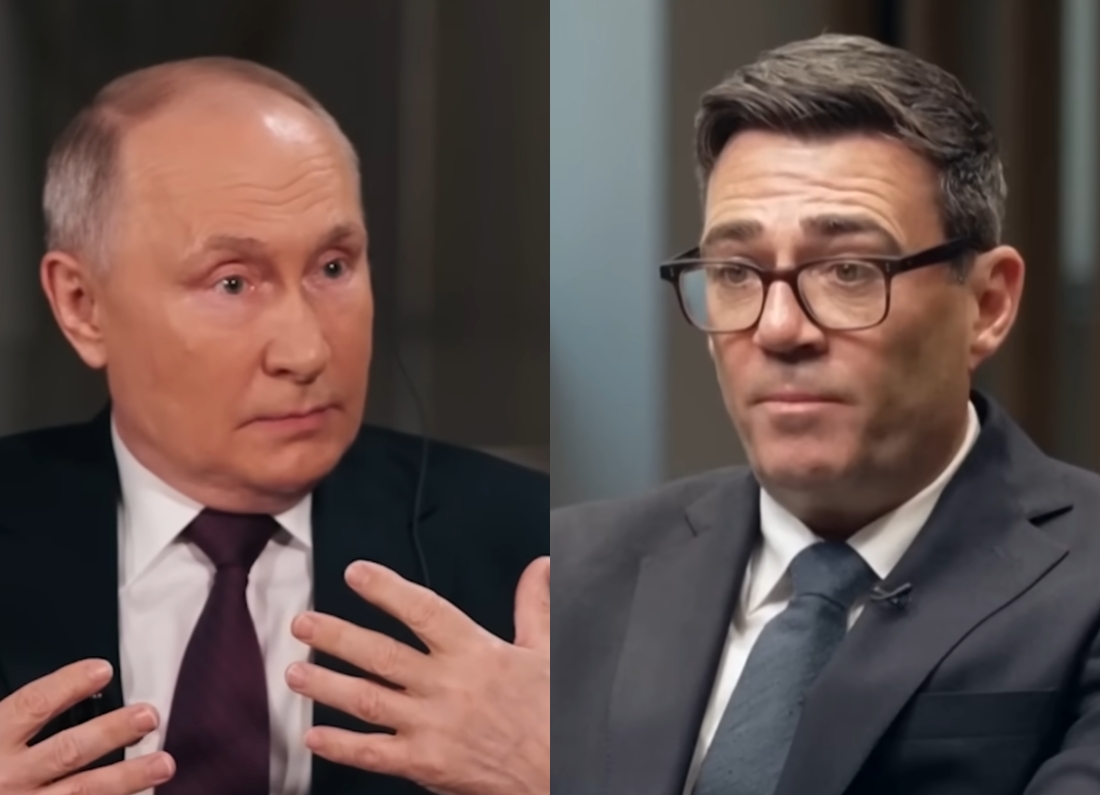
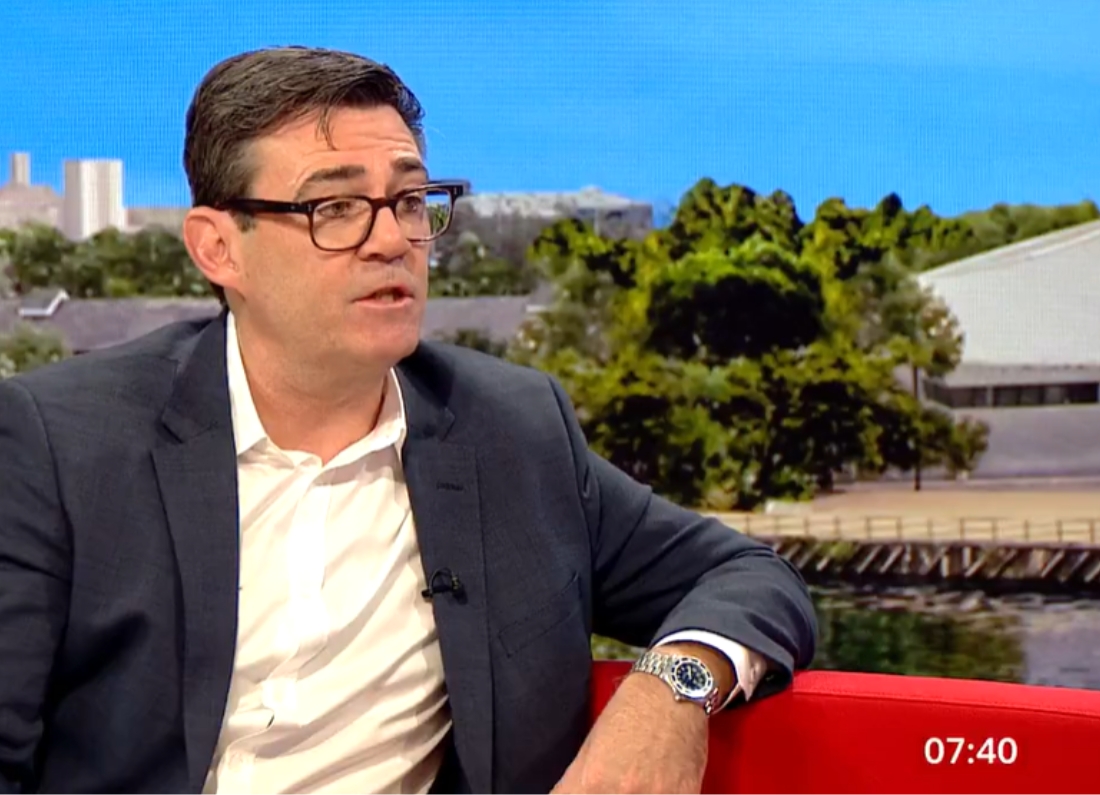
Russia has threatened to strike British military installations and equipment in response to Ukrainian attacks carried out with UK-supplied weapons, accusing Andy Burnham’s government of taking the conflict towards “an entirely new level”.
Maria Zakharova, the Russian foreign ministry spokesperson, issued the warning days after the prime minister visited Kyiv and announced further British assistance for Ukraine’s production of long-range cruise missiles.
Speaking at a briefing in Moscow, Zakharova said British military assets could become targets both inside and beyond Ukraine.
She said:
“We have repeatedly warned that any British military installations and equipment in Ukraine and beyond its borders could be targeted in response to Ukrainian strikes on Russian territory carried out using British weapons.”
Zakharova accused the UK of being “one step away” from becoming legally complicit in what Moscow describes as terrorism against Russian civilians.
She warned Britain of “inevitable catastrophic consequences” unless Burnham changed his government’s approach.
“We propose that the British leadership once again carefully analyse the situation and immediately, in the most resolute and unequivocal manner, abandon the hostile, aggressive line, which can only create the risk of the conflict escalating to an entirely new level.”
The threat was reported by Reuters, which described its force and urgency as stronger than Moscow’s previous warnings to Britain.
What Britain has given Ukraine
The latest confrontation follows Burnham’s first overseas visit since becoming prime minister.
During Monday’s trip to Kyiv, he met Ukrainian President Volodymyr Zelenskyy and reiterated that Britain remained “100 per cent behind” Ukraine.
The UK did not hand Ukraine a complete blueprint for the British Storm Shadow missile, as some initial reports suggested.
Instead, the government authorised defence manufacturer MBDA to release classified information about British components used in SCALP, the French name for the Franco-British Storm Shadow system. The agreement is intended to help establish missile assembly lines inside Ukraine.
France has also approved the transfer of the relevant technology.
The official Downing Street account of the meeting said the arrangement would allow Ukraine to strengthen its ability to defend itself against Russian attacks.
Storm Shadow and SCALP are air-launched cruise missiles capable of striking targets hundreds of miles away. Ukraine has used the weapons against Russian military facilities and targets in Ukrainian territory occupied by Moscow.
The Kremlin responded to Burnham’s announcement by accusing Britain of adding “fuel to the fire”.
Asked about that criticism during his visit, the prime minister replied:
“Who started the fire?”
Russia alleges missile strike on Donetsk shopping centre
Zakharova’s warning followed a Russian allegation that Ukraine had used Storm Shadow or SCALP missiles to attack a shopping centre in Donetsk on Wednesday.
Russia said eight civilians were injured, including two children.
Donetsk is internationally recognised as Ukrainian territory but has been partly controlled by Russian-backed forces since 2014. Moscow claimed to have annexed the wider region in 2022, although that annexation has not been recognised by most countries.
Ukraine did not immediately respond to the allegation. Reuters said it was unable to verify Russia’s account independently.
Both governments deny deliberately attacking civilians. UN figures show that far more Ukrainian civilians than Russian civilians have been killed since Putin launched the full-scale invasion in February 2022.
A spokesperson for the Ministry of Defence said the UK continued to stand “shoulder to shoulder” with Ukraine.
The spokesperson told Reuters:
“Russia should be in no doubt about the resolve of this Government to stand against Russian aggression, in Ukraine and against the UK and our allies.”
Could Russia strike a Nato country?
Moscow has threatened consequences over Western weapons on numerous occasions without openly attacking a Nato member.
A deliberate Russian strike against a British military installation in the UK would risk triggering Article 5 of the North Atlantic Treaty, under which Nato members treat an attack against one ally as an attack against them all.
Zakharova’s reference to assets “beyond” Ukraine was not accompanied by details about which locations Russia might consider legitimate targets.
Her remarks could cover British equipment operating elsewhere in Europe rather than necessarily indicating an imminent attack on the UK. Even so, the deliberate ambiguity allows Moscow to threaten escalation without committing itself to a particular action.
The warning comes amid separate reports that CIA director John Ratcliffe used an unusually visible visit to Moscow to caution Russia against testing Nato.
CBS News reported that Ratcliffe raised the risk of Russian operations against Nato members during meetings with Russian intelligence officials.
American intelligence assessments have reportedly considered the possibility that Russia could authorise cyberattacks or other covert operations intended to test Nato’s unity without beginning a conventional war.
Donald Trump played down the significance of the visit, describing it as “semi-routine” and saying he was not worried that Putin would attack Nato territory.
Kremlin spokesperson Dmitry Peskov also rejected reports that Russia was preparing to increase its aggression against Europe.
He said:
“Russia faces a very aggressive policy from European countries.
“This aggression comes specifically from European countries. Claims to the contrary distort reality and are nothing more than media rumour.”
Burnham faces his first major foreign policy test
Burnham used his first international visit as prime minister to demonstrate continuity in Britain’s support for Ukraine while announcing a significant expansion of Kyiv’s domestic weapons production.
Allowing Ukraine to assemble long-range missiles locally could reduce its reliance on future deliveries from Britain and France. It would also make the system harder for Moscow to restrict through pressure on Ukraine’s allies.
That helps explain the strength of Russia’s response.
Moscow is attempting to deter Britain from deepening its involvement by raising the potential cost. The UK government, meanwhile, argues that retreating in response to Russian threats would reward aggression and weaken Ukraine’s ability to defend itself.





Leave a Reply