

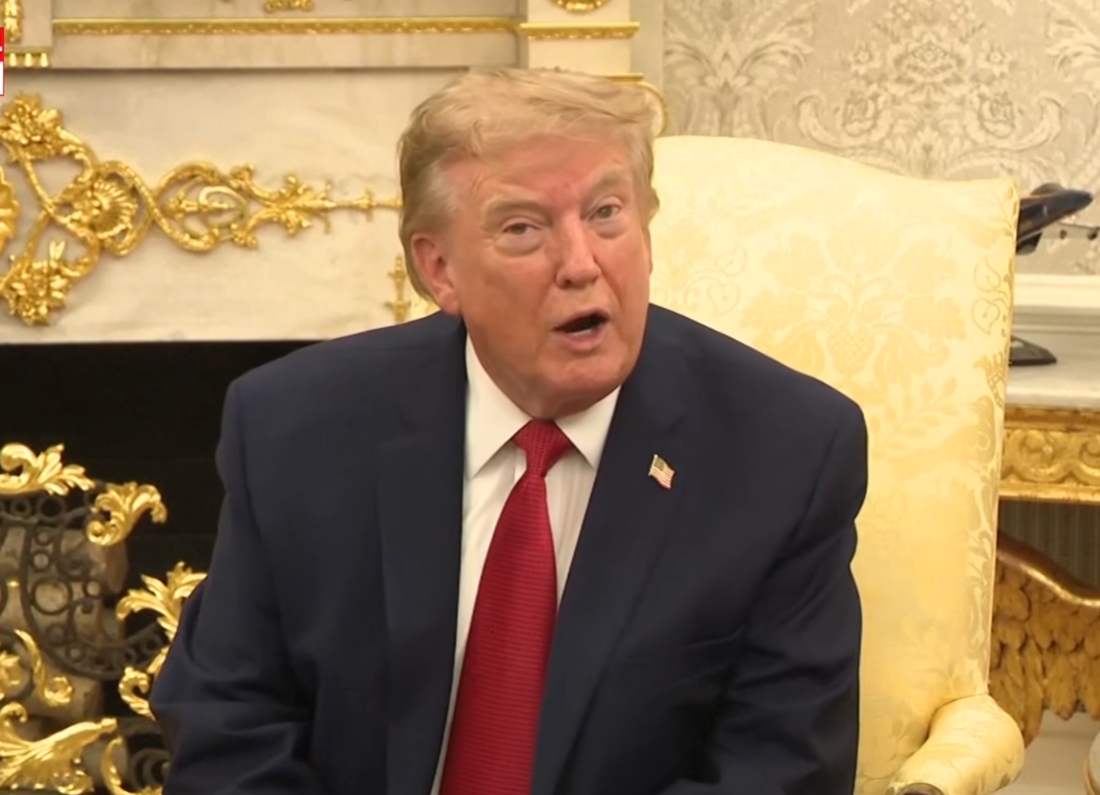
Donald Trump has said the United States is considering renaming Lake Ontario “Lake America” as his increasingly bitter trade dispute with Canada escalates.
The US president floated the extraordinary name change on Tuesday after trade negotiations between Washington and Ottawa collapsed and Canada prepared retaliatory tariffs against its southern neighbour.
Lake Ontario is one of North America’s five Great Lakes and is shared by the United States and Canada, sitting between New York state and the Canadian province of Ontario.
Trump said his administration was giving “serious consideration” to changing its name because he did not expect the US to be doing much business with Ontario in future.
It follows Trump’s previous decision to direct the US federal government to refer to the Gulf of Mexico as the “Gulf of America”.
But the latest intervention comes during a considerably more serious deterioration in relations between two countries that have traditionally been among the world’s closest allies.
Canada is preparing to retaliate against US tariffs while Prime Minister Mark Carney has accused Washington of making demands that threaten Canadian sovereignty.
Trump floats ‘Lake America’
Trump made the suggestion on his Truth Social account on Tuesday morning.
He said the United States was considering changing the name because of the worsening relationship with Ontario.
The comments immediately drew comparisons with Trump’s Gulf of America order.
Shortly after returning to the White House, Trump ordered US federal agencies to begin using Gulf of America instead of Gulf of Mexico.
Other countries were not required to recognise the change.
Lake Ontario presents an even more obvious international complication.
Unlike a body of water lying largely beyond national territorial waters, the US-Canada border runs directly through Lake Ontario.
Its northern shore is Canadian, including Toronto, while New York sits along its southern and eastern shores.
There is therefore no suggestion that Washington could simply compel Canada to begin calling the entire lake “Lake America”.
Canadian trade minister Dominic LeBlanc declined to engage with Trump’s latest comment, saying the government had a policy of not responding to social-media statements from the US administration.
US-Canada trade relationship deteriorates
Behind the unusual name proposal is a much more consequential economic confrontation.
The United States and Canada came close to reaching a trade agreement last week.
Trump announced on August 18 that planned tariffs would be temporarily paused after claiming the two countries had a deal subject to finalising the documents.
Carney was more cautious, saying substantial progress had been made but important work remained.
The negotiations subsequently collapsed.
Washington has since imposed 50% tariffs on around $20 billion worth of Canadian goods after the two sides failed to reach a final agreement.
Trump has also threatened to increase tariffs on Canadian-built cars, trucks and automotive parts to 50% from January.
That is particularly significant because the American and Canadian car industries are deeply integrated, with components routinely crossing the border during the manufacturing process.
Ontario is at the centre of Canada’s automotive industry.
Trump has argued that Canada has taken advantage of the United States economically and says Ottawa needs to accept Washington’s demands.
Canada strongly disputes that characterisation.
Carney accuses US of trying to undermine Canada
Carney has taken an increasingly confrontational approach since the negotiations broke down.
The Canadian prime minister says demands introduced by the United States during the final stages of negotiations were unacceptable.
According to Carney, Washington wanted restrictions that could have affected Canada’s ability to negotiate independent trade agreements with other countries.
He has characterised the dispute as a question of Canadian sovereignty rather than simply tariffs.
Canada is now preparing retaliatory measures of its own.
Carney has pledged to respond “dollar for dollar” to new American tariffs, while Canadian ministers are preparing support for industries and workers likely to be affected by the dispute.
Trump, meanwhile, has told Canada’s leaders to “fall in line”.
The dispute has also drawn Ontario Premier Doug Ford into an increasingly personal confrontation with the US president.
Ford has suggested Canada could use its exports of strategically important products as leverage if Washington continues escalating the trade war.
Canada supplies the United States with energy, critical minerals and other commodities that are important to American industry.
From Gulf of America to Lake America
Renaming geographical features has become a recurring feature of Trump’s second presidency.
His Gulf of America order required federal agencies in the United States to adopt the new terminology, although Mexico and other governments continued to use Gulf of Mexico.
The Lake Ontario proposal would similarly have no automatic authority over what Canada calls the lake.
Trump’s intervention nevertheless illustrates how far relations between Washington and Ottawa have deteriorated.
Canada and the United States share one of the world’s largest bilateral trading relationships, with enormous quantities of goods crossing their border every day.
Supply chains in industries including cars, energy and manufacturing have developed across both countries over decades.
The escalating tariff battle threatens to disrupt those relationships and potentially increase prices for consumers on both sides of the border.
For now, “Lake America” remains something Trump says his administration is considering rather than an announced federal name change.
The tariffs are considerably more real.
After negotiations that appeared close to producing an agreement only days ago, Canada and the United States are instead heading deeper into a trade war.






Leave a Reply