

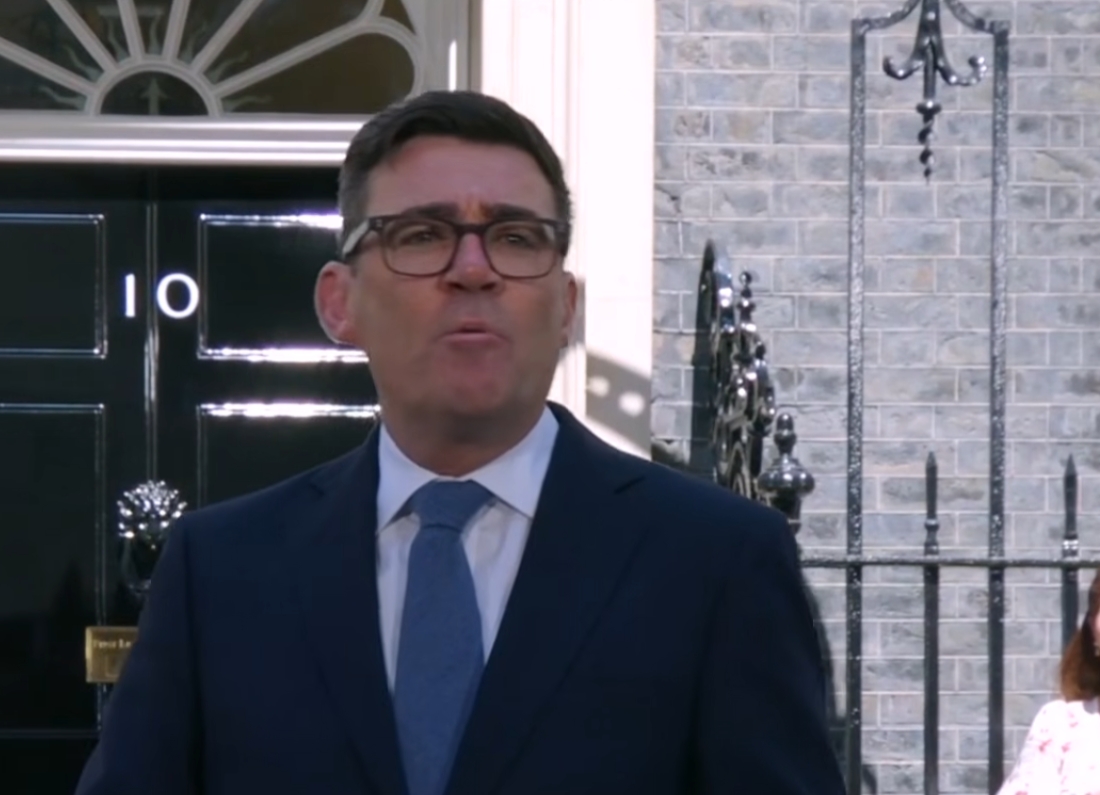
Andy Burnham received almost £350,000 in donations and other support in the months before becoming prime minister, newly published transparency records show.
The money and non-cash support helped fund his political operation across his return to Westminster, the Labour leadership contest, and his eventual move into No 10. Among the biggest backers: Labour donor Lord David Sainsbury, businessman Gary Lubner, and former Greater Manchester night-time economy adviser Sacha Lord, alongside trade union support. All declared under the relevant transparency rules, and there’s no suggestion Burnham broke those rules accepting it. But with the prime minister now making decisions on tax, transport and business regulation, the disclosures offer a genuinely useful look at who helped bankroll his rapid return to frontline politics.
Lord Sainsbury provided more than £164,000
The largest individual contribution came from Lord David Sainsbury, former chairman of the Sainsbury’s supermarket group and a long-standing Labour donor, valued at £164,347. Rather than a straightforward cheque, the support included office space and the cost of contractors helping with policy and operations as Burnham’s campaign gathered pace. Sainsbury’s donated millions to Labour causes over many years and has backed organisations associated with the party’s moderate wing.
Gary Lubner, former chief executive of Belron, the company behind Autoglass, provided £25,000 directly to Burnham’s operation. He’s become one of Labour’s most significant financial backers in recent years and has also donated substantial sums to Labour Together, now known as ThinkLabour. Electoral Commission records show Lubner gave Labour Together £175,000 in June alone, while Sainsbury donated £125,000 to the same organisation that same month.
Sacha Lord among Burnham’s backers
Sacha Lord, who worked closely with Burnham during his time as Greater Manchester mayor, provided support worth £35,390. Lord was Burnham’s night-time economy adviser in Greater Manchester and became a prominent voice for hospitality businesses during Covid, later stepping down from that role after controversy over a Covid business grant application. He’s remained politically close to Burnham and was among those backing his return to national politics.
Another £50,000 came from Charlie Parsons Creative, and Burnham also received support from trade unions and Labour-linked organisations, Unison, the Communications Workers Union and the Fire Brigades Union among them. Those unions later supported him during the Labour leadership election too, alongside a much wider group of affiliated organisations.
More than just cash
The disclosures aren’t limited to straightforward political donations. Burnham also declared thousands of pounds in hospitality and travel over the previous year, The Times puts the total at around £13,630, including tickets and accommodation connected to Glastonbury Festival, two Brit Awards tickets worth £3,800 from Sony Music, and trips to Madrid and Nice. Some of those entries relate to his previous role as Greater Manchester mayor rather than his time as prime minister. The register also records his ownership of a rental property in London and an interest in a private company called Office of Andy Burnham Ltd, set up to manage his affairs. Again, these are disclosures, not allegations of wrongdoing, the whole point of the register is making financial interests and significant gifts visible so voters, journalists and Parliament can scrutinise them.
Political donations matter even when the rules are followed
Arguments about political donations in Britain tend to go binary, either someone’s broken a rule, in which case it’s a scandal, or everything’s declared correctly and the subject’s treated as closed. There’s plenty of ground between those two positions. Political campaigns cost money. Leadership elections need staff, offices, travel and organisation, and politicians building national campaigns need donors willing to fund that. None of that automatically buys donors government policy. It does make transparency genuinely important.
If someone contributes £164,000 worth of support to a politician who then becomes prime minister, voters are entitled to know about it, whatever party that politician belongs to. Burnham’s government has already been making decisions affecting businesses, unions and public services, and his new “No 10 North” operation is preparing proposals for further economic and tax devolution. There’s no evidence any donor named in the register has received favourable treatment in exchange for their support. Their donations still form part of the wider political picture around the new government.
Labour says everything was properly declared
Labour points out that leadership campaigns aren’t publicly funded and depend heavily on political donations as a result, and says Burnham’s support was declared in line with the rules. That distinction matters, there’s no allegation here that Burnham hid the donations or improperly accepted them. Publication of the register is, in fact, the transparency system working exactly as intended.
This lands at a moment when political money is getting renewed attention generally, Angela Rayner’s faced questions this week over money she earned from paid speaking engagements while outside government, while Farage remains under scrutiny over his own financial declarations. Burnham shouldn’t be exempt from similar examination just because his current personal polling is strong. He’s spent his first weeks in No 10 presenting his government as a break with the political culture voters have grown frustrated with. Knowing who funded the campaign that got him there is part of judging that promise for ourselves.




Leave a Reply