

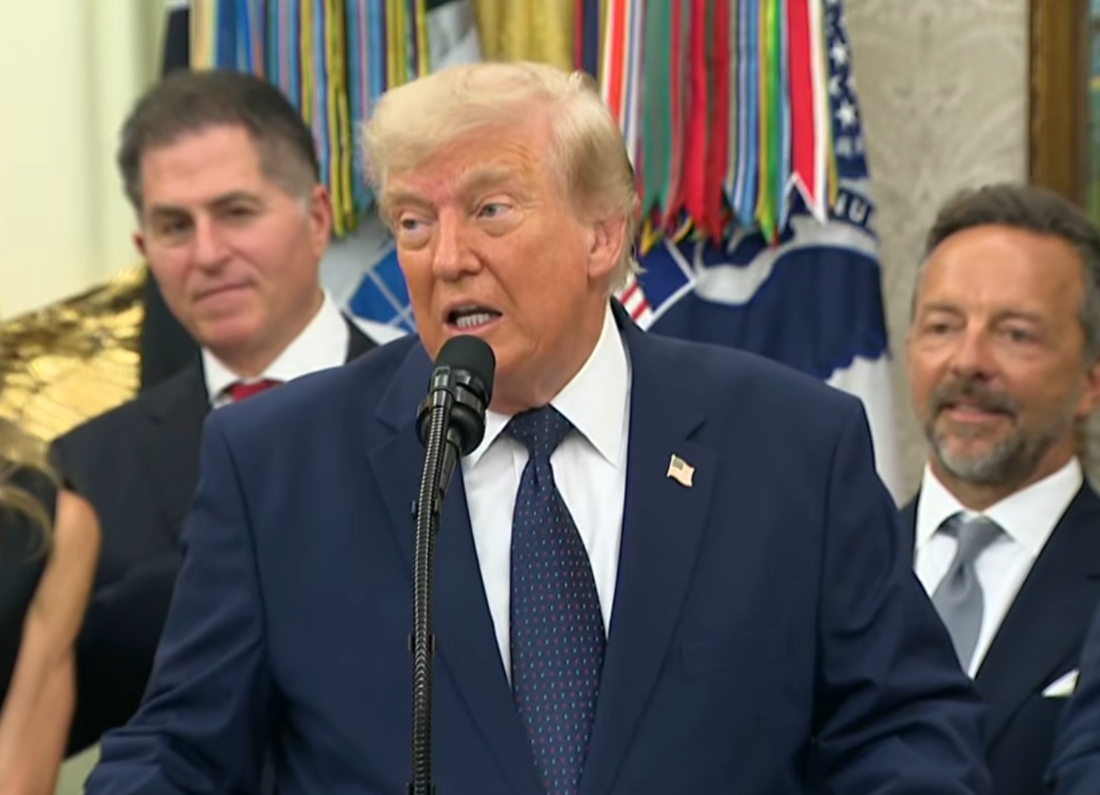
Five years after losing the White House to Joe Biden, Donald Trump still cannot let the result go. On Thursday night he took that grievance to a primetime address, using the East Room to accuse China of meddling in an election his own former intelligence chief had already concluded was the most secure in American history.
The core claim
Speaking for 25 minutes to roughly 55 guests including Vice President JD Vance, Trump declared the US electoral system “falls catastrophically short” of the standard required for a functioning democracy. “No country can be great without fair and honest elections,” he said, before announcing what he called the “immediate declassification and release of critical intelligence, revealing shocking vulnerabilities in our election infrastructure.”
He offered no specifics on what that intelligence actually contained, only that it proved the system was “dangerously exposed… to hacking, exploitation and interference.”
A conclusion his own administration already rejected
The claim collides directly with findings from Trump’s first term. John Ratcliffe, who served as his Director of National Intelligence before later becoming CIA director, oversaw an assessment that concluded 2020 was the most secure election in US history. Trump has never accepted that verdict, instead accusing the intelligence community, which he brands “the deep state”, of burying evidence to protect Biden.
“They did not disclose to me as president or to anyone else,” Trump said. “All they kept saying is: ‘This is the most secure election in the history of our country.'”
China’s embassy in Washington moved to shut the claim down before Trump had even spoken. Spokesperson Liu Chang said: “China has never and will never interfere in the presidential elections of the US.”
Who’s actually driving the investigation
Trump has now ordered the FBI, CIA, Justice Department and his own intelligence office to determine “how and why” the alleged cover-up happened, with instructions to fire those responsible and pursue criminal charges “if appropriate.”
Much of the material underpinning this push reportedly comes from Bill Pulte, Trump’s newly installed acting Director of National Intelligence, who has no prior intelligence background and previously used his role atop the federal housing regulator to hunt for material against Trump’s political opponents. Working alongside him is John Solomon, a former journalist known for promoting election conspiracy theories, hired last month as a White House special adviser.
Even Solomon, briefing reporters after the speech, conceded the newly released documents contained no evidence that any foreign actor had actually altered a single vote.
How Democrats responded
Senator Mark Warner of Virginia, vice-chair of the Senate Intelligence Committee, dismissed the speech as a rehash of claims already tested and rejected repeatedly. “Americans heard the president once again repeat claims about our elections that have been investigated for years and repeatedly rejected by the Intelligence Community, the FBI, DHS, DOJ, bipartisan state election officials, audits, recounts, and the courts,” he said. “The facts have not changed.” He added that genuine foreign threats from China, Russia and Iran deserved to be “confronted with facts, not distorted for political purposes.”
Kamala Harris, defeated by Trump in 2024, got in ahead of the speech itself, posting online minutes before it aired: “The 2020 election was not stolen; we won and he lost.” She also took aim at the legislative centrepiece of the address, the Save America Act, which would impose strict voter ID requirements and remains stalled in Congress, calling it “voter suppression” and part of “a larger agenda of conservatives trying to steal power from the people.”
Trump’s own framing of that bill left little room for ambiguity about who he thinks opposes it: “How easy is that to do? Unless you want to cheat.”
Iran got almost no mention
Given the timing, one notable absence was Iran. Trump had, just days earlier, abandoned last month’s ceasefire and resumed strikes aimed at breaking Tehran’s grip on the Strait of Hormuz, a blockade that has driven global energy prices sharply higher since late February. Thursday’s speech gave the conflict a single line: “We are winning big in Iran, and you will see the fruits of that labor very, very shortly.”
An unusual format for Trump
Formal, scripted White House addresses have never suited Trump’s style, and he uses them sparingly. The format requires sticking to a teleprompted text for a fixed period, a constraint he visibly struggled with on the night, at points losing the thread of his own sentences and lapsing into the looser, sarcastic tone of his rally speeches.
The evening carried its own subplot: Trump’s regular teleprompter operator had been placed on administrative leave after allegedly wagering close to $100,000 on a prediction market about the speech’s content, forcing press secretary Karoline Leavitt to step in as a last-minute replacement.
Not every network carried it live
NBC, ABC and CNN all declined to broadcast the address on their main channels, citing its potentially partisan or inflammatory content, though each streamed it online and some ABC affiliates opted to air it anyway. Trump responded by calling for their broadcast licences to be revoked. Networks are under no legal obligation to grant such requests; both Biden and Obama were previously refused live broadcast slots for White House addresses of their own.
Why Democrats think the real audience was November
The consistent theme among Democratic reactions, delivered even before Trump took the podium, was that the speech had little to do with settling a five-year-old grievance and everything to do with pre-emptively undermining confidence in this November’s midterms, a contest polling suggests could hand Democrats control of the House and Senate.
Whether that strategy works, or whether it simply becomes one more entry in a pattern already visible across Trump’s other recent interventions abroad, will not be clear until voters actually cast their ballots.





Leave a Reply