

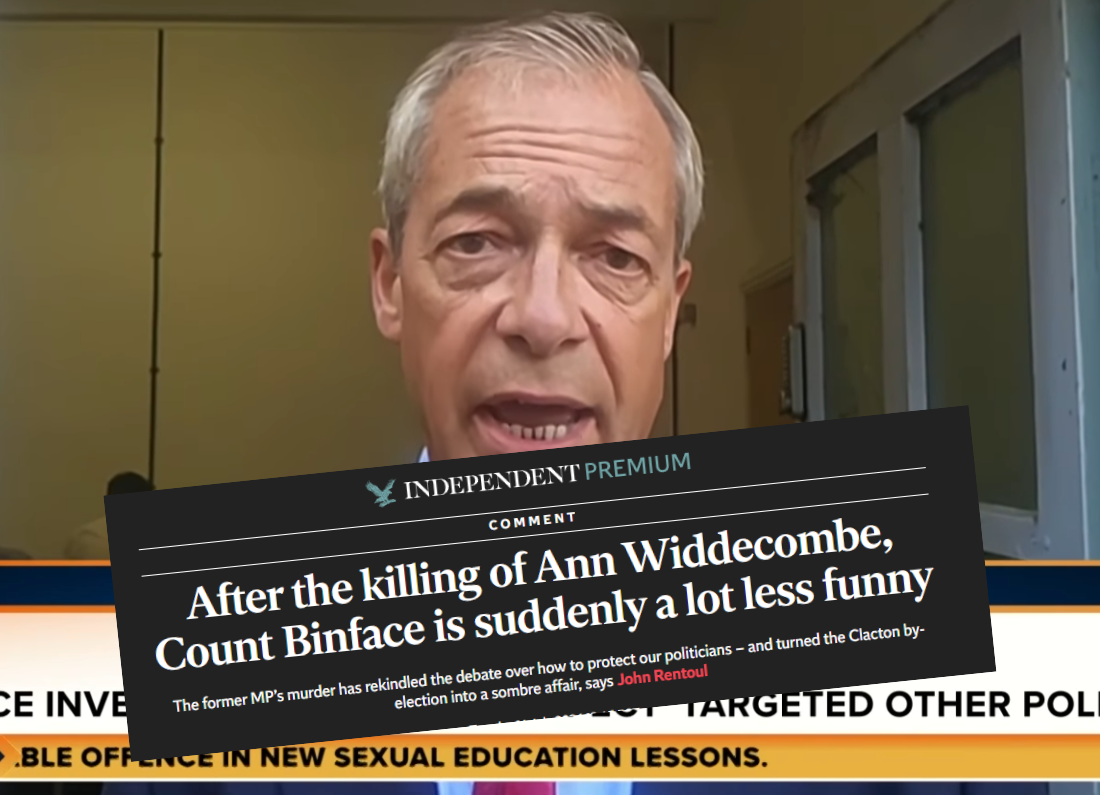
There is something deeply odd about the growing number of articles insisting that Count Binface somehow isn’t funny anymore.
The latest comes from The Independent, where John Rentoul argues that Ann Widdecombe’s tragic death has transformed the Clacton by-election into “a sombre affair”, making Nigel Farage’s contest with Britain’s most famous novelty candidate somehow inappropriate.
It is a remarkable conclusion to reach.
Not because anyone disputes the seriousness of Ann Widdecombe’s death. Quite the opposite. It is because the two things have almost nothing to do with one another.
Satire isn’t disrespect
The suggestion appears to be that because a politician has been murdered, political satire should pause. That is an extraordinary standard. If it were applied consistently, British comedy would barely exist.
Should Have I Got News For You have stopped making jokes after Jo Cox was murdered? Should Spitting Image have gone off air every time a politician received threats? Should Private Eye suspend publication after David Amess was killed?
Of course not.
Political violence is an attack on democracy. Political satire is one of democracy’s oldest defences. Confusing the two serves nobody.
Count Binface isn’t mocking Ann Widdecombe
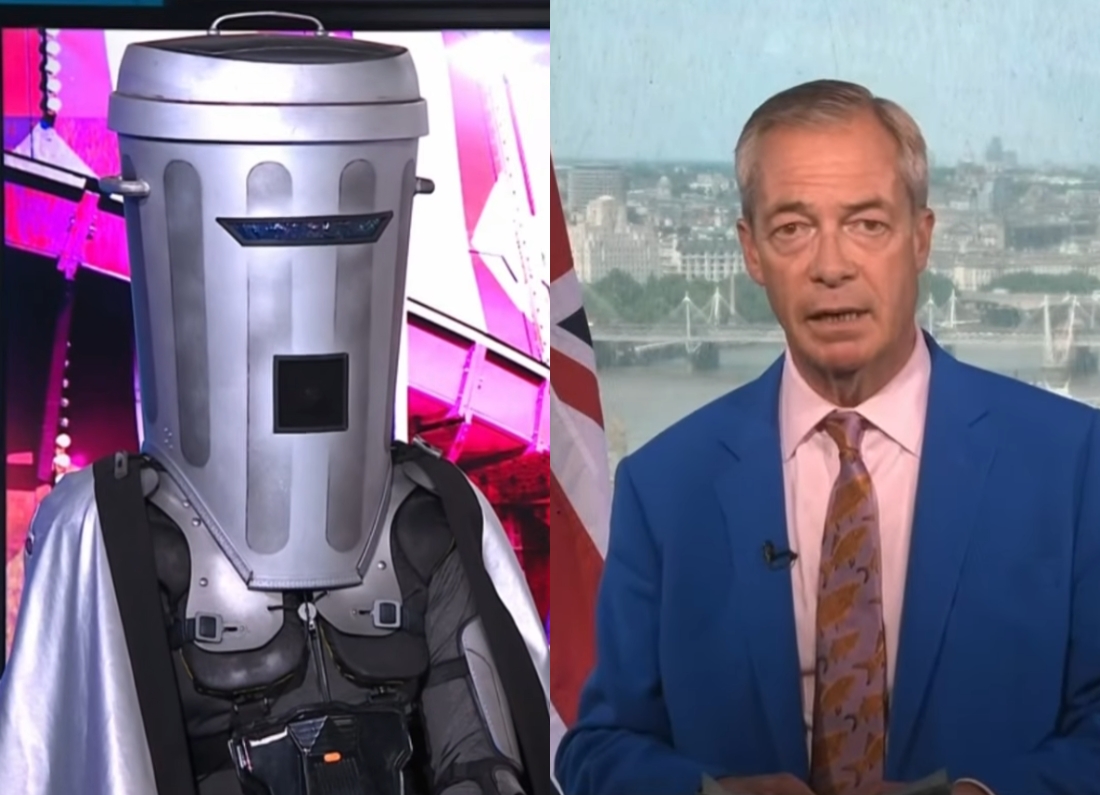
This is perhaps the strangest leap in the argument. Count Binface is not standing against Ann Widdecombe. He is standing against Nigel Farage.
Nothing about his campaign references her death. Nothing about his campaign mocks political violence. Nothing about his campaign diminishes the seriousness of what happened in Devon.
His campaign is doing exactly what it has always done: using absurdity to expose contradictions in politics. That remains entirely legitimate.
The target has always been power
Rentoul’s argument also overlooks something fundamental about satire. Count Binface has stood against Boris Johnson. Against Theresa May. Against Sadiq Khan. Against London mayors. Against prime ministers. Against political parties across the spectrum.
He is not a campaign against Reform UK. He is a campaign against pomp, ego and political self-importance. The joke only works because powerful politicians take themselves so seriously. Farage simply happens to be the latest target.
Why this campaign exists at all
It is also worth remembering why Britain is talking about Count Binface in the first place. Nigel Farage resigned his own parliamentary seat. Not because he lost an election. Not because his constituents removed him. Not because Parliament dissolved.
He resigned while facing a Parliamentary Standards investigation into an undeclared £5 million gift from crypto billionaire Christopher Harborne. His stated aim was to let voters judge him rather than what he describes as “the establishment.”
The major political parties then declined to stand candidates. That left Count Binface as his principal challenger.
This is not a normal by-election. It is a political stunt responding to another political stunt. Satire is almost inevitable.
Humour can expose what anger cannot
Perhaps the biggest misunderstanding is the assumption that comedy somehow trivialises politics. Often it does the opposite.
Some of the most effective political criticism in British history has been humorous. Yes Minister. The Thick of It. Brass Eye. Have I Got News For You. Even Blackadder remains one of the sharpest commentaries ever written about war, despite being a sitcom.
Nobody argues those programmes disrespect democracy. They enrich it.
Humour often succeeds where shouting fails because it lowers people’s defences. It encourages people to question powerful figures without demanding they join one political tribe or another. That is exactly what Count Binface has managed to do.
Reform didn’t invent division, but it profits from it
There is another uncomfortable truth missing from arguments that tell people to stop laughing.
Nigel Farage has built much of his political career around confrontation. His campaigns have repeatedly centred on immigration, identity and cultural grievance. His rhetoric has frequently divided opinion by design. Whether people agree with him or not, few would seriously argue his political style seeks consensus.
Count Binface responds to that with ridicule rather than rage. He doesn’t call Farage names. He doesn’t encourage abuse. He simply asks people to laugh.
In an era of increasingly toxic political discourse, that is arguably one of the least confrontational responses available.
The real message seems to be: don’t laugh at Nigel
Strip away the emotional framing and a different argument begins to emerge. The practical effect of saying Count Binface isn’t funny anymore is simple.
Stop mocking Nigel Farage. Treat him more seriously. Leave him alone.
That is a curious request to make of a politician who has spent decades using ridicule against his own opponents. Farage has mocked MPs. Mocked judges. Mocked campaigners. Mocked journalists. Mocked political institutions.
Political humour is apparently acceptable until it points in his direction.
The joke survives because the politics created it
If anything, the endless commentary declaring Count Binface “not funny anymore” has had the opposite effect. Every article insisting people shouldn’t laugh seems only to remind readers why the campaign exists.
Because one of Britain’s most recognisable politicians resigned his own seat while under investigation and now finds himself explaining his actions against a man wearing a bin on his head.
That isn’t satire inventing absurdity. It is satire reflecting reality.
Democracy needs fewer sacred cows
There are moments when politics requires solemnity. The murder of Ann Widdecombe is unquestionably one of them.
There are also moments when democracy requires people willing to puncture ego, expose contradictions and remind voters that no politician should ever become untouchable. That is what political satire has always done.
Count Binface has not become less funny because of a tragedy entirely unrelated to his campaign.
If anything, the growing chorus insisting that people stop laughing suggests he may be performing exactly the democratic function satire is supposed to perform.




![Crypto Toll And Passcode? Iran's New Hormuz Status Quo [YouTube]](https://thedailybritain.co.uk/wp-content/uploads/2026/04/donaldtrumpstraitofhormuz.jpg)
Leave a Reply