

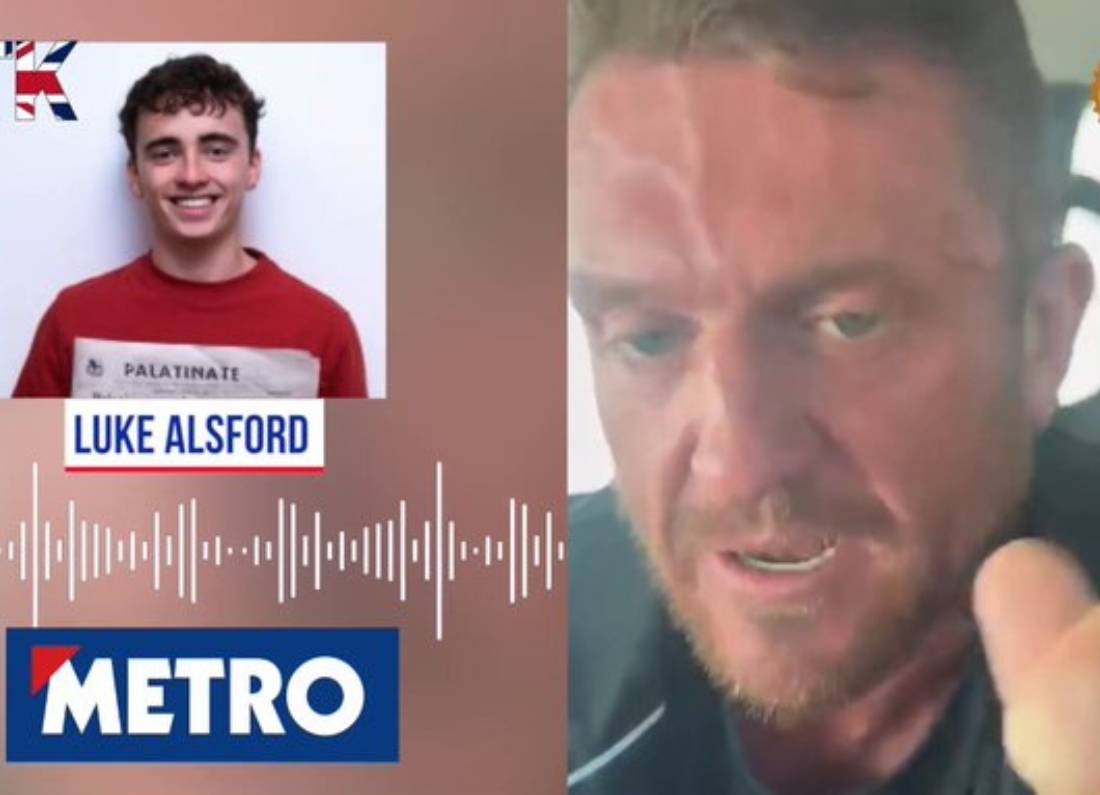
Tommy Robinson has called a Metro journalist to confront him over a story about a campaign to have his podcast removed from Spotify.
Robinson, whose real name is Stephen Yaxley-Lennon, appeared in a video clip shared by the X account Gadget, speaking to Metro reporter Luke Alsford from what appeared to be a car, visibly angry about the article being prepared. The clip was posted with the caption: “An enraged and irate Tommy Robinson calls a journalist with a bright red face and veins popping out of his forehead to confront him over a story about a campaign to have his podcast removed from Spotify.” The post added: “Has he been taking hay fever tablets again?!”
The hay fever reference
That line refers to Robinson’s recent insistence that repeated sniffing and fidgeting during an interview with Australian presenter Karl Stefanovic was caused by hay fever, not anything else, after viewers speculated about his behaviour online following the interview’s release. On that occasion, Robinson responded to a critic on X by writing: “It’s called hay fever you dumb bitch,” before posting a photo of medication and adding: “I got these in Russia to help me with it, I have no idea why I’m explaining myself to this nobody.”
This time, the issue was not hay fever. It was Spotify.
What actually happened
According to the clip and reports of the exchange, Alsford had contacted Robinson’s team about a story concerning calls for Spotify to remove or review his podcast. Robinson did not take that well. In the call, he said: “No matter what your newspaper does, we’re not going to stop. It doesn’t matter if you manage to get us deplatformed from Spotify, because that’s what you’re doing.”
He then accused Alsford of not being a journalist at all: “You’re not a journalist. You act as a propaganda hit-piece.” Robinson also challenged Alsford to include his comments about Islam and the Quran in the article, suggesting the reporter would not fairly represent what he had said. Alsford could be heard telling him he would “definitely, definitely, fairly reflect” his comments, which is, more or less, how journalism works. Someone asks for comment, the person gives a comment, the journalist includes the comment. It is not usually supposed to involve being rung up by the subject of the story and confronted before the article has even appeared.
Why this pattern matters
There is a specific reason this kind of confrontation attracts particular attention when it involves Robinson. In 2021, he was given a five-year stalking protection order after turning up outside the home of Independent journalist Lizzie Dearden and shouting abuse. The court heard he had hired a private investigator to find information about Dearden after she had requested comment on a story about allegations he had misused supporters’ money.
The Guardian reported that Robinson went to Dearden’s home, shouted unsubstantiated allegations about her partner, and threatened to return. Deputy chief magistrate Tan Ikram said his behaviour crossed the line between harassment and stalking, adding that the intention of turning up at a journalist’s house after 10pm was “clear: to intimidate her.” Robinson later failed in a bid to overturn the order, with a judge describing him as a “bully” and saying the incident was a calculated attempt to intimidate rather than a legitimate response to journalism.
That history matters because Robinson has long presented himself as a journalist, describing himself as an independent journalist while continuing to focus heavily on Muslims, grooming gangs and immigration, while repeatedly confronting actual journalists who investigate, criticise or question him.
The free speech argument, and its limits
Robinson’s complaint in the call was that he was not being treated fairly by the press. But his chosen method of making that point was to ring a reporter, film himself doing it, and accuse him of running a propaganda operation before the article had even been published. Supporters have framed the underlying Spotify story as one of free speech and deplatforming. Critics argue platforms are entitled to decide whether they want to host content from someone with Robinson’s specific history of far-right activism and anti-Muslim campaigning, including his role co-founding the English Defence League in 2009.
There is a contradiction worth naming here. Robinson wants the freedom to publish his views, build an audience and criticise journalists. That is a legitimate position. But journalists retain the freedom to report on campaigns, scrutinise public figures, ask platforms for comment and examine whether companies like Spotify wish to continue hosting particular content. Free speech does not mean never being written about, never being challenged, or that every private platform has an obligation to host anyone indefinitely without question.
Whether Spotify takes any action over Robinson’s podcast remains to be seen. But the reaction to the clip suggests one thing clearly: if Robinson was hoping to appear calm, reasonable and unfairly targeted, filming himself angrily confronting a young reporter before a story had even run was unlikely to achieve that.
You can watch it below:
And the reaction spoke for itself..
1.
2.
3.
4.
5.
One response to “Tommy Robinson calls Metro journalist over Spotify podcast story, and the whole thing was as calm as you’d imagine”
-
Please, please, someone deplatform the poisoned dwarf. I don’t know how it can be legal for a criminal, convicted multiple times for everything from assault to fraud, to spread lies, misinformation and hatred, including manipulated statistics. Unfortunately the gullible and the white supremacists buy the garbage, so he needs to be contained or confined










Leave a Reply