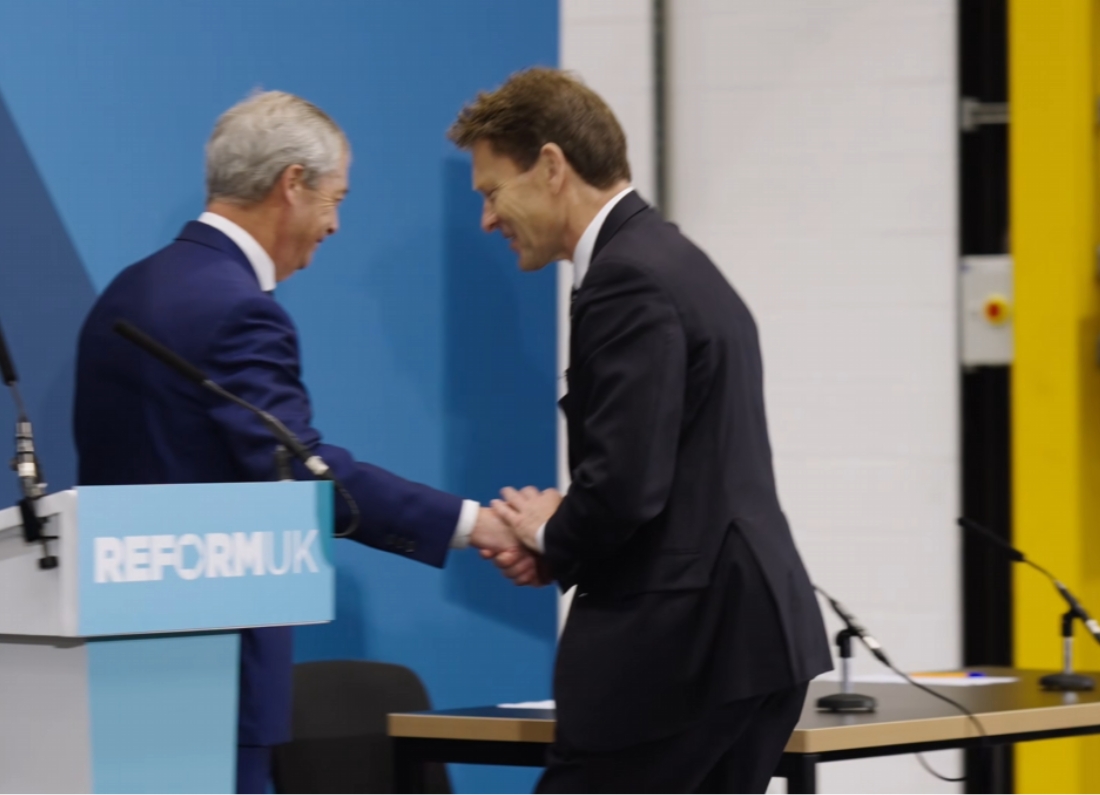
Richard Tice, the deputy leader of Reform UK, allegedly failed to pay nearly £100,000 in corporation tax through four shell companies that in turn transferred over £1.1 million to his party, the Sunday Times has reported – the latest in a series of financial disclosures about the Boston and Skegness MP who has been a vocal critic of others’ tax conduct.
The newspaper reported that four shell companies run by Tice – defined as corporations without active business operations or significant assets – allegedly did not pay any tax on their profits between 2020 and 2022. The companies were set up to receive dividends from Tice’s property investment firm and pass the money to their parent company, Tisun Investments Ltd, which then transferred £1,113,000 to Reform UK between March 2020 and May 2022.
In response, Tice posted a lengthy statement on X in which he acknowledged the possibility of errors but stopped short of conceding that tax had gone unpaid. “A long career with multiple businesses is bound to feature some errors,” he said. “Naturally I am always happy to put things right and if numbers need rechecking, of course I will pay what is owed – be that more or less.”
What the experts say
Dan Neidle, founder of Tax Policy Associates and one of Britain’s most respected tax lawyers – whose analysis was also central to last week’s revelation about Tice’s REIT withholding tax failure – wrote on X that “around £98,000 of corporation tax is due,” plus “about £27,000 of interest.”
Neidle has now identified two separate alleged tax compliance failures by Tice: the previously reported £91,000 withholding tax shortfall on dividends paid from Quidnet REIT to Tice personally and to his offshore Jersey trust, and now this separate alleged corporation tax shortfall of approximately £98,000 across the four shell companies.
Reform UK’s defence
Reform’s Treasury spokesperson Robert Jenrick sought to minimise the significance of the latest disclosure, suggesting Tice believed he may actually have overpaid tax by paying it through his personal taxation rather than through the company.
“If it transpires that he’s underpaid tax, of course he’ll settle it. But that is not his position. He thinks he’s paid the right tax, and that’s absolutely right,” Jenrick told the BBC’s Sunday with Laura Kuenssberg. “As far as I know, HMRC are not investigating. So there is no story.”
The party described any oversight as “a minor administrative error” last week.
Tice himself used his statement to push back against the Sunday Times investigation, accusing the paper of “crawling all my business career in the hope of dredging up some more obscure technical issues from years ago” and claiming it was collaborating with Labour in a “smear campaign.”
He also set out his record: “In a highly successful career spanning 40 years, I have done business in 12 countries across three continents, and been a director of more than 150 companies. I have helped build thousands of homes, creating thousands of jobs and generating hundreds of millions of value for shareholders and investors along with many tens of millions of tax for HMRC.”
Labour’s response
Labour Party chair Anna Turley did not accept the characterisation. “Richard Tice’s credibility is in tatters and Nigel Farage needs to urgently explain why he remains Reform’s deputy leader,” she said.
“Tice aggressively attacked the Sunday Times for raising questions about his tax affairs, but he now admits that he may not have paid the taxes he owes. This is a major scandal that’s not going away. Tice has called for others to resign over tax errors that involved less money than this.”
That last point cuts directly to the hypocrisy argument. Tice was among the most vocal critics of Angela Rayner when she faced questions over stamp duty on a second home purchase, saying her position was “morally completely indefensible” and that she should resign if she had “any moral decency.” The financial figures now alleged against Tice substantially exceed those that prompted his call for Rayner’s resignation.
The broader picture
This is now the second separate financial compliance allegation against Tice reported by the Sunday Times in as many weeks. The first concerned Quidnet REIT – his property investment company – and its failure to deduct the legally required 20% withholding tax before paying dividends to Tice personally and to his offshore Jersey trust, resulting in a £91,000 shortfall. Tice described that failure as a “complex tax technicality.”
The latest disclosure concerns a different set of entities entirely – four shell companies operating between 2020 and 2022 – and a different type of tax, corporation tax, rather than withholding tax. The two failures are separate and cumulative. Together, on Neidle’s analysis, they amount to approximately £216,000 in alleged underpaid tax plus interest.
Tice has built a significant part of his political identity on presenting himself as a successful businessman whose commercial experience qualifies him for government. The question of whether that business record stands up to scrutiny has moved from a peripheral concern to one of the central issues around Reform UK’s deputy leader in the space of a fortnight.
You may also like: ‘He gambled – and the gamble failed’: Trevor Phillips delivers damning verdict on Starmer over Mandelson vetting scandal