

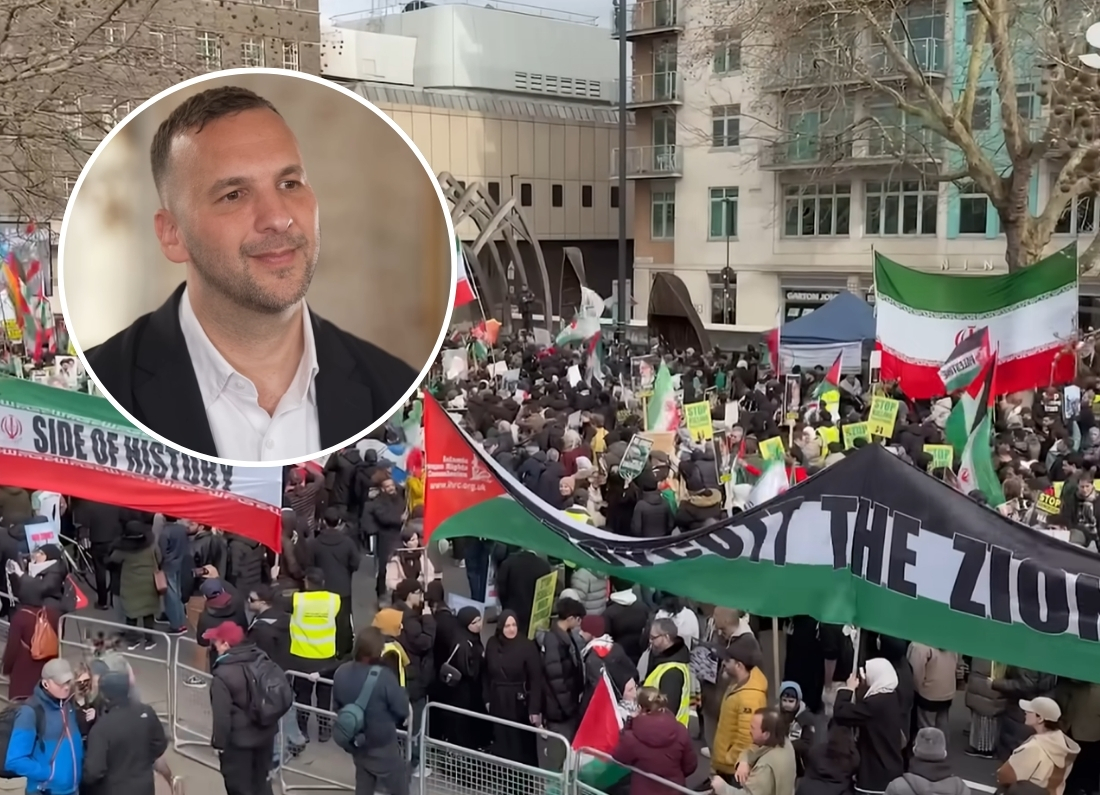
The UK government has been holding near-daily COBR meetings and drawing up contingency plans for potential mass demonstrations, as the economic fallout from the Iran war pushes food, fuel and energy prices toward levels that experts warn could trigger widespread public unrest – while Green Party leader Zack Polanski is asking why the government is preparing to suppress protests rather than act on the underlying crisis.
Downing Street held talks on the potential of mass protests over a cost of living crisis following the war in Iran, with representatives from several Whitehall departments holding conversations about the prospects of mass demonstrations due to high prices and shortages of key goods. Officials have also been preparing for possible anti-war demonstrations, particularly in communities with large Muslim populations, reflecting concerns similar to those seen during the Iraq War protests of 2003.
Communities Secretary Steve Reed has been tasked with overseeing “community cohesion” during the conflict, while any potential mass protests or rioting would fall under the responsibility of the Home Office.
A government spokesman sought to downplay the significance of the contingency planning: “While we don’t comment on COBR meetings, the government maintains contingency arrangements across a wide range of scenarios, however unlikely. That is exactly as the public would expect.” No 10 insisted the chance of mass protests was remote, although contingency planning in the Cabinet Office’s civil contingencies directorate is reportedly underway.
The economic picture facing households
The reason ministers are worried is clear in the data. The Iran war – which disrupted global energy supply chains by closing the Strait of Hormuz for weeks – has sent a shockwave through the British economy that experts say will continue long after the ceasefire holds.
The Food and Drink Federation has issued a stark warning that food inflation in the UK could climb to 9% by the end of 2026 – nearly tripling its previous forecast of 3.2% made before the Middle East conflict erupted. Academics advising the government have suggested it could go even higher. ITV News consultants at the Food Systems Institute at the University of Nottingham, Bournemouth University and the University of Exeter calculated that food inflation could rise to up to 12% in 2026, based on energy prices remaining at 50% above pre-war levels.
The Food and Drink Federation’s forecast of at least 9% food inflation by year end came as the British Retail Consortium’s Andrew Opie said the conflict had left a “lasting mark” on supply chains. He said: “Higher shipping, fertiliser, insurance and commodity costs will all continue to feed into inflation, compounding domestic and policy-related costs already affecting businesses.”
The impact on individual household budgets is being felt across multiple fronts simultaneously:
Fuel: Petrol and diesel prices have climbed to their highest level since late 2022. The RAC says oil prices would need to stay lower for several weeks before drivers see a noticeable drop at the pumps.
Energy bills: Although gas prices in Britain fell by 18% following the ceasefire announcement, they are still about a third higher than before the conflict began. Ofgem’s July price cap review is expected to push a typical annual household bill up by nearly £300 to £1,929.
Food shopping: A ceasefire is not expected to bring food prices down quickly because energy, fertiliser and shipping costs remain high. Farmers have raised alarms about potential shortages of domestic tomatoes, cucumbers, peppers and aubergines if government aid is not forthcoming to offset surging energy costs.
Mortgages: City traders are now pricing in just one interest rate rise this year. Last month, expectations were for as many as three increases from the current 3.75% rate, with 1.3 million borrowers already paying more.
Flights: Air fares are expected to remain high as airlines continue to face higher jet fuel costs, with the effects of the conflict likely to last for months.
The damage that is already locked in
Economists have been clear that the ceasefire – however welcome – does not undo the economic harm already done. Kallum Pickering, chief economist at Peel Hunt, said: “Even if this truce marks the genuine end of fighting, some economic damage is already baked in. Expect higher inflation in the second half of the year and slower growth for major parts of the global economy compared to the pre-war outlook.”
The International Energy Agency described the situation caused by the war as the “greatest global energy security challenge in history”, echoing the 1970s energy crisis through acute supply shortages, currency volatility, inflation and heightened risks of stagflation and recession. The European Central Bank warned that a prolonged conflict would likely trigger a period of stagflation and push major energy-dependent economies including Germany and Italy into technical recession by the end of 2026.
Britain is particularly exposed. The UK was the worst hit by the war-induced global bond market sell-off, signalling weakness in the UK gilts market. The Bank of England’s expected trajectory of falling inflation has been abandoned – instead the central bank now faces the choice between raising interest rates to tackle rising prices or holding them to avoid tipping the economy into recession.
The protest question – and Polanski’s challenge
The revelation that ministers are preparing for mass protests has prompted immediate political controversy – not because such preparations are surprising, but because of what they say about the government’s priorities.
Green Party leader Zack Polanski delivered a pointed response to the story, asking: “Why is the Labour government preparing a crackdown on protests against the illegal war it’s enabling – and the cost-of-living crisis it risks fuelling – instead of acting to stop people struggling?”
The question cuts to a tension that has run through the government’s handling of the entire Iran crisis. Starmer has insisted Britain is not a party to the conflict while simultaneously permitting US bombers to use British bases for strikes. He has said the war is “not our war” while British soil has been used to fly missions over Iran. He has promised to protect British living standards while the bills keep rising.
The political character of any protests that do emerge is, as one analysis noted, “up for grabs.” The right blame fuel taxes and green energy policies for high prices. But cutting taxes and abandoning climate change commitments do not solve the root causes of the problem, which include the privatised energy sector that prioritises profits and has not invested in significant storage capacity to mitigate price shocks.
Chancellor Rachel Reeves indicated ministers would step in to support struggling households, but said support would probably be means-tested. The government is understood to be exploring options for targeted cost of living support similar to the energy price guarantee introduced during the Ukraine energy crisis in 2022 – though no formal announcement has been made.
The theft indicator
One detail buried in the reporting offers a bleak illustration of where the country is. Theft levels are now said to be worse than in 2022, when prices surged after Russia’s invasion of Ukraine – the last time Britain faced an energy shock of comparable severity. The rise in shoplifting during the cost of living crisis has been well documented, and its return as a significant social indicator suggests that the economic pressure on lower-income households is already being felt in the most immediate and concrete way.
Food bank usage has not fallen since the ceasefire announcement. Supply chains remain disrupted. And the Ofgem price cap review in July – which is expected to push the average annual energy bill to £1,929 – has not yet landed.
The government’s contingency planning for protests is, in one sense, entirely routine – any competent administration plans for civil contingencies. But the juxtaposition of that planning with the absence of meaningful action on the underlying causes of the crisis – the war that Britain’s own bases helped enable, the energy dependence that decades of policy choices created, the privatised supply chains that have no resilience to external shocks – is one that the public, and politicians like Polanski, are unlikely to let pass without scrutiny.
You may also like: The media won’t tell you this – but the Green Party is now a serious force in British politics



Leave a Reply