

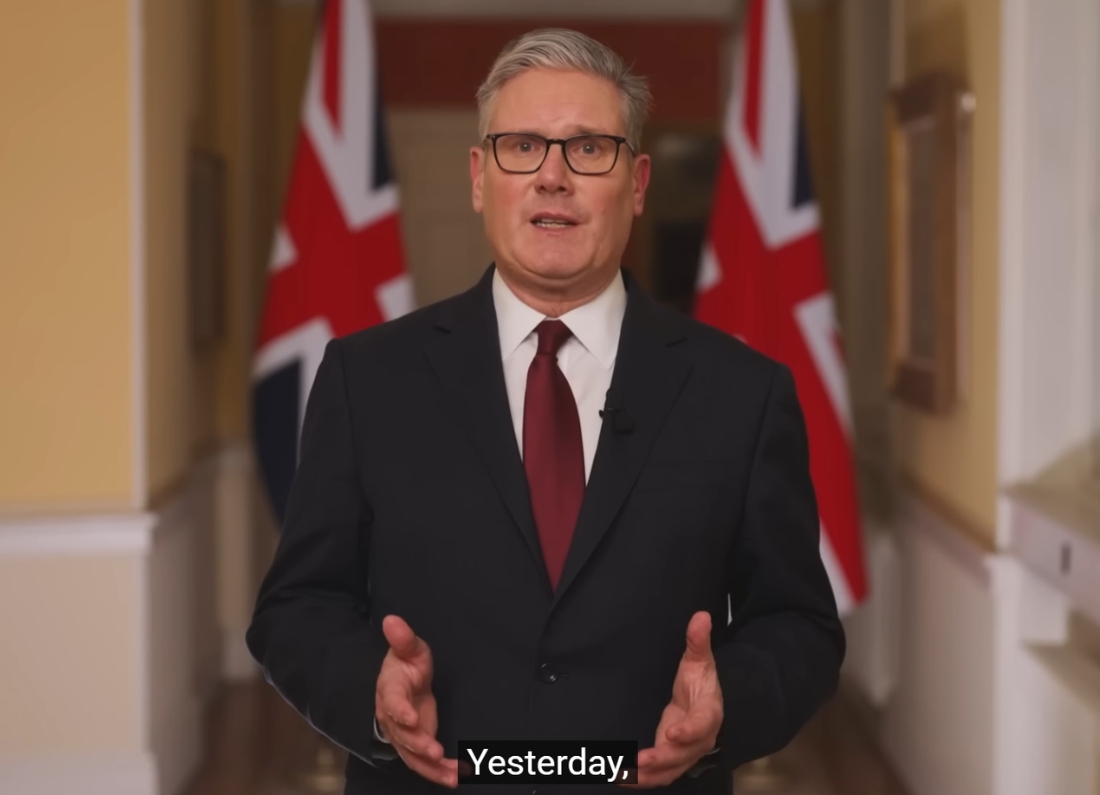
New polling from YouGov has found that 63% of Britons would vote to rejoin the European Union if a fresh referendum were held today – a striking reversal of the 52-48% result that took Britain out of the bloc in 2016, and a finding that cuts across age groups in ways that will unsettle those who assumed “Bregret” was primarily a generational phenomenon.
The survey, published in February, finds only 37% of the UK population would vote to remain outside the EU – meaning the hypothetical margin for rejoining would be almost exactly as wide as the original margin for leaving, but in the opposite direction. With the tenth anniversary of the 2016 referendum approaching on 23 June, the findings land at a politically charged moment: Keir Starmer has just signalled the most ambitious EU reset of his premiership, while Donald Trump’s repeated attacks on Britain have accelerated a sense across the political mainstream that closer European ties are in the UK’s strategic interest.
The numbers in detail
The headline 63-37 split in favour of rejoining is striking enough, but the breakdown by demographic group reveals just how comprehensively opinion has moved.
Among 18 to 25-year-olds – many of whom were too young to vote in 2016 – support for rejoining is overwhelming, with 86% saying they would back EU membership and just 14% preferring to remain outside. That generation will form an increasingly dominant share of the electorate over the next decade.
More surprising to many analysts will be the retired voter figures. Older British voters were long assumed to be the bedrock of Leave support – and indeed, the 2016 result was heavily influenced by high turnout among older demographics who voted to Leave in large numbers. But the new polling shows that even among retired voters, 60% would now vote to rejoin, with just 40% preferring to stay out.
That figure represents a profound shift. It suggests that “Bregret” – the term coined to describe voters who supported Brexit and have since changed their minds – is not simply a young person’s phenomenon driven by those who felt robbed of their European identity. It has spread into precisely the demographic that delivered the Leave majority in the first place.
A decade of polling movement
The 2026 figures are the latest in a consistent trend that has been moving in one direction since the early years after the referendum. In early 2021, Britons were divided almost evenly on the question of rejoining, with 42% in favour and 40% against. At that point, just 8% of Leave voters said they would now vote to rejoin. By 2023 those figures had shifted meaningfully, and by early 2026 the movement has been dramatic.
The most recent broad YouGov survey found that 56% of Britons believe the decision to leave the EU was wrong, with only 31% maintaining it was the right decision. Asked whether Brexit has been more of a failure than a success, 61% said it had been more of a failure, 20% said it was neither, and just 13% considered it a success.
Of those who see Brexit as a failure, 88% place the blame on the Conservative Party and 84% on Boris Johnson specifically. That framing – in which Brexit is understood primarily as a Tory failure rather than a democratic decision the public is broadly content with – has significant implications for how the political conversation around a potential return to the EU may develop.
The gap between opinion and policy
Despite the polling shift, no major party is currently advocating EU membership. Keir Starmer has consistently and explicitly ruled out rejoining the single market or customs union, let alone full EU membership. His EU reset – announced with new ambition this week in the context of the Iran war and the deteriorating relationship with Trump’s America – is framed in terms of closer partnership, not reintegration.
Almost two thirds of Britons now say they want a closer relationship with the EU, a stance that is popular across all main parties and even among 60% of Leave voters. But the question of whether rejoining is a political priority right now is more contested: 44% said attempting a return to the EU would be the wrong priority given the other issues Britain currently faces, compared to 37% who believe it would be the right priority.
That distinction matters. There is a meaningful difference between believing Brexit was a mistake and wanting the government to spend its political capital pursuing membership. The polling consistently shows large majorities in the first camp, but more ambivalence about the second – suggesting that while the public mood has shifted significantly, there is no overwhelming clamour for an immediate referendum.
Britons are, however, open to the idea over a longer timeframe. Around 45% say there should be a referendum in the next five years, rising to 49% over ten years, and 52% over a 25-year timeframe.
Why opinion has moved
The shift in public opinion on Brexit and EU membership has been driven by several interconnected factors that have accumulated over the past six years.
Economic concerns have been consistently prominent. Trade barriers erected after leaving the single market have added friction and cost to British businesses, particularly smaller exporters and those in the food and agricultural sector. The promised post-Brexit trade deals have largely failed to compensate – the UK-Australia deal, for example, has been estimated to add a fraction of a percent to GDP. The independent Office for Budget Responsibility has estimated that Brexit has reduced UK trade intensity by around 15%.
Freedom of movement – or rather its loss – has also remained a live concern, particularly for younger Britons who grew up with the right to live and work across 27 countries. University exchanges, early career opportunities, and the simple ability to move freely across the continent are all now more complicated for British citizens in ways that were abstract before 2016 and very concrete after.
The geopolitical backdrop has also changed the framing of the debate. The Iran war and Trump’s America have made European unity feel like a strategic imperative in a way that was harder to articulate in the relative stability of 2016. Starmer’s decision to explicitly describe Brexit as having caused “deep damage” and to pursue the most ambitious EU reset of any post-Brexit British leader represents a tacit acknowledgement that the political case for European closeness has strengthened.
What it means for British politics
The polling creates an interesting political dynamic. The party that is most closely identified with Brexit – Reform UK – continues to oppose any closer EU relationship, and its voters remain among the most committed to staying outside the EU. Only 16% of Reform voters say they would vote to rejoin.
But the broad electorate has moved well beyond that position. Even among Labour voters who elected the current government, 56% say that rejoining the EU is the right priority, as do 59% of Green voters and 55% of Liberal Democrats. The Lib Dems – the most explicitly pro-European of the major parties — remain the clearest voice for eventual EU membership, though even they have stopped short of campaigning for an immediate referendum.
The question is whether any political party will be willing to move to where the public already is. The 2026 polling suggests that if a second referendum were held tomorrow, the result would not be close. Whether any government will have the political courage to call one – and face the upheaval that would follow – is an entirely different question.
What is now beyond serious dispute is that the settled, irreversible democratic verdict that Brexit’s advocates claimed in 2016 does not describe where the British public currently stands.
You may also like: Starmer signals major UK pivot towards EU as Trump taunts strain transatlantic ties






Leave a Reply