

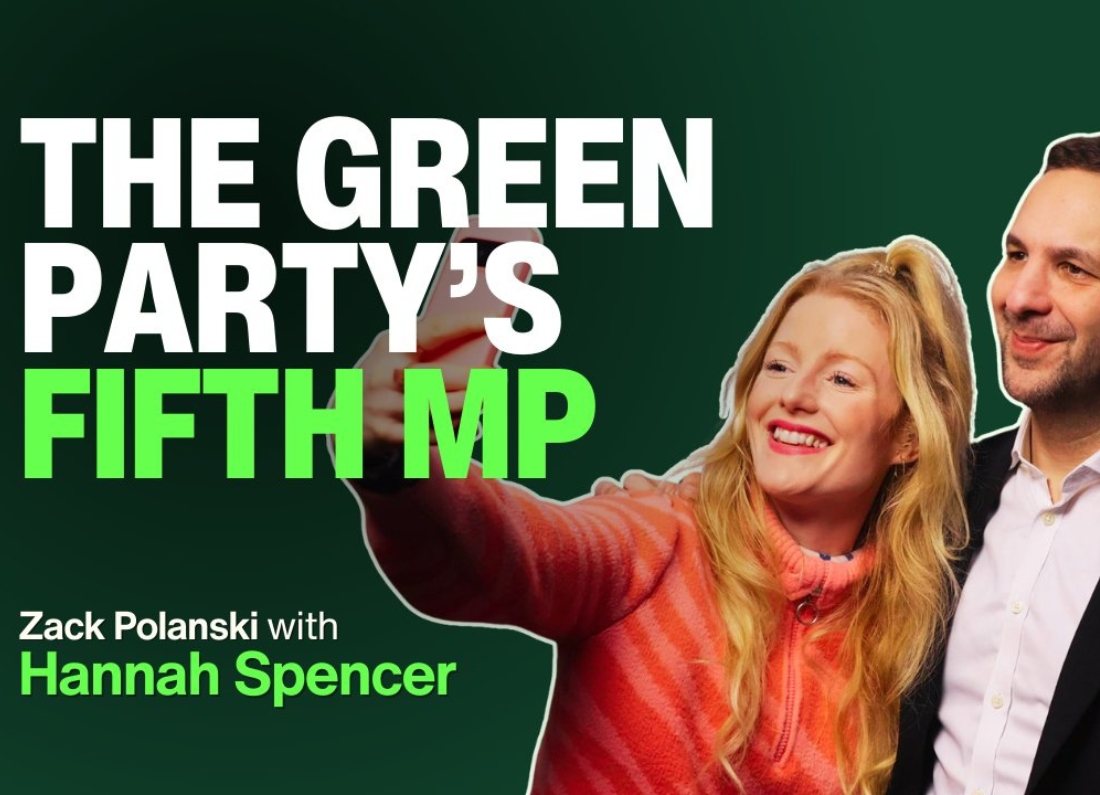
Bookmakers have shortened the odds on the Green Party winning the Gorton and Denton by-election after a surge of interest in the contest and reports of significant money backing the Greens’ candidate, Hannah Spencer.
The by-election takes place on 26 February and was triggered by the resignation of the sitting MP, Andrew Gwynne, on health grounds.
While betting markets are not the same thing as polling, they can shift quickly when bookmakers receive a run of one-sided wagers – especially in a short, high-profile campaign where national attention is focused on a single seat. In this case, the movement has put the Greens firmly in the spotlight and sharpened the political narrative around tactical voting, turnout and whether Reform UK can convert national momentum into a Westminster win.
What the betting move actually means
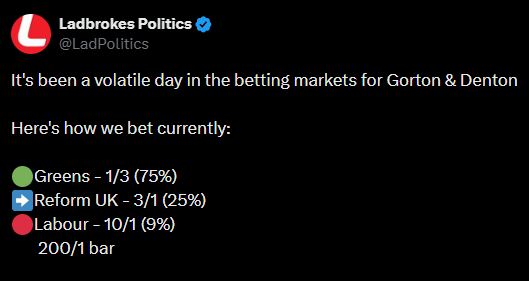
Reports of a flurry of large bets have been followed by a sharp change in prices, with the Greens now widely described as clear favourites, Reform UK second, and Labour drifting behind.
Bookmakers shorten odds when they need to reduce exposure – essentially making a result “more expensive” to back – while lengthening the odds on others to attract balancing money. This is less a prediction and more a reflection of where the risk is sitting on a bookmaker’s book at that moment.
It is also why betting odds can sometimes change dramatically even without any new public polling, major endorsement, or campaign event. In a by-election, relatively small volumes of money compared with a general election can move the market quickly.
A febrile contest with national consequences
The Gorton and Denton race has become a high-stakes test for the main parties, partly because it comes at a time when Reform UK has been pushing to present itself as a genuine electoral force, not just a protest vehicle.
Labour, meanwhile, has faced repeated questions about whether it can consolidate an anti-Reform vote in seats where the Greens also have a presence. The dynamic has made tactical voting arguments more central than they usually are this early in a campaign – with each party trying to persuade voters that only they can win locally.
In practical terms, that means Labour will aim to frame the contest as a straight fight with Reform, urging progressive voters not to “split the vote”, while the Greens will argue that they are the best-placed challenger on the ground and that momentum is moving their way.
Why bookmakers and politics don’t always align
It is tempting – particularly on social media – to treat betting prices as a definitive forecast. They are not.
Polling asks a representative sample how they intend to vote. Betting markets reflect the behaviour of those willing to wager money, which can be influenced by activists, partisans, high-information political obsessives, or a handful of wealthy punters. The two can point in the same direction, but they are not measuring the same thing.
That matters because a headline about “big money bets” can take on a life of its own, shaping perceptions of momentum, which then shapes media coverage, which can in turn influence tactical calculations among voters.
Momentum stories can become self-reinforcing – but they can also collapse quickly if a new poll lands, a local row blows up, or the ground campaign surprises people.
A word of caution about political betting
Political betting has also become more sensitive in recent years, following high-profile investigations and charges linked to wagers on election-related information. In the UK, the Gambling Commission has investigated allegations of wrongdoing connected to election betting, and authorities have previously brought charges in cases where it was suspected that confidential information had been used.
None of that is directly about this by-election market move – but it is part of the wider context: election betting is not a harmless parlour game when it intersects with public office, privileged information, or the perception of unfairness.
For voters trying to understand what is happening in Gorton and Denton, the safest interpretation is simple: the market has moved because people have backed one outcome heavily, not because a result is guaranteed.
What to watch between now and polling day
With the vote on 26 February, three things are likely to decide whether the shortened odds prove meaningful:
First, turnout. By-elections are notoriously volatile because fewer people vote, and motivated supporters can have an outsized impact.
Second, tactical voting behaviour. If Labour and Green-leaning voters begin acting on a shared “stop Reform” instinct – but disagree on which party is best placed – it could decide the result.
Third, candidate scrutiny and campaign discipline. By-elections concentrate pressure. Missteps that would be a footnote in a general election can become defining moments when a constituency is under a media microscope.
For now, the betting move adds another layer of drama to an already intense contest – but the basic reality remains: by-elections are unpredictable, and voters, not odds, decide outcomes.
You may also like: UK by-elections explained: what happens when MPs defect




Leave a Reply