

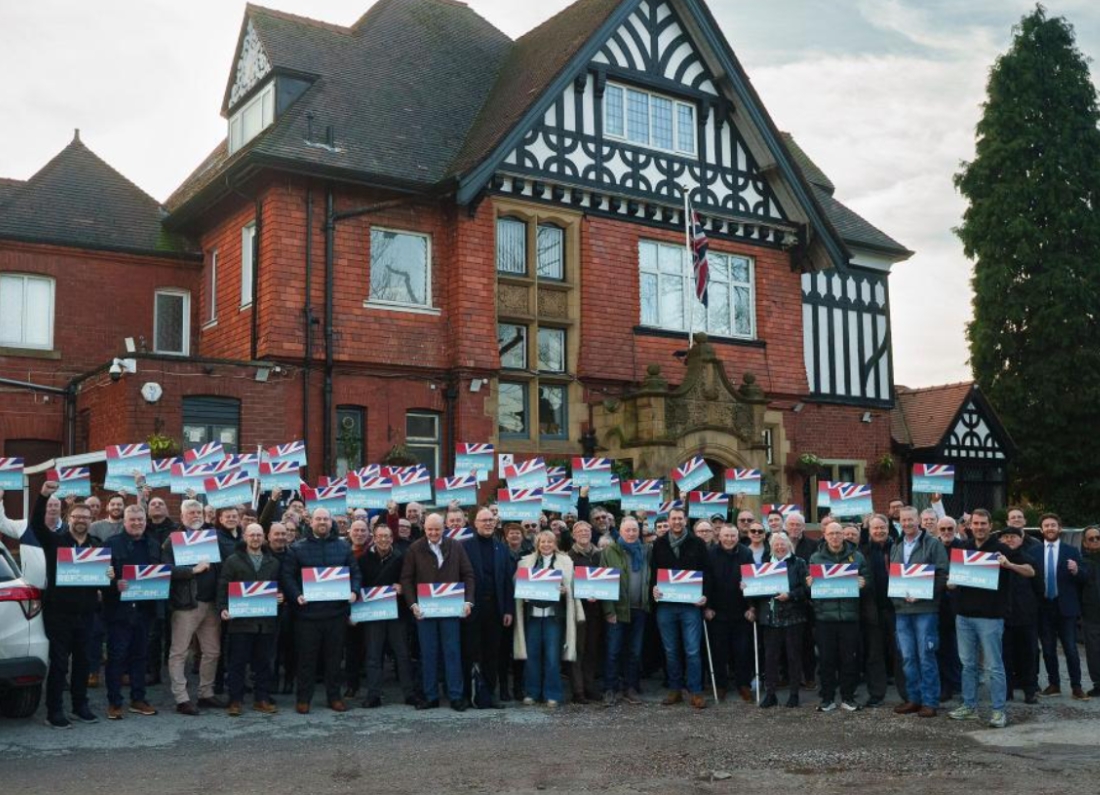
Reform UK has been mocked for a rocky start to its campaign in the Gorton and Denton by-election after senior figures appeared to stage a photo opportunity outside the constituency they are trying to win.
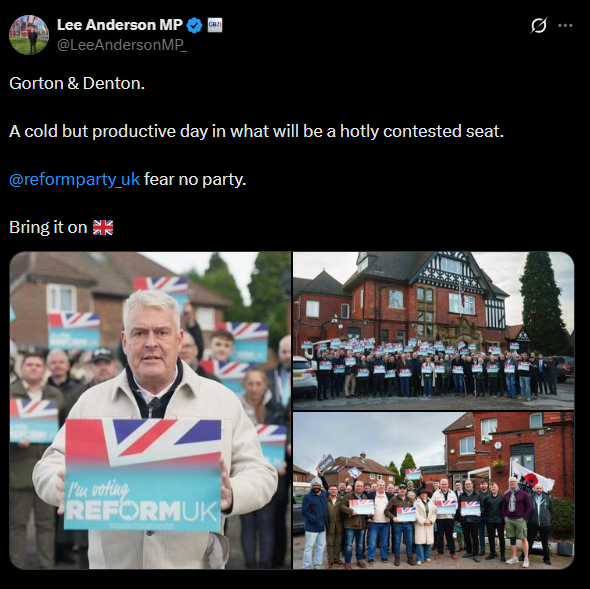
Lee Anderson, Reform’s chief whip and MP for Ashfield, posted pictures online of himself alongside party activists, describing it as a day of campaigning in Gorton and Denton. But the backdrop in the images -Stanley House Function Rooms – is in Audenshaw, which sits just outside the seat’s boundary in the neighbouring constituency of Ashton-under-Lyne.
The slip has handed Labour an early talking point in a contest already expected to attract intense national attention. The by-election, scheduled for Thursday 26 February 2026, follows the resignation of Andrew Gwynne and comes amid wider debate about defections, party “mandates”, and Reform’s push to turn high-profile media moments into votes on the ground.
A campaign launch that quickly became the story
Anderson’s post struck a confident tone, calling it “a cold but productive day” in what he said would be a “hotly contested seat”. The problem, critics argued, was not the message but the map.
Angela Rayner, Labour’s former deputy leader and the MP for Ashton-under-Lyne, seized on the location to ridicule Reform’s organisation. She told the Mirror that Reform “can’t even find the Gorton and Denton constituency on a map”, adding that Labour would be focusing on “local residents’ priorities like tackling the cost of living” while Reform worked out where the seat actually is.
Labour Party chair Anna Turley also piled in, accusing Reform of “campaigning in the wrong constituency” and arguing the episode showed the party would not stand up for residents in Gorton and Denton.
While the exchange has a comic edge, it also reflects something more serious about the kind of politics both major parties expect from the contest: tight margins, heavy national messaging, and an unusually high level of scrutiny on basic competence.
Reform’s response: “absolute rubbish” and a parking argument
Reform rejected the accusation that it had fundamentally misunderstood the constituency. Anderson described the claims as “absolute rubbish” and said the group chose the location because it had the space to accommodate a large number of volunteers, before heading into the target wards to canvass.
That defence has not stopped opponents from portraying it as a symbol of a party still learning how to translate online attention into constituency-level campaigning. It also underlines a practical point that tends to get lost in Westminster commentary: for voters, local recognition and familiarity can matter as much as national brand – especially when a seat includes multiple communities and distinct neighbourhood identities.
Why this by-election is already politically charged
The Gorton and Denton contest has become a proxy battle for bigger arguments within and between parties.
Reform has selected Matt Goodwin, a GB News presenter and former academic, as its candidate. His selection has drawn criticism over previous comments about British identity and ethnicity, which Goodwin has been pressed on repeatedly since his announcement.
Labour, meanwhile, faced internal turmoil after the party blocked Greater Manchester mayor Andy Burnham from seeking selection – a decision that has fuelled headlines about Labour discipline, leadership insecurity, and the strategic fear of triggering another major election contest in the region.
Against that backdrop, even a minor campaign misstep is likely to be amplified. Parties expect a febrile atmosphere, with national figures parachuting in, activists mobilising quickly, and social media being used to shape perceptions of momentum.
The wider “mandate” row in British politics
The episode also lands in the middle of a growing debate about political legitimacy and party switching.
Although Anderson’s mistake is about geography, critics argue it fits a pattern of politics that prioritises theatrics over accountability. Recent weeks have seen louder calls – from voters and rivals – for MPs who defect to face constituents in by-elections, even though the law does not require it.
That tension has been sharpened by high-profile switches to Reform and the arguments used to justify them. The mandate debate is likely to continue to hover over the campaign, particularly as Reform seeks to present itself as insurgent and anti-establishment while recruiting familiar Westminster names.
What happens next in Gorton and Denton
With polling day set for late February, the immediate question is whether this early error becomes a footnote or the first in a series of unforced mistakes.
Reform will aim to refocus attention on its core campaign themes and prevent the narrative from hardening into one about organisational competence. Labour will want to avoid being dragged into purely tactical messaging and instead persuade voters it still understands the area – especially after the Burnham controversy and the wider national difficulties Labour has faced in byelections and local contests.
For voters, however, the test is likely to be simpler than the national spin suggests: who is visible, who is accessible, and who sounds like they understand the pressures facing households, public services, and neighbourhoods in Greater Manchester right now. The parties will spend the next month trying to prove that point – ideally in the right place.
You may also like: Braverman says she “believes in by-elections” but won’t trigger one after Reform switch



Leave a Reply