

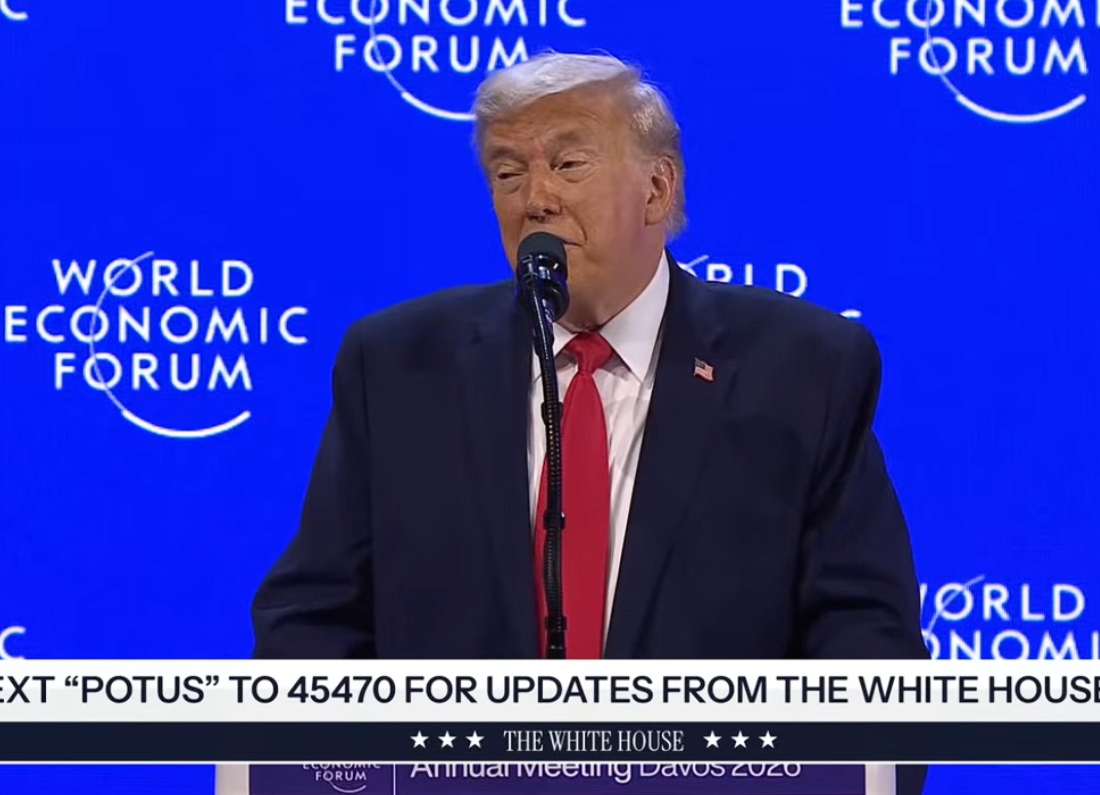
Donald Trump has launched a fresh broadside at Europe – including the UK – claiming the continent is “not heading in the right direction” as tensions over Greenland spill into wider rows on trade, energy and Nato cohesion.
Speaking at the World Economic Forum in Davos, the US president complained that friends returning from Europe no longer “recognise it” – “and that’s not in a positive way, that’s in a very negative way” – before adding: “I love Europe… but it’s not heading in the right direction.”
His comments land in the middle of an extraordinary standoff between Washington and European allies over Greenland, the vast Arctic territory that is part of the Kingdom of Denmark. Trump has repeatedly pushed the idea of the United States acquiring Greenland and has used tariff threats as leverage against countries that oppose him.
In the UK, Downing Street has tried to keep the temperature down publicly, but ministers have also been forced into sharper language as Trump’s rhetoric has intensified and his administration has suggested allies should “go along” with his plans.
🌍 Europe “not heading in the right direction”, Trump tells Davos
Trump’s Davos remarks were framed as a warning, but delivered with his usual mix of grievance and bravado. He argued that Europe has become unfamiliar to visitors, and suggested that its economic and political direction is deteriorating.
He also revived a familiar attack line against renewable energy, deriding “windmills all over Europe” and calling them “losers”, while claiming European electricity prices have surged.
European leaders have been trying to hold a united line over Greenland and tariffs, wary that a public split would embolden Trump – and rattle markets – at a time when transatlantic relations are already strained by trade threats and security arguments around the Arctic.
🇬🇧 Trump singles out UK over North Sea drilling and windfall tax
In one of the most pointed sections of his Davos address, Trump targeted the UK’s energy policy, criticising the government’s stance on new North Sea drilling licences and the tax burden on producers.
He claimed Britain “produces just one third of the total energy from all sources that it did in 1999”, and insisted the North Sea is “not depleted”, adding: “It’s got 500 years.” He also claimed oil companies face a “92%” take on revenues.
Those claims are contested. UK oil and gas production has fallen substantially since its peak and long-term decline has been widely documented, while the combined headline tax rate on North Sea profits has been set far below Trump’s “92%” figure (even after recent increases linked to windfall measures).
The political significance, though, is clear: Trump is now directly using UK domestic policy – and the cost of energy – as ammunition in a broader confrontation over Greenland and the balance of power inside Nato.
🧊 Greenland: tariffs, sovereignty and Nato pressure
Trump’s Greenland push has become the defining flashpoint in the current US–Europe relationship. He has argued the US “needs” Greenland for national security and has refused in recent weeks to fully rule out coercive options, even as Denmark and Greenland have insisted the territory is not for sale.
European governments have responded by stressing sovereignty and territorial integrity, while also highlighting that Arctic security is a shared Nato concern. The dispute is especially sensitive because Denmark is a Nato member, and any attempt to seize territory by force would strike at the alliance’s foundations and trigger a crisis of credibility across the bloc.
Trump has also been pressing a narrative that the US carries allies who don’t do enough in return – a theme he repeated at Davos when discussing Greenland and European defence responsibilities.
🗣️ “You can say no and we will remember”
Alongside criticism of Europe and the UK, Trump paired his Davos message with an unmistakable warning about consequences for resistance.
He argued there is “nothing wrong” with the US acquiring territories and said he wanted “immediate negotiations” on Greenland’s “acquisition”, framing it as a small request compared with what he claims the US has provided to Nato over decades.
In one of the starkest lines, he warned allies that refusal would not be forgotten – a line that has landed badly in capitals already rattled by tariff threats and the idea of using trade penalties to force a geopolitical outcome.
🏛️ Starmer hardens tone as pressure grows at home
Keir Starmer has tried to keep the “special relationship” functional, but the Greenland row has forced the government into a more explicit defence of principle.
In the Commons this week, Starmer told MPs the UK would not be bounced into abandoning its stance on Greenland’s future under tariff pressure, describing Britain’s position as rooted in values and allies’ sovereignty – even as he continued to signal he wants “calm discussion” rather than escalation.
The episode is also politically awkward for Starmer domestically: it combines the cost-of-living sensitivity of tariffs and energy with a foreign policy dispute where Trump is demanding visible deference from allied governments.
⚖️ The wider problem: does Nato still behave like an alliance?
Underpinning all of this is a question European leaders are increasingly being forced to ask out loud: can Nato function normally if the US president treats allied sovereignty as negotiable and uses tariff threats against partners to get his way?
Trump has hinted the alliance should be “very happy” with whatever deal emerges, but the strain is real. Nato’s Article 5 collective defence clause has only been invoked once – after 9/11 – and European officials privately fear that any perception the US would not stand by allies could destabilise deterrence at the very moment Russia is testing Europe’s nerves.
For now, European governments are attempting to present a united front: protect Greenland’s right to decide its future, keep Nato aligned on Arctic security, and avoid a trade war that would punish households and businesses on both sides of the Atlantic.
You may also like: Mark Carney tells Davos the “rules-based order” is over as Trump’s Greenland threat looms





Leave a Reply