

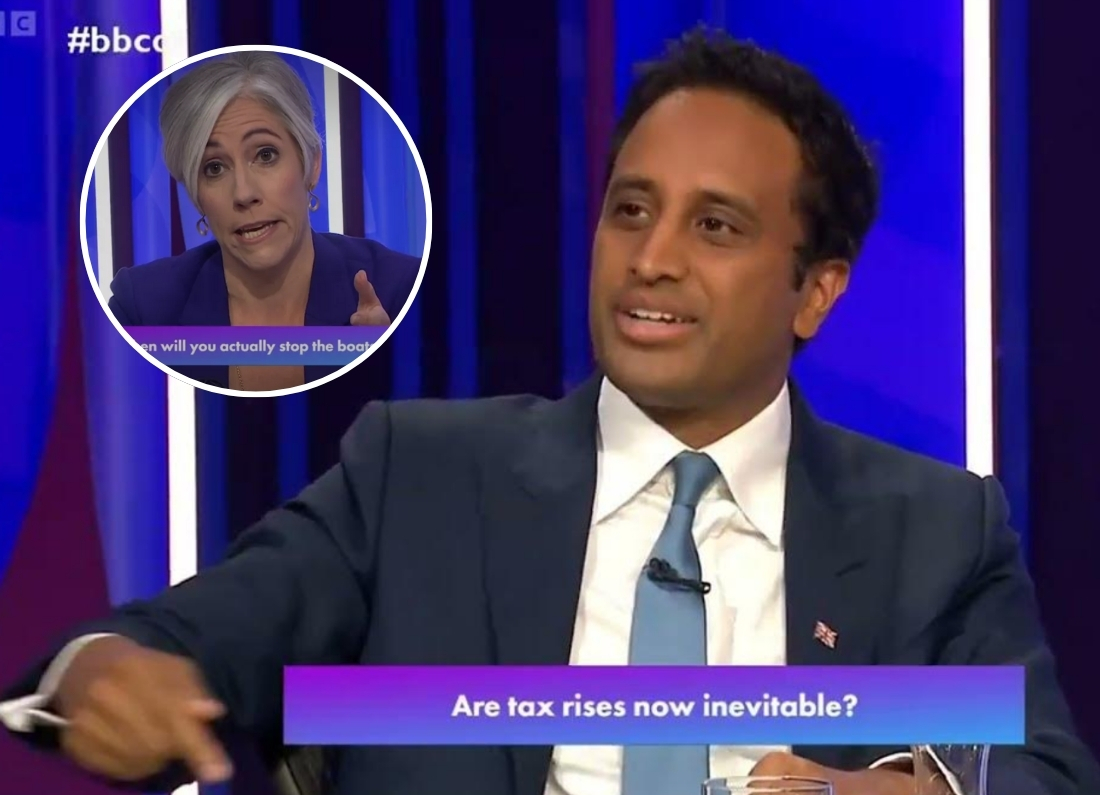
Audience members burst into applause during BBC Question Time after Liberal Democrat deputy leader Daisy Cooper delivered a sharp attack on Nigel Farage’s role in Brexit and the surge in small boat arrivals.
The immigration-focused edition of the programme – filmed in Dover, a frontline area in the Channel crossings crisis – quickly descended into confrontation as Ms Cooper challenged Reform UK figure Zia Yusuf and directly blamed Farage for Britain’s asylum system turmoil.
🔵 ‘Farage should be here apologising to the British people’
Ms Cooper told the audience that Britain saw zero small-boat arrivals in 2017, citing research from Durham University, before arguing that the collapse in returns agreements and border coordination after Brexit fuelled the dramatic rise to 46,000 crossings per year.
She said:
“It was because of the botched Brexit deal pushed through by Boris Johnson, championed by Nigel Farage. Nigel Farage should be here tonight apologising to the British people.”
Her remarks prompted loud applause from the Dover audience – a rare moment of unified reaction on one of the most divisive questions in British politics.
🔥 Panel showdown erupts as Cooper clashes with Reform UK
Reform UK’s Zia Yusuf reacted with a smirk as Cooper insisted voters had “other choices” than Reform UK and defended the “silent majority” who, she said, reject hostility toward migrants.
Conservative MP Kieran Mullan jumped in, calling Cooper’s claim “utter nonsense.”
Dr Mullan argued that small-boat arrivals surged across Spain and Italy too – pointing to a Europe-wide pattern, not just a UK-specific Brexit outcome.
🛂 Immigration tensions dominate – again
This latest clash continues a trend on Question Time, where immigration has repeatedly triggered heated exchanges and viral moments.
In October, right-wing commentator Matt Goodwin was publicly dismantled by economist Faiza Shaheen, who accused him of misrepresenting asylum seekers. Her defence – “migrants want the same things as us” – was met with repeated applause and widely shared online.
The Dover episode followed the same pattern: polarised views, emotional testimony, and a recurring political question – who is responsible for the crisis?
You may also like: Brexit Party’s pro-Kremlin voting record resurfaces at worst possible time for Reform



Leave a Reply