

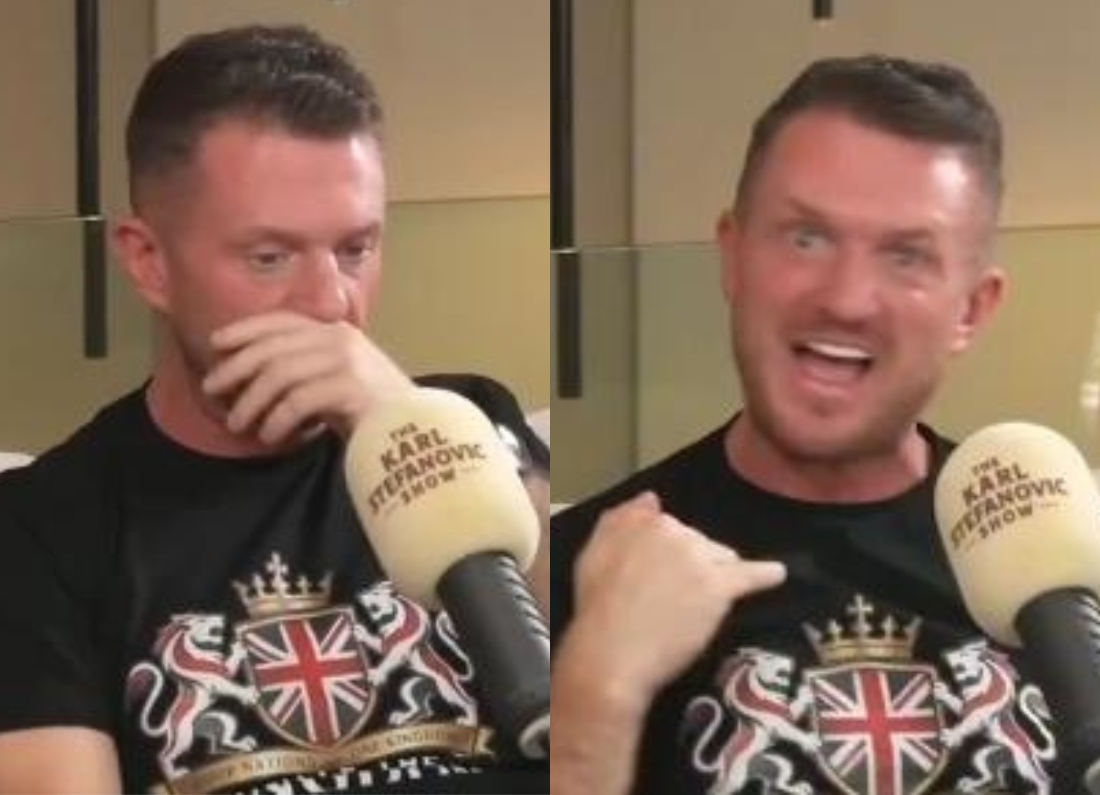
Far-right activist Tommy Robinson has been found guilty of harassing two journalists and causing them to fear violence after a jury heard how he hired private investigators to track down their home addresses and published photographs of their families online.
Robinson, whose real name is Stephen Yaxley-Lennon, was convicted on two counts of harassment causing fear of violence at Southwark Crown Court on Wednesday, following a trial examining his conduct towards journalists investigating his activities during the Southport riots in August 2024.
The 43-year-old had denied both charges, claiming that he was responding to a newspaper report which he believed had placed his own family in danger.
But jurors accepted the prosecution’s case that Robinson’s actions amounted to intimidation, with one journalist requiring a close protection officer and another being forced to move house.
The jury deliberated for 11 hours and 25 minutes before returning majority guilty verdicts of 10 to two on both charges.
Robinson was granted bail ahead of sentencing on 16 December.
Journalists targeted after reporting on Robinson’s Cyprus holiday
The case arose from an investigation carried out by the Daily Mail and its sister publication MailOnline during the violent disorder that followed the murders of three young girls in Southport in July 2024.
Robinson had been posting about the unrest on social media while holidaying in Cyprus with his family.
The newspaper dispatched freelance investigative reporter Andrew Young and a photographer to the island to investigate his activities.
Following publication of the article, which reported on Robinson’s social media activity during the disturbances, he began publicly criticising Young and Daily Mail editor Jacob Dirnhuber.
Robinson maintained that the newspaper had endangered his family by revealing details about where he was staying.
He subsequently told jurors that he had been frightened about their safety and believed his response was justified.
Prosecutors, however, argued that his behaviour went far beyond a complaint about the newspaper’s reporting.
They alleged that Robinson had deliberately set out to frighten the journalists responsible for the article and make them fear that violence could follow.
The jury accepted the prosecution’s case.
Robinson hired private investigators to find their homes
During the trial, jurors heard that Robinson had commissioned private investigators to establish the home addresses of Young and Dirnhuber.
The investigators also sought the address of Daily Mail editor-in-chief Ted Verity.
Prosecutors said this was part of a campaign designed to intimidate those involved in the newspaper’s coverage.
Robinson subsequently shared photographs of Dirnhuber outside his home on X, while also publishing cropped images of members of Young’s family.
The impact on the journalists was considerable.
Young was provided with a close protection officer by the Daily Mail after images of his wife and children appeared on Robinson’s social media account.
Dirnhuber moved house because of fears surrounding the harassment.
Another journalist involved in the newspaper’s coverage, George Odling, also left his family home after becoming concerned about the publicity surrounding his colleagues.
The offences for which Robinson was convicted related specifically to Young and Dirnhuber.
The prosecution described his conduct as a calculated attempt to retaliate against journalists for carrying out their work.
‘I’m coming to get you’
Some of the most disturbing evidence concerned Robinson’s direct communications with those involved in the newspaper investigation.
The court heard that he telephoned Young on 5 August 2024, the day after the MailOnline article was published.
During the call, prosecutors said Robinson became increasingly menacing.
“I’m coming to get you,” he told the reporter.
Dirnhuber also received a direct message warning that Robinson would visit his home.
“I’ll be knocking at your door,” the message said.
The court additionally heard evidence from Daily Mail editor-in-chief Ted Verity, who received a voicemail in which Robinson claimed to have located those involved in the reporting.
The prosecution argued that these were not simply angry responses to a newspaper article.
Taken alongside the private investigators, photographs and social media posts, they formed part of a sustained campaign which caused the journalists to fear violence.
Robinson had a substantial online following, something prosecutors said increased the potential danger to the people he identified.
Their concern was not limited to a possible confrontation with Robinson himself, but extended to the prospect that somebody influenced by his posts might target them.
Robinson admitted applying pressure but denied intimidation
Giving evidence in his own defence, Robinson acknowledged that he wanted to put pressure on the journalists.
However, he denied that hiring investigators to find their addresses was intended to frighten them.
He argued that the newspaper’s reporting had exposed his family to danger during a particularly volatile period.
Robinson told the court that he believed his relatives had been placed at risk and became emotional while discussing his relationship with his children.
He insisted that his actions should be understood as a response to those concerns rather than a deliberate attempt to intimidate reporters.
During the trial, Robinson also described a video he had published on X as a warning, maintaining that he had not intended to physically attack the journalists.
But the jury rejected his defence and accepted that his conduct had crossed the threshold into criminal harassment.
The convictions establish that his behaviour towards Young and Dirnhuber caused them to fear violence.
Prosecutors accuse Robinson of weaponising social media
Following the verdict, the Crown Prosecution Service delivered a forceful assessment of Robinson’s conduct.
Frank Ferguson, head of the CPS Special Crime and Counter Terrorism Division, said Robinson had used his online presence to carry out a campaign against journalists.
“Stephen Lennon weaponised social media and subjected two journalists to a campaign of harassment which caused them serious fear of violence.”
Ferguson said the evidence demonstrated how Robinson had targeted the victims through telephone communications, social media posts and material relating to their families.
The CPS stressed that reporters should not have to fear physical harm because of their professional work.
The statement also highlighted the wider implications of the verdict for journalists investigating controversial public figures.
Journalists routinely publish reporting that the subjects of their investigations may find uncomfortable, embarrassing or objectionable.
Those individuals are entitled to challenge inaccuracies, complain about coverage and pursue legal remedies where appropriate.
But the jury concluded that Robinson’s response had gone beyond criticism or legitimate disagreement.
His decision to locate journalists’ homes, publicise material involving their families and make threatening remarks amounted to criminal conduct.
Robinson thanked Elon Musk for funding legal defence
The trial also attracted attention because of Robinson’s connection to billionaire businessman Elon Musk.
Before proceedings began, Robinson published a message thanking the Tesla and X owner for funding his legal fees.
Musk has previously expressed support for Robinson and used his platform to amplify some of the activist’s claims.
Robinson, a former leader of the English Defence League, has built a substantial online following through campaigning on immigration, Islam and allegations concerning the British establishment.
He has repeatedly accused traditional media organisations of dishonesty and presented himself as a campaigner exposing subjects he believes journalists and politicians refuse to address.
The Daily Mail case involved an especially notable clash because the publication targeted by Robinson is itself a right-leaning newspaper.
The journalists were investigating his involvement in public discussion surrounding the 2024 disorder, rather than reporting on an ideological disagreement between Robinson and a left-wing political organisation.
Robinson was entitled to dispute the accuracy or fairness of their reporting.
The jury nevertheless concluded that his response constituted harassment causing fear of violence.
Jury returns guilty verdicts after more than 11 hours
The verdicts were delivered after the jury had spent three days considering the evidence.
Mr Justice Cavanagh issued a majority direction, allowing the jurors to return a verdict where at least ten of the twelve members agreed.
They subsequently found Robinson guilty by ten votes to two on each charge.
Robinson stood as the verdicts were announced before returning to his seat.
Members of the public gallery reportedly expressed disappointment, while Robinson shook his head as the judge addressed the court.
The convictions relate to events in August 2024, but the trial has brought renewed attention to the pressures faced by reporters who investigate individuals with large and politically engaged online audiences.
The court heard that Young required professional protection and Dirnhuber had to relocate as a result of the harassment.
The case also demonstrates the distinction between criticism of journalism and attempts to intimidate those responsible for it.
Robinson disputed the newspaper’s coverage and maintained that he acted out of concern for his family.
But jurors accepted that the conduct he directed towards the two journalists amounted to criminal harassment.
The former English Defence League leader remains on bail.
He will return to court on 16 December, when he is due to be sentenced for both offences.




Leave a Reply