

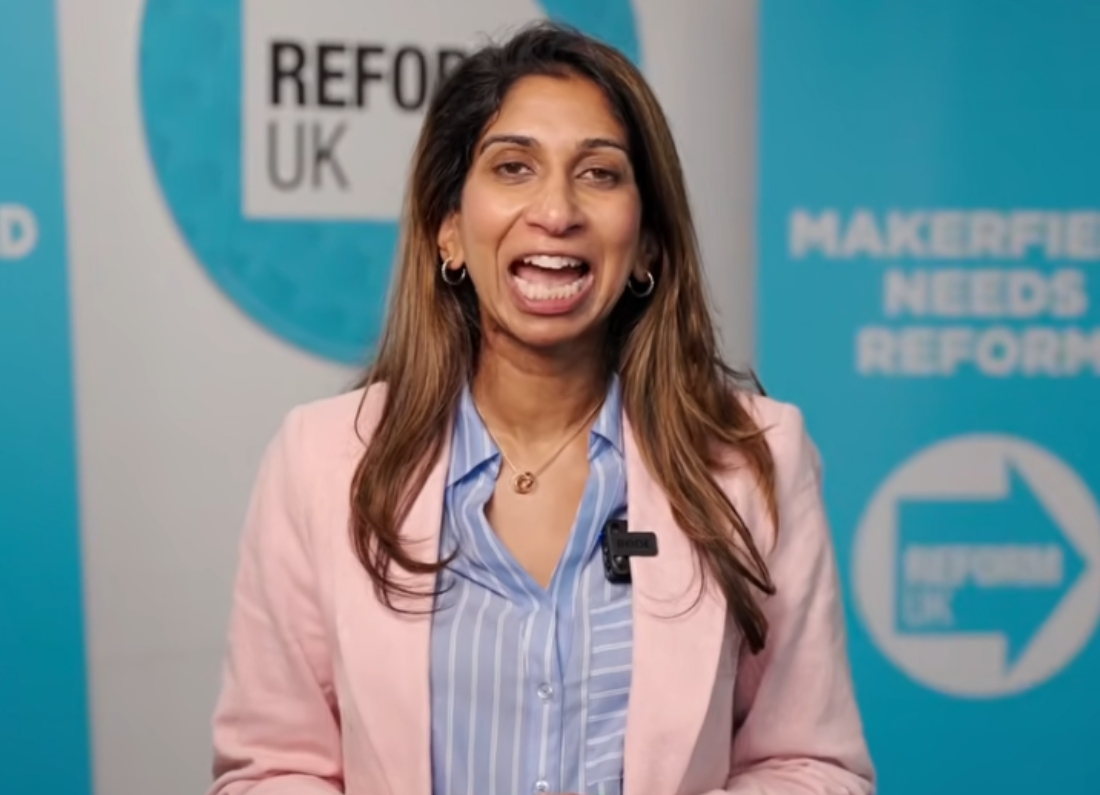
A week since Nigel Farage said “so what?” to his candidate calling himself a sexist was probably not the ideal moment for Reform to announce a Women and Motherhood Protection Act. But here we are…
The policy document, published this week, promises that Reform will be “the most pro-woman and pro-mother government in modern British history.” It argues the Equality Act has not gone far enough and that sex-based rights have been eroded. It pledges to extend the time limit for pregnancy and maternity claims of unfair dismissal to twelve months. “This Act,” it states, “will make Britain one of the best countries in the world to become a mother.”
The responses from across the political spectrum were not kind.
The sharpest critique came from Stella Creasy, the Labour MP who has spent years campaigning against what is known as the motherhood penalty – the documented economic disadvantage that falls on women when they have children, a disadvantage that does not fall on fathers to anything like the same degree.
Creasy’s problem with the document is visible from the title. The Women and Motherhood Protection Act. Not the Parents and Parenting Protection Act. Not the Working Families Protection Act. Women and motherhood.
“Reform reveal they think only women have responsibility for bringing up children,” she told HuffPost UK. “This is a charter for bringing in the Handmaid’s Tale, not equality in the home or the workplace – reinforcing the motherhood penalty and not ending it.”
The Handmaid’s Tale is the Margaret Atwood novel and HBO series about a totalitarian society in which fertile women are designated purely for reproductive purposes. It is not a gentle comparison. But Creasy’s specific point is worth separating from the rhetorical heat: the document, as she notes, fails to mention the responsibilities of fathers and second parents at all. If you want to end discrimination against mothers in the workplace, the most effective mechanism is giving fathers the same parental rights so employers cannot discriminate against women because they alone carry the cost of childcare.
“That’s why we need to align with Europe in giving all parents rights to paid parental leave so that no parent is left holding the baby,” Creasy said. “If Reform are serious about helping end discrimination, they should back my amendment to do that instead of failing to even mention the responsibilities of dads and second parents.”
Bridget Phillipson, the minister for women and equalities, focused less on the policy’s internal contradictions and more on the broader pattern.
“Nigel Farage has spent years arguing women don’t need the protections and rights we fought for. From their leader praising Andrew Tate, to running a self-professed sexist as a candidate, Reform prove time and again they have a problem with women.”
The “self-professed sexist” is, of course, Robert Kenyon – their Makerfield candidate who wrote “I’m sexist, sorry but I am” on a rugby forum, endorsed a graphic sexual comment about Carol Vorderman with “he’s only saying what we’re all thinking,” and was asked to apologise on Question Time and declined. As we reported in our Farage “so what” piece, Farage’s response to all of this was two words. This is the week they published a document claiming they would be the most pro-woman government in modern British history.

Phillipson also went to the policy substance: “Tearing up the Equality Act on day one just to replace it with something weaker is a complete waste of time and money. It was a Labour government that put women’s rights into law, and a Labour government now that is safeguarding and strengthening them.”
Even the Conservatives found reason to reject it, though from a different direction. Shadow equalities minister Claire Coutinho highlighted what she said was a fundamental misunderstanding of the Equality Act that the document proposes to replace.
“Reform care so little about women’s rights they said they’d scrap the Equality Act without even realising that it protects pregnant women from being sacked,” she said. “Their prisons adviser believes men should be put in women’s prisons. And today’s plans would leave women who say biological sex is real completely exposed to being harassed and hounded out of their jobs.”
The prisons adviser claim, the Equality Act gap, and the exposure of gender-critical women are three quite different concerns, but they converge on the same basic accusation: that Reform’s policy process had not thought through the consequences of what it was proposing.
As we reported in our Stefanovic Reform policies piece, Stefanovic’s breakdown of Reform’s Great Repeal Act documented that 83% of the public support ending fire and rehire, 78% support guaranteed hours contracts and 76% support day one sick pay – all protections that would be removed. The Equality Act which underpins maternity rights, pregnancy discrimination protections and equal pay provisions is central to what Reform has promised to scrap and replace with legislation it had, as recently as the BBC Makerfield debate, not yet drafted.
The document’s timing is its own kind of political comment. Reform ran a candidate in Makerfield who called himself a sexist. Their leader said “so what?” when asked about it. Their Women and Motherhood Protection Act was published in the same week. The most charitable reading is that the party’s various moving parts are not especially well coordinated. The less charitable reading is also available.
The reactions didn’t stop at politicians though…
1.
2.
3.
4.
5.











Leave a Reply