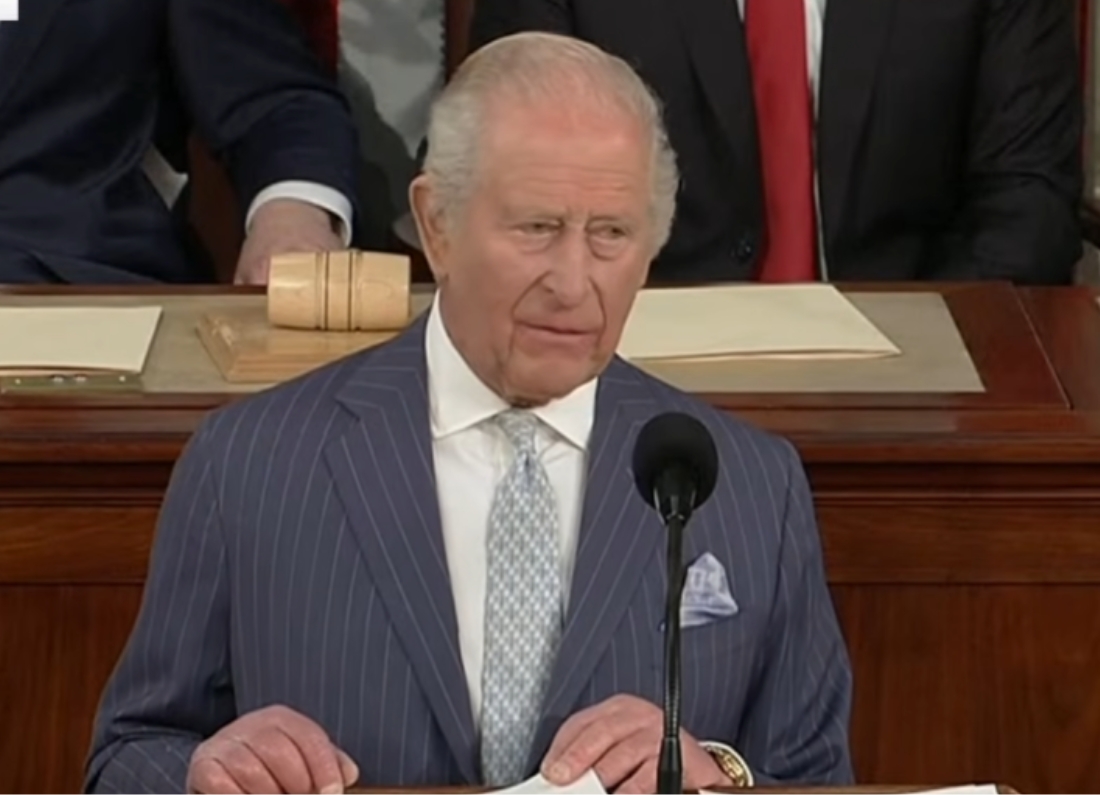
King Charles III has delivered the most diplomatically significant royal speech in a generation, addressing a joint session of the United States Congress for only the second time a British monarch has done so – receiving 22 standing ovations for a carefully constructed address that defended NATO, Ukraine, diversity, executive accountability and democracy without ever once mentioning Donald Trump by name.
Charles delivered his remarks from the dais of the House of Representatives – the same chamber where President Franklin D Roosevelt addressed Congress the day after the Pearl Harbor attack, and from which Winston Churchill expressed the unity of the US and UK in the war effort weeks later. He was the first British monarch to address Congress since his mother Queen Elizabeth II did so on 16 May 1991.
The reception in a Congress that has become infamous for partisan division was, by all accounts, extraordinary. King Charles got something unusual in a bitterly divided Congress: a very warm and bipartisan reception. Members from both chambers listened intently and laughed at the king’s jokes. Both sides cheered and gave standing ovations – something rarely seen nowadays when partisan ovations tend to dominate.
The speech – and what Charles was really saying
The address lasted approximately 30 minutes. To those listening closely, it was a masterclass in diplomatic coding – saying everything that needed to be said about the current moment in Anglo-American relations without ever making it personal, partisan or directly confrontational.
Charles opened by addressing the shooting at the White House Correspondents’ Dinner that had nearly derailed the visit. “Let me say with unshakeable resolve: such acts of violence will never succeed,” he said. “Whatever our differences, whatever disagreements we may have, we stand united in our commitment to uphold democracy, to protect all our people from harm, and to salute the courage of those who daily risk their lives in the service of our countries.”
He then moved through a series of themes that – given the current political context – carried unmistakeable weight.
On executive power and accountability: Charles received a standing ovation when he said that “executive power is subject to checks and balances” – a line that drew a hush and what was described as almost a gasp from the Democratic side of the chamber before the applause began. One observer noted it “clearly resonated with certain members of Congress in the room.”
On NATO and collective security: Charles took a moment to praise NATO – the organisation Trump has repeatedly criticised during the Iran conflict for not getting sufficiently involved – drawing a large standing ovation from many in the chamber.
On Ukraine: The mention of Ukraine drew sustained applause from across the chamber – again, a pointed moment given Trump’s complicated record on the subject.
On diversity: The King praised the strength that comes from “vibrant, diverse and free societies” – language that sits in direct contrast to the current administration’s rollback of diversity initiatives across federal government. He used it to acknowledge, obliquely, the victims of abuse in both countries, saying it was “the very fact of our vibrant, diverse and free societies that gives us our collective strength, including to support victims of some of the ills that, so tragically, exist in both our societies today.”
On American words carrying weight: When Charles said that America’s words carry weight and meaning, there was a hush and almost a gasp from the Democratic side of the chamber – a moment observers interpreted as a subtle message about the current administration’s rhetoric on Iran, on the special relationship, and on global institutions.
On the alliance itself: “The challenges we face are too great for any one Nation to bear alone,” Charles said. “Our Alliance cannot rest on past achievements, or assume that foundational principles simply endure.” He quoted Starmer directly: “As my Prime Minister said last month: ‘Ours is an indispensable partnership. We must not disregard everything that has sustained us for the last eighty years. Instead, we must build on it.'”
You can watch it in full below:
The White House – where Trump’s mother had a crush on Charles
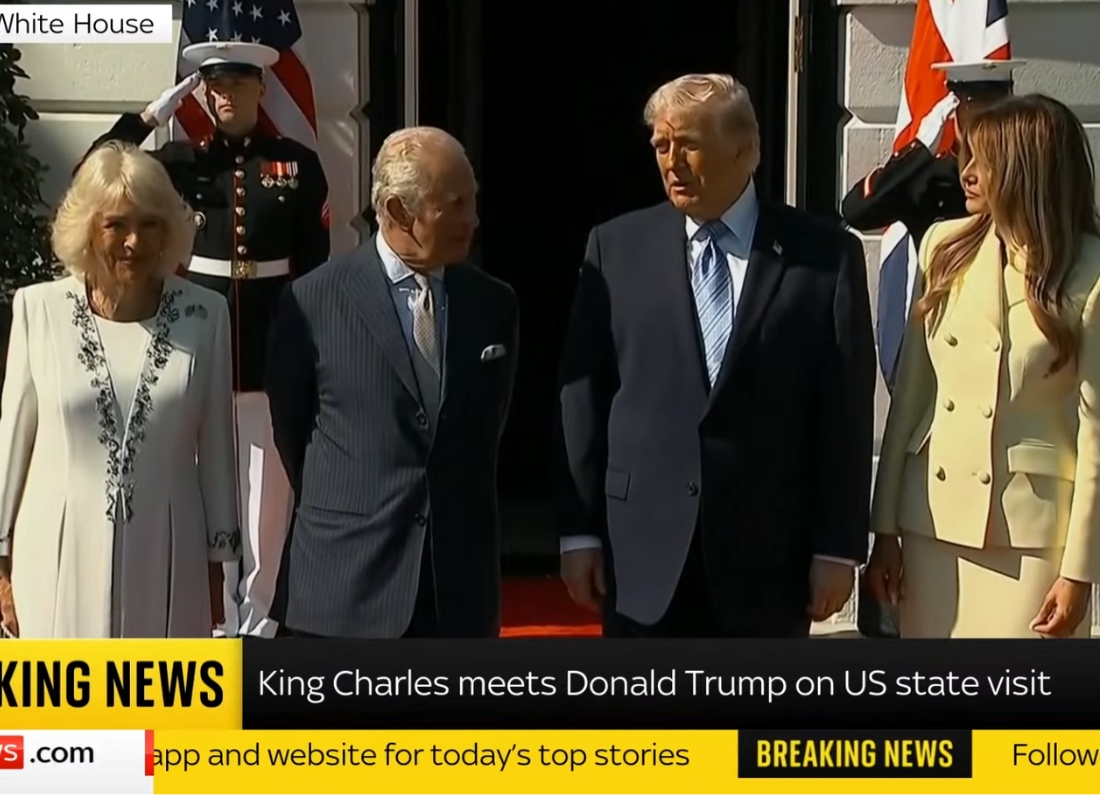
The day had begun at the White House, where Trump and Melania welcomed Charles and Camilla with a full military ceremonial arrival on the South Lawn, complete with military flyover, cannon salute and a ceremonial review of the troops.
Trump’s remarks were notably warm – and occasionally personal. He talked about his mother’s Scottish ancestry, praised Queen Elizabeth II as “a very, very special woman who is very greatly missed,” and made what was perhaps the most memorable revelation of the day: that his late mother Mary had harboured a crush on the young Charles.
“She really did love the family but I also remember her saying very clearly, ‘Charles, look young Charles, he’s so cute’. My mother had a crush on Charles – can you believe it?” Trump said. “Amazing how… I wonder what she’s thinking right now?”
Trump declared: “In the centuries since we won our independence, Americans have had no closer friends than the British.” He said it was a “tremendous privilege” to host the royal couple and called Charles “a very elegant man.”
When asked whether the visit would help repair the special relationship, Trump was direct: “Absolutely, the answer is yes. I know him well, I’ve known him for years. He’s a brave man and he’s a great man.”
Trump also revealed that he had considered attending Charles’s speech to Congress in person but had been advised against it. “I was thinking of going but they said, ‘I don’t know. That might be a step too far.’ I would love to go. It’s not supposed to be protocol, but I would love to be with you,” he told Charles at the White House.
What the speech achieved
The political purpose of Charles’s Congress address – carefully crafted by the government with the involvement of royal aides – was to do something that Starmer could not do directly: speak to the US political establishment and the American public about the values that the special relationship is supposed to be built on, in terms that both Democrats and Republicans could embrace.
The bipartisan standing ovations suggest it worked. In a chamber that cannot agree on anything, a British king defending checks and balances, NATO and Ukraine got both sides to their feet simultaneously. Unlike Trump or even former presidents, Charles did not stray from his prepared remarks – striking a contrast that was itself diplomatically meaningful in a Washington grown accustomed to impulsive rhetoric.
Whether the warm atmosphere at the Capitol translates into a genuine thaw in UK-US relations depends on what happens between Downing Street and the White House after the state banquet ends. But the King’s visit has, at the very least, given the special relationship something it has been lacking for months: a moment of genuine, bipartisan warmth in Washington.
What comes next
Charles and Camilla travel to New York on Wednesday, where they will visit the September 11 Memorial ahead of its 25th anniversary – a visit that will underline the shared sacrifice and solidarity at the heart of the alliance Charles spoke about in Congress. They will also visit a community project in Harlem and attend events marking the centenary of Winnie the Pooh.
The state visit concludes on Thursday in Virginia before a farewell ceremony at the White House.
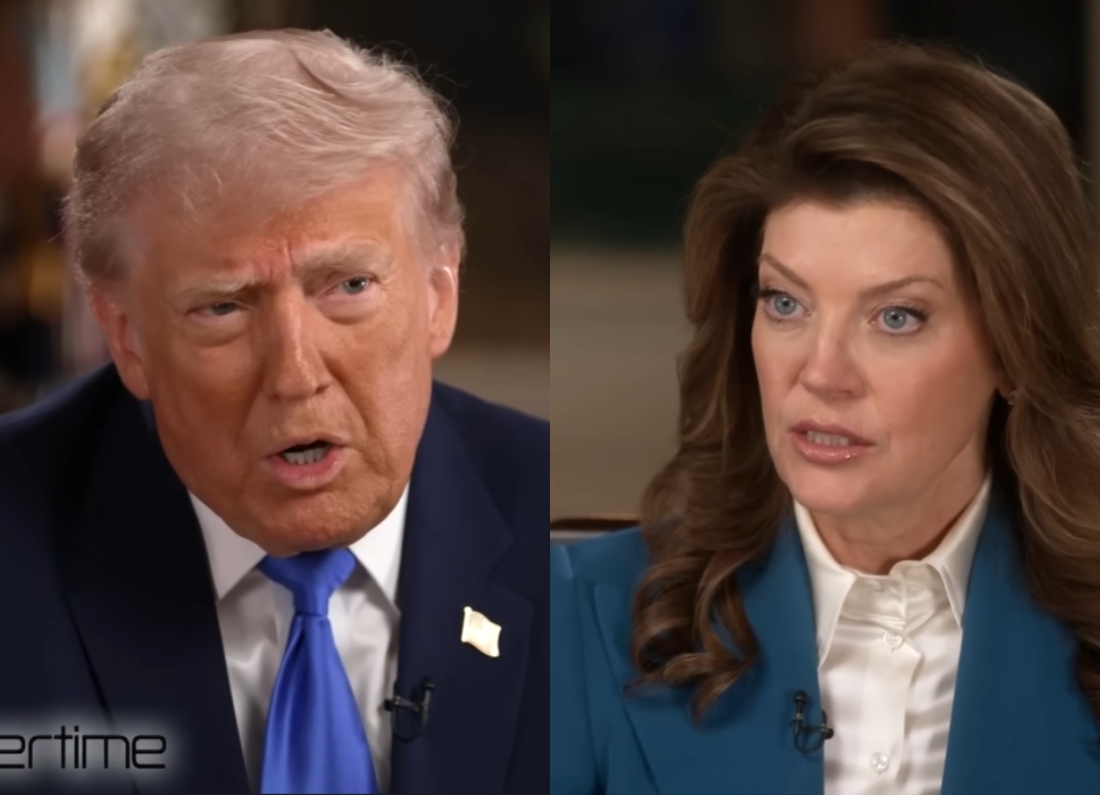
You may also like: ‘You’re a disgrace’: Trump erupts at CBS journalist live on 60 Minutes after she reads gunman’s manifesto