

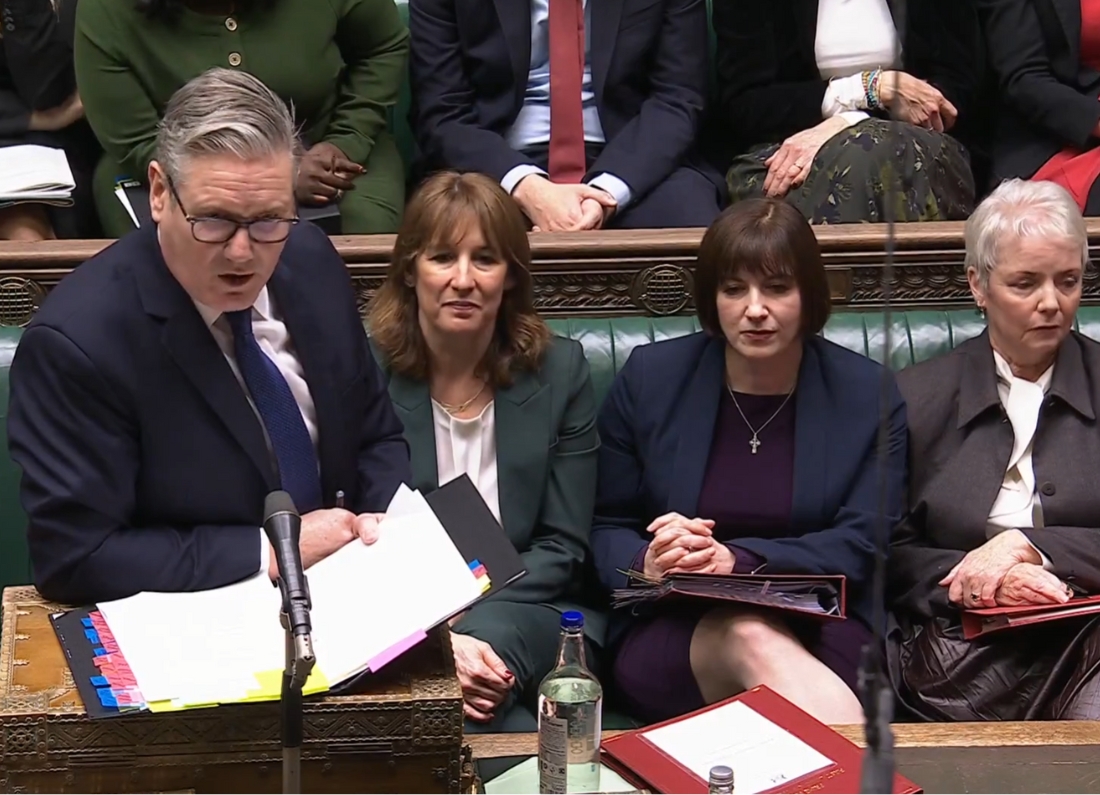
Prime Minister Keir Starmer launched a sharp attack on Reform UK and its honorary president Nigel Farage during a tense session of Prime Minister’s Questions on Wednesday, using the opportunity to underline what he described as the party’s “incompetence” in local government.
The exchange was triggered by Labour MP Jim Dickson, who pressed the Prime Minister on Reform’s chaotic leadership of Kent County Council (KCC), which the party has controlled since the general election. Dickson mocked the administration’s much-derided DOGE scheme, joking in the chamber that it stands for “deluded, over-confident, gormless, [and] embarrassing.”
Starmer seized on the moment, telling MPs that Dickson had “summed up very well how his community has been utterly let down by Reform,” before adding that the party’s approach to governance “shows exactly why they are unfit to run a parish council, let alone a country.”
The remarks prompted audible laughter from Labour MPs, with Starmer later making a pointed reference to Farage’s public interventions, accusing the Reform leadership of “bluster in the studio and breakdown in the council chamber.”
🔍 Reform under fire in Kent: Cuts, controversy and accusations of incompetence
Reform UK’s leadership at Kent County Council is facing growing criticism after announcing plans to slash the number of council committees in a bid to save around £75,000 per year. The proposal forms part of a restructuring package that will be presented to a specialist panel next week, before going to a full council vote on 18 December.

The authority currently operates between 120 and 150 committee meetings annually, with the new administration seeking to cut around fifteen of them. According to Reform leaders, the changes aim to “streamline” internal processes, eliminate duplication, reduce allowances and support costs, and introduce AI-generated minutes as part of a modernisation drive.
KCC deputy leader Cllr Brian Collins, defending the overhaul, said the reforms represent “a bold step towards modernising how we govern,” insisting that taxpayers would benefit from a more “efficient, better equipped” system.
However, opposition councillors fiercely dispute that narrative. Members of the Conservative group, who led KCC until earlier this year, say Reform is attempting to dodge scrutiny while struggling to staff committees with enough qualified councillors.
⚠️ Conservative backlash: “Out of their depth and avoiding scrutiny”
Conservative councillor Sarah Hudson delivered one of the strongest rebukes yet, accusing Reform of cutting committees not for efficiency, but because they simply cannot fill the seats.
“The lengths Reform will go to avoid scrutiny is outrageous,” she said. “They are trying to hide the fact they haven’t got enough available members to fill their slots on the committees, so they just cut the number of committees. This administration is now totally officer-led because they are so out of their depth.”
Opposition members also highlighted the council’s repeated cancellations of scheduled meetings in the early months of Reform’s administration, followed by what they called “unusually thin agendas,” raising concerns that committee oversight is being directly undermined.
Despite the cuts, some key bodies – including scrutiny, governance and audit, pensions, personnel and standards committees – will remain unchanged, according to the Reform-led council.
🛠️ What the restructuring actually includes
Under the planned changes, the environment and transport committee will merge with the growth, economic and development panel, creating a single multi-portfolio entity.
The selection and member services committee will combine with the electoral and boundary review committee, forming a new “electoral and member arrangements committee.”
Meanwhile, the member development sub-committee will be abolished entirely and replaced with alternative “engagement methods” that have yet to be detailed.
These changes will be reviewed by the selection and member services committee on 16 December, ahead of the decisive council vote two days later.
🏛️ Reform’s growing national headaches
The row comes at a moment when Reform UK is facing wider political difficulties. National polling has been volatile, Farage is fighting off further controversy surrounding historic allegations, and several senior Reform figures have publicly clashed over policy direction.
Starmer’s intervention at PMQs suggests Labour sees fertile ground in Reform’s early governance struggles – and is prepared to weaponise them in Westminster.
Whether the committee overhaul will save money as promised, or heighten political turmoil in Kent, will become clear only after the pivotal vote on 18 December.
You may also like: Sadiq Khan hits back after Donald Trump brands him a ‘disgusting mayor’




Leave a Reply