


The Green Party has overtaken Labour in the latest YouGov voting intention poll, with new analysis suggesting the surge is drawing support from would-be Reform voters as well as Labour defectors – a development that could fundamentally reshape how the May 7 elections are understood and how the next general election is fought.
The YouGov poll, conducted for Sky News and the Times with fieldwork on 1-2 March among 2,073 adults, showed Reform UK leading on 23%, down one point, with the Greens jumping to second place on 21% – five points ahead of both Labour and the Conservatives, each on 16%. The Liberal Democrats remained unchanged on 14%.
YouGov’s head of political polling Anthony Wells attributed the sharp four-point rise largely to the publicity surrounding the party’s historic by-election victory in Gorton and Denton on February 26. “This reflects the Greens appearing to be a more viable option and less of a wasted vote,” he said.
That result is now being built upon. The latest YouGov tracker has the Greens up a further two points, moving them ahead of Labour into third and closing within two points of Reform at the top. The momentum is not fading – it is, if anything, accelerating.
A landmark that keeps compounding
It is worth pausing to understand just how extraordinary the Green Party’s current position is.
The 21% figure represents the Green Party’s highest ever recorded by YouGov. Labour’s 16% represents a record low in recent YouGov polling for the party in government. The combined Conservative and Labour vote share – the two parties that dominated British politics for more than a century – fell to just 37.1% in March’s polling average, a significant drop from the combined 57.4% they achieved at the 2024 general election, itself a record low.
The poll also revealed the Green Party is now the most popular party in the UK for all age groups under 50, leading with 49% support among 18 to 24-year-olds and 27% among 25 to 49-year-olds. Among those who voted Labour in 2024, roughly 25% said they would now vote Green.
This comes on the back of the Lord Ashcroft poll earlier this month that put the Greens joint top nationally on 21% alongside Reform and the Conservatives – the first time in the party’s history it had led or tied at the head of a major national poll. And earlier this week, the Greens took a Kent County Council seat directly from Reform in the Cliftonville by-election, demonstrating the same ability to win in the south of England they showed in Manchester.
The Gorton effect – and why it has not faded
In the Gorton and Denton by-election on February 26, Green candidate Hannah Spencer – a local plumber and councillor – secured the party’s first-ever Westminster by-election win, taking approximately 41% of the vote and comfortably pushing Labour into third place in what had been one of its safest seats.
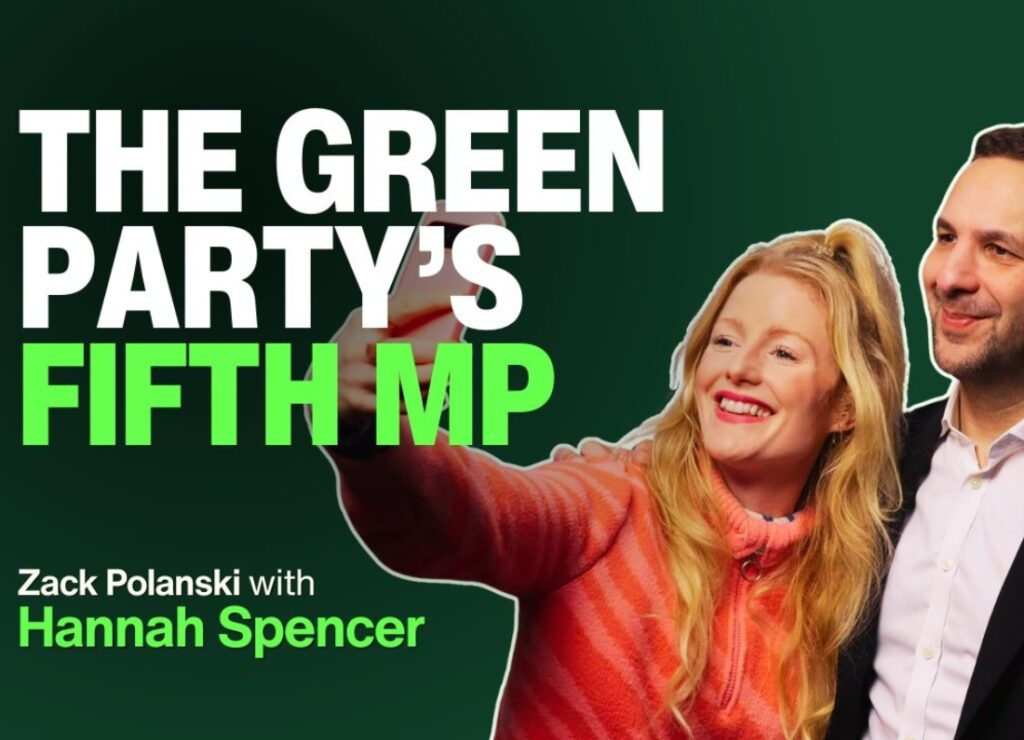
The conventional wisdom after by-election victories is that the polling bounce fades within weeks, as the media cycle moves on and voters return to their instincts. That has not happened here. The reason is what the Gorton result represented – not just a one-off protest vote, but proof of concept. The Greens can win in the north of England. They can beat Reform head-to-head. They can win in multi-ethnic urban seats with large Muslim populations. They are, as their own messaging insists, not a wasted vote.
As Electoral Calculus noted, whereas the Greens took only an eighth of the national vote of the three left-of-centre parties in 2024, in current polls they are taking almost one-third of the combined Labour, Green and Liberal Democrat support.
A new dimension: the Greens taking Reform voters
Perhaps the most significant new development in the polling picture is evidence that the Greens are not simply hoovering up Labour defectors. Writing in the New Statesman, polling analyst Ben Walker highlighted a striking shift among people who did not vote in the 2024 general election but say they are certain to vote next time.
Last summer, almost half of this group said they would vote for Reform. That figure has now fallen to closer to one in three. At the same time, 16% of this group say they would vote Green – up from 12%. The number of 2024 non-voters certain to vote next time has stayed the same, which means the shift is not explained by new people entering the pool. The same people who were heading toward Reform are now, in growing numbers, heading toward the Greens.
Walker’s analysis suggests there is a constituency of voters who are motivated less by left versus right than by a desire to “shake things up” – and who see little meaningful difference between a Green and a Reform vote in that respect. Both represent a break from the establishment. Both represent rejection of a Labour government that has disappointed. Some voters, Walker notes, would prefer Nigel Farage in Downing Street over Keir Starmer – and yet they are moving toward the Greens.
If that analysis is correct, the Greens’ May 7 performance could be more significant still than the current polls suggest – and successful results in local elections could, as Walker writes, see them “become the first-choice option for anyone looking to keep out Reform.”
What it means for May 7
Zack Polanski has already framed the May 7 elections as “a straight-up battle between Reform and the Greens” and a choice between “hope and hate.” That framing – ambitious for a party that until recently held four Westminster seats – now looks considerably less like positioning and considerably more like an accurate description of what is actually happening in the polls.
Reform remains first in the polls but its lead has been slashed, and at its current trajectory it would fall well short of a majority with its only route to government requiring a coalition with the Conservatives, something they have shown little sign of wanting at any level.
For Labour, the position is more uncomfortable still. A party that won a historic landslide less than two years ago is now polling below the Greens – the party it spent years dismissing as a fringe protest movement. The fact that Labour MPs are being urged to campaign in London to stop the Greens taking major councils, while simultaneously being told by Zack Polanski that what voters want is “help with the affordability crisis and real affordable housing” rather than a knock on the door from a 2024 intake MP, tells its own story.
Electoral Calculus modelling shows all 56 seats the Greens are predicted to win nationally would come from Labour. A small increase in Green support and a fall in Labour support would put the Green Party ahead of Labour in parliamentary strength. That was a theoretical projection six weeks ago. It is looking less theoretical by the week.
You may also like: More than a fifth of UK’s ‘austerity generation’ children scarred by poverty, study finds







Leave a Reply