

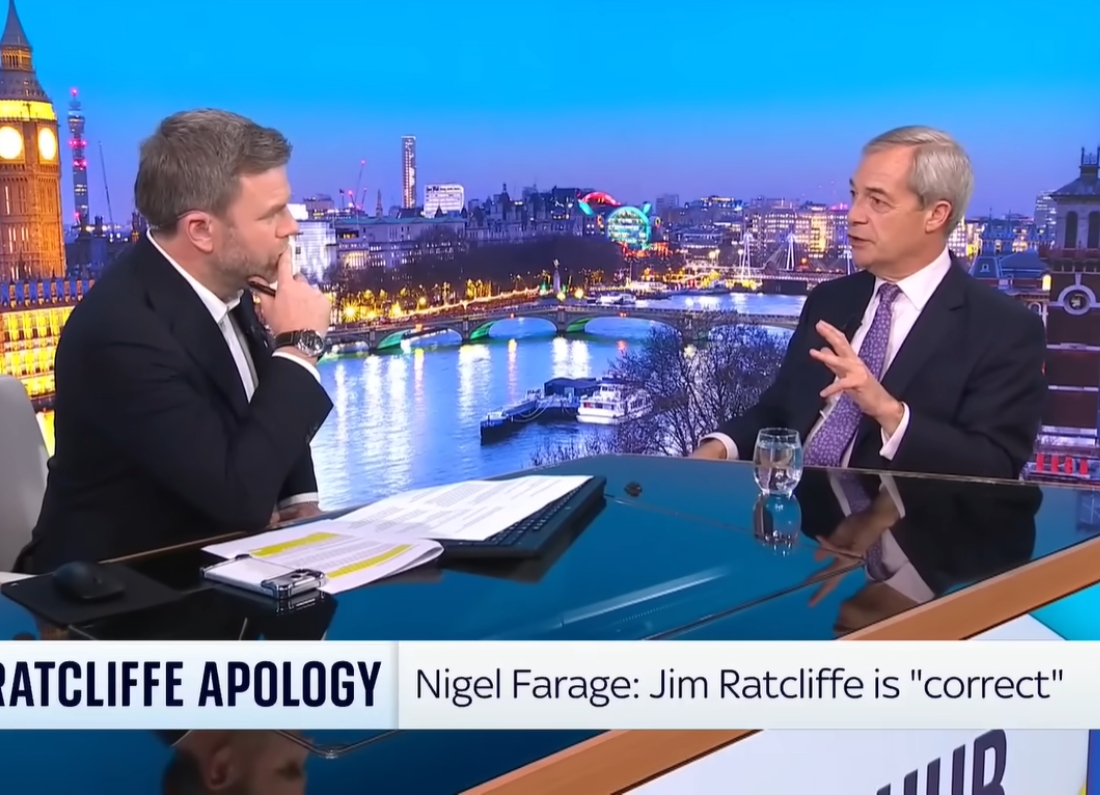
Nigel Farage has backed Manchester United co-owner Sir Jim Ratcliffe after the billionaire claimed Britain is “being colonised” by immigrants – a phrase which sparked a swift political backlash, including condemnation from Keir Starmer and Andy Burnham.
Ratcliffe, the Ineos founder and one of the UK’s wealthiest businessmen, made the remark during a broadcast interview in which he argued the country’s immigration system was “costing too much money”. He said: “The UK is being colonised. It’s costing too much money. The UK has been colonised by immigrants.”
Within hours, Downing Street criticised the language and urged Ratcliffe to apologise, with the prime minister later describing the wording as “offensive and wrong”.
Farage, however, sided with Ratcliffe’s broader argument, saying he believed the businessman was “right” about how parts of the country have changed – turning the episode into a fresh flashpoint in the UK’s increasingly charged debate over immigration, integration and national identity.
What Ratcliffe said – and why it caused such a row
Ratcliffe’s “colonised” remark landed as immigration remains one of the most polarising political issues in Britain, with parties on the right arguing for tougher controls and parties on the centre-left pushing back against language they say dehumanises newcomers.
The immediate controversy was not just about the sentiment, but the specific framing. “Colonised” is a loaded word in British political history – traditionally associated with empire and conquest – and critics accused Ratcliffe of portraying migration as a hostile takeover rather than a complex social and economic phenomenon.
Starmer’s response focused on that point. Asked about Ratcliffe’s claim, the prime minister said the language was “offensive and wrong” and publicly called on him to apologise.
Ratcliffe later issued a statement attempting to dampen the argument, saying he regretted causing offence. “I apologise if my choice of language offended some people,” he said, while maintaining he wanted to raise “the issue of controlled and well-managed immigration that supports economic growth.”
Farage’s defence and Labour’s counterattack
Farage’s intervention matters because it positions Reform UK squarely on the side of Ratcliffe’s diagnosis of the country’s immigration experience – even if the businessman partially retreated on his wording.
In response to the row, Farage wrote that “Britain has undergone unprecedented mass immigration that has changed the character of many areas in our country”, arguing that Labour “may try to ignore that but Reform won’t.”
The Reform leader’s support drew an immediate rebuttal from Labour figures who accused him of encouraging division. Downing Street warned Ratcliffe’s remarks “play into the hands of those who want to divide our country” – a line echoed by senior Labour voices as they sought to frame Reform’s politics as inflammatory rather than solution-focused.
Andy Burnham’s response: ‘Withdraw’ the comments
Andy Burnham, the Labour mayor of Greater Manchester, also criticised Ratcliffe – linking the remarks to Manchester’s civic identity and to the club Ratcliffe helps to run.
Burnham said the claim was “inaccurate, insulting, inflammatory” and argued it should be withdrawn. He drew a distinction between making a case for lower immigration and presenting migrants as an invading force, saying: “Calling for curbs on levels of immigration is one thing; portraying those who come here as a hostile invading force is quite another.”
Burnham also pointed to the role of international talent in Greater Manchester, including in football, and suggested criticism should be directed at those he said had taken value out of institutions rather than the communities that have helped build them.
Immigration, identity and the risk of political escalation
The clash underlines a long-running tension in British politics: how to talk about immigration’s pressures – on housing, public services and local cohesion – without using language critics say stokes hostility or fear.
The prime minister’s criticism of Ratcliffe’s wording signals Labour believes there is political danger in allowing loaded framing to go unchallenged. Reform, by contrast, has repeatedly argued that mainstream parties sanitise the issue and fail to address what it calls the lived experience of rapid demographic change.
But the politics cuts both ways. When politicians and prominent public figures use sweeping metaphors, it can intensify the debate rather than clarify it – and that can make practical policy solutions harder to land.
Ratcliffe’s apology tried to reposition his intervention in that practical space, emphasising “controlled and well-managed immigration” and the economic case. Yet the original phrase is likely to linger because it is emotionally resonant and easily shareable, and because it arrived at a time when partisan identities are hardening around culture, borders and national belonging.
Farage’s decision to defend Ratcliffe also fits a broader Reform strategy: aligning with high-profile figures who articulate concerns about immigration in blunt terms – then challenging opponents to explain why they reject those concerns rather than the language used to express them.
For Labour, the response appears designed to do the opposite: isolate the language, label it unacceptable, and argue that Reform’s rhetoric divides communities instead of improving wages, services or security.
With national politics already volatile, and with local contests where Reform and Labour are directly competing, the Ratcliffe row is unlikely to be the last time immigration arguments spill into wider culture-war framing. The question for both parties is whether voters see this episode as a necessary confrontation over standards in public debate – or just another escalation that distracts from the day-to-day issues people want fixed.
You may also like: Bookmakers cut Green odds sharply ahead of Gorton and Denton vote






Leave a Reply