

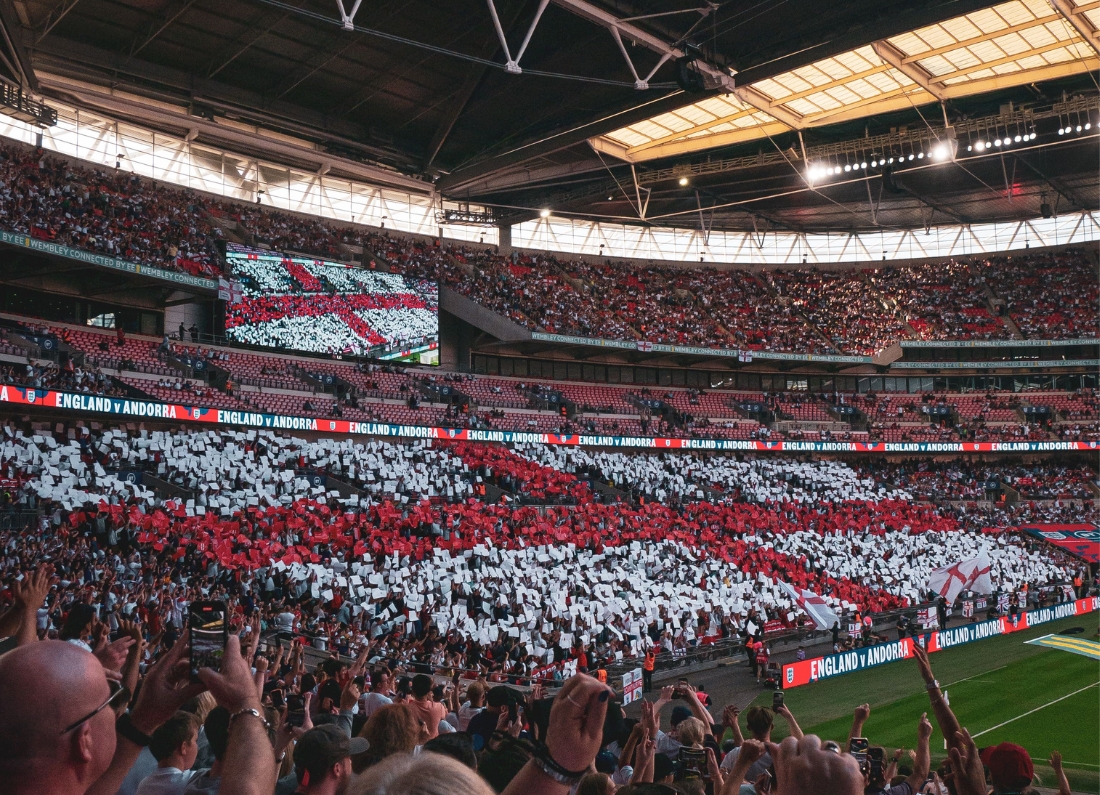
Bristol City Council, South Gloucestershire Council and Wiltshire Council have each warned residents not to hang England flags on public property during the World Cup, citing public safety, legal obligations under the Highways Act 1980 and the need to maintain what Bristol’s council leader described as a “welcoming, respectful and safe” environment. Bristol has gone furthest, urging residents to report any flags on public property to the authorities and pledging to fast-track removal from “sensitive locations.” The tournament in North America begins tonight. England play their first match against Croatia next week.
The announcements have drawn significant public attention, with critics characterising them as an overreach and councils maintaining that the rules apply to all decorations on public land – not specifically to England flags – and that health and safety obligations under the Highways Act are clear.
What the councils have actually said
Bristol City Council leader Tony Dyer urged residents to avoid hanging flags from lampposts, railings or any public property. “What people cannot do is fly flags on lampposts or railings or any public property. Please do not attach anything to lampposts – it causes health and safety issues,” he said.
The council said it would fast-track removal of flags in “sensitive locations” and reassess its strategy on flags on council-owned property more broadly. It also urged residents to report instances of flags on public property to the authorities. Dyer’s framing: “By celebrating responsibly and being mindful of others, we can ensure that Bristol remains welcoming, respectful and safe for everyone during the tournament.”
The specific historical context is notable. Bristol’s Torrington Avenue was recognised as the most heavily-decorated street in England during Euro 2016, with flags hanging from lampposts, houses and telephone poles throughout the tournament. England were eliminated in the last 16 by Iceland.
South Gloucestershire Council issued a similar warning, telling residents to ensure flags were flown “with consideration for others” and warning that decorations “displayed without permission on public land or council property” would be removed. The council insisted it welcomed World Cup celebrations but said measures were necessary to “protect public safety, prevent damage to public assets, ensure the highway remains safe and usable for everyone.”
Wiltshire Council’s Martin Smith took a different tone, saying the council was “all willing the England team on to end 60 years of hurt and bring the trophy home” before adding that “placing items such as banners, bunting or flags on or near the public highway – including lampposts, road signs and roundabouts – without permission, can pose safety risks to road users and pedestrians. It can also obstruct visibility.”
The legal position
The councils are not acting without legal basis. Under the Highways Act 1980, it is illegal to attach anything to structures on the highway without the permission of the relevant authority. Section 132(2) of the legislation allows authorities to remove items. These rules apply to all decorations – Christmas lights on lampposts, promotional banners, and England flags – and are not specific to international tournaments.
The question of whether enforcement during a major international football tournament was the right moment to publicise these rules – and whether the specific language around community cohesion, “welcoming” environments and the instruction to report flags to authorities was proportionate – is what has generated the most criticism.
The immigration officer angle
The councils’ announcements arrived alongside a separate story: an Independent Monitoring Board report revealed that immigration officers were advised that wearing England badges during the World Cup could “intimidate” detained migrants and damage “professional standards.” The report stated that staff at one short-term holding facility were observed wearing England flags affixed to their uniforms, and that “the Board felt this risked perceptions of bias or even intimidation among detained people, especially in the light of recent anti-immigration protests in which flag displays were prominent.”
This is a more specific and arguably more defensible concern – the particular context of uniformed immigration officers in a detention facility wearing symbols that have been prominently displayed at anti-immigration protests is different from the question of whether residents should hang flags from lampposts during a football tournament. But the two stories have been linked in much of the coverage, and between them they have created a political moment that Reform has been quick to exploit.
As we reported in our Belfast riots piece, the England flag has been increasingly adopted by the far right as a symbol of anti-immigration sentiment, particularly since the 2024 Southport riots. That context is present in the Independent Monitoring Board’s reasoning, even if it is absent from the councils’ stated justifications, which focus on safety rather than symbolism.
The wider picture
England’s World Cup campaign begins in earnest next week against Croatia. The tournament is hosted in North America and begins tonight. England have not won the World Cup since 1966 – the “60 years of hurt” Wiltshire’s Martin Smith referenced.
The flags debate will not define the tournament. Whether England’s performance does is another matter. In the meantime, residents of Bristol who wish to celebrate should note that flags on private property – houses, gardens, windows – are not affected by any of the council guidance. It is specifically the attachment of flags to public infrastructure that is being restricted, for reasons that have applied in law long before this particular World Cup began.
Whether the timing and the language of the announcements was well-judged is a separate question – and one that the councils’ critics have already answered in their own way.









Heather Wright
What is wrong with these councils other than brain rot and virtue signalling disease ? Literally every other country in the world flies their nation’s flag proudly and they are never accused of anything but praised for their patriotic spirit. As an immigrant and naturalised citizen of this once great United Kingdom, I am immensely proud of the. Rotisserie culture and all of its flags. The government, the media and the civil service should be ashamed of themselves for this degradation of a historic and important symbol as the St George’s Cross.