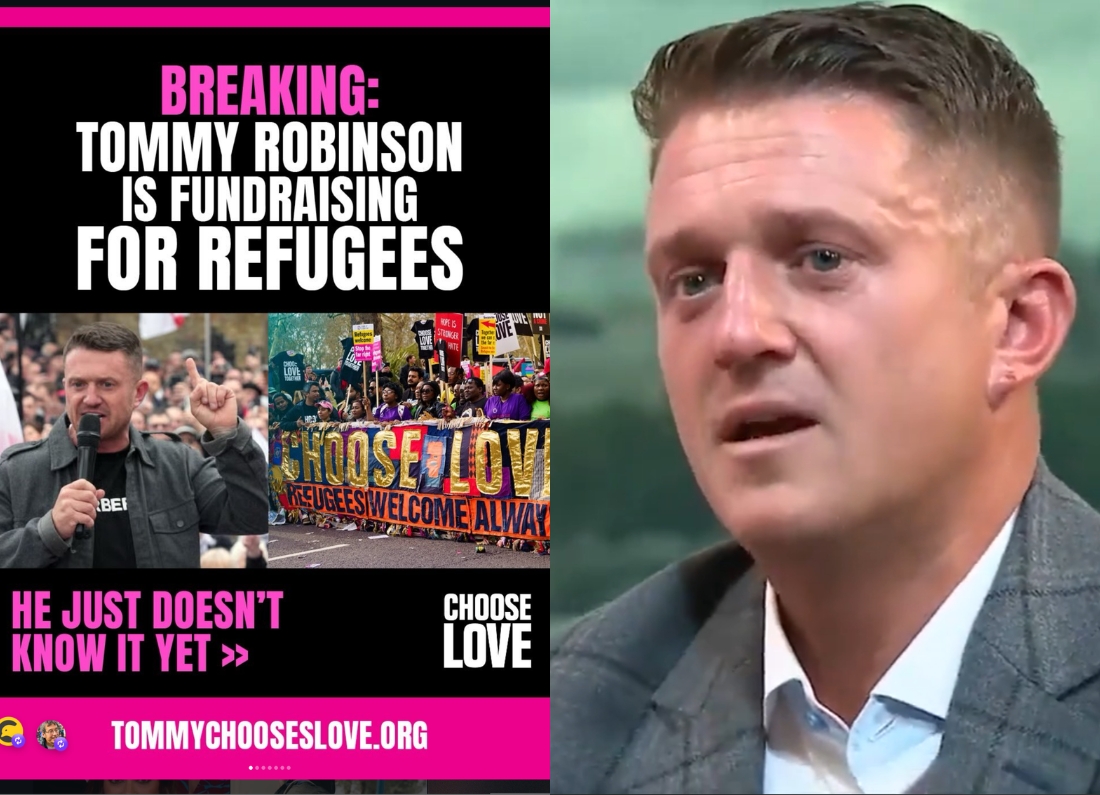
The charity Choose Love has raised more than £100,000 for refugees and displaced people by turning this weekend’s Tommy Robinson-backed Unite the Kingdom march in London into an unwitting sponsored walk – raising money for the people the march is designed to march against, with every step the far-right demonstrators take generating donations they cannot prevent.
The campaign, launched on Instagram, was straightforward in its logic: “Tommy Robinson is organising a far-right march in London. Here’s the plan. We turn it into a sponsored walk for refugees and displaced people, while funding anti-racism education too. The further they march, the more we raise. Let’s turn hate into love.”
Choose Love initially set a target of £50,000. By Friday, they had smashed it and raised more than £100,000 – with over 2,000 individual donors contributing. The charity announced: “Tommy Robinson’s far-right march has unwittingly raised over £100k for refugees.” They have also put posters up across London informing passersby that the march is “raising money for refugees and there’s nothing he can do about it.”
You can donate here.
The march it responds to
Saturday’s Unite the Kingdom march is the second such event backed by Stephen Yaxley-Lennon – known as Tommy Robinson – to take place in London. The first, held last year, featured a violence-inciting video message from Elon Musk and resulted in 26 police officers being injured.
Far-right activists from overseas were barred from entering the UK ahead of this year’s event – a step Keir Starmer announced in his make-or-break speech on Monday, as we reported in our full coverage of his address, when he said he would ban “far-right agitators” from coming to Britain to speak at a nationalist march.
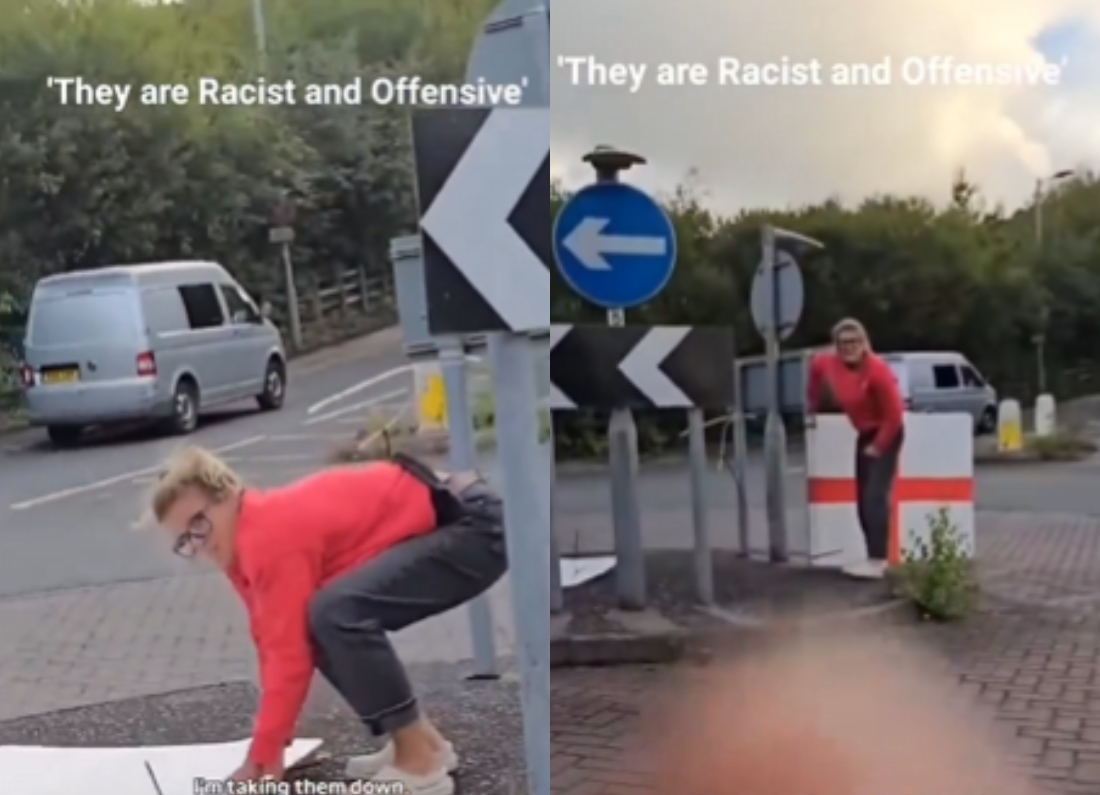
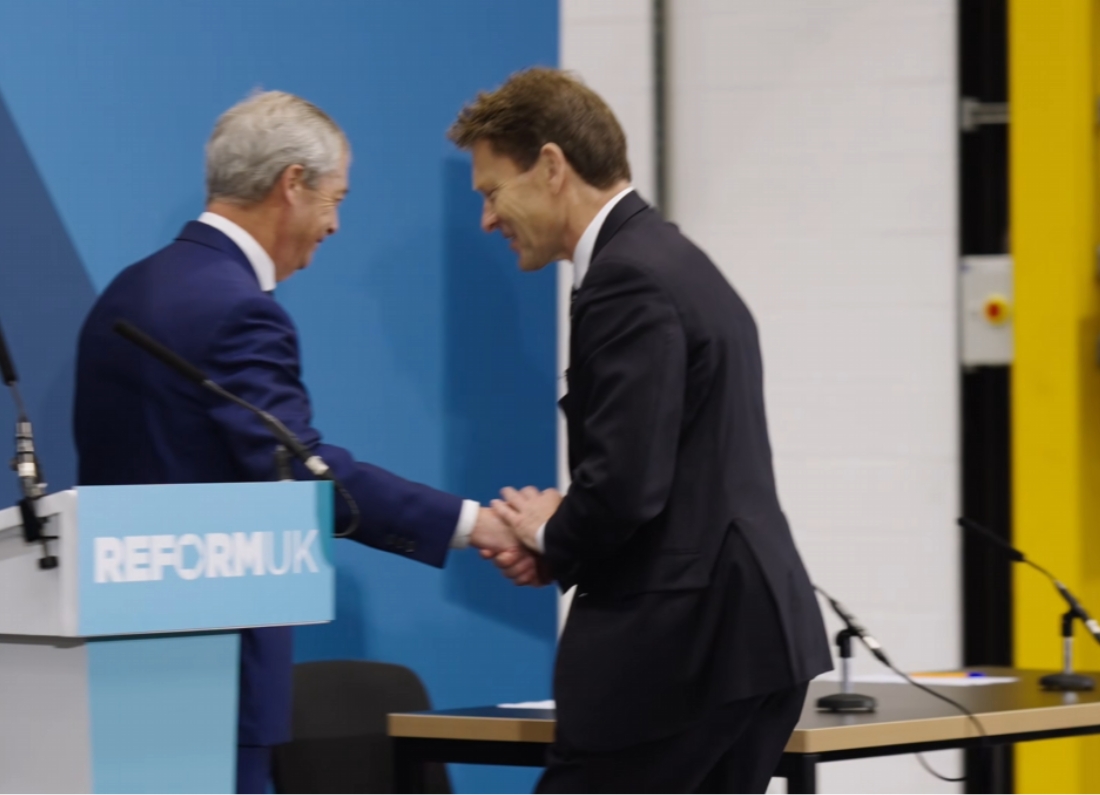
The march is expected to feature St George’s Cross flags and nationalist messaging. It takes place in a specific political context – Reform UK’s historic local election gains have emboldened the far-right fringe of British politics, even as Farage has consistently sought to distance Reform from Robinson himself, as we reported in our piece on the Musk-Farage row. The relationship between mainstream Reform politics and the Robinson-adjacent far-right is one of the defining tensions in the current British political landscape.
How Choose Love’s campaign works
The mechanics are simple. Sponsors pledge a fixed amount per mile marched. The route of the Unite the Kingdom march is a set distance. Every time a far-right demonstrator takes another step, they generate another fraction of a donation to an organisation that exists specifically to support the refugees they are marching against.
The campaign generates two streams of positive impact simultaneously: direct fundraising for refugees and displaced people, and donations to anti-racism education. Choose Love describes both as responses to the specific harm the march represents.
The posters placed across London – telling people Robinson is “raising money for refugees” – are a piece of political communication as effective as anything produced by an official political party this week. They are factually accurate, impossible to refute and land the argument without requiring any more words than a bus stop advertisement.
Why it works
The Choose Love campaign succeeds because it refuses to engage on the terms the march is designed to set. The instinct in response to a far-right march is typically protest, counter-march or outrage – all of which provide the march with the oxygen of opposition and give its participants the sense of embattled heroism that drives their movement.
Choosing instead to transform the march into a fundraiser does something different. It refuses to treat the march as something that needs to be fought and instead treats it as an engine that can be redirected. The marchers cannot stop it. They cannot avoid participating in it by staying home. Every step they take makes it worse – for their cause and better for the cause they oppose.
The £100,000 raised is not transformational on its own. But Choose Love’s funds go directly to emergency relief for refugees and displaced people globally – people whose plight the march treats as a political problem to be reversed. The money raised this weekend will do specific, documentable good for specific people whose lives are worse because of the political movement the march represents.
The broader context
The campaign arrives in a week in which questions about the relationship between far-right politics and mainstream British political life have been particularly live. As we reported in our coverage of the Badenoch pro-Palestine march ban controversy, the Conservative leader defended allowing Robinson marches while calling for pro-Palestine ones to be banned – a distinction critics described as applying different standards to different communities.
Reform’s own post-election councillor difficulties – including a Plymouth councillor suspended for sharing a post depicting a bomb being dropped on Mecca, as we reported in our suspended councillors piece – sit in the same territory: the specific question of where the line falls between Reform’s stated mainstream nationalism and the more explicitly hostile politics of the Robinson movement.
Choose Love’s campaign does not engage with any of that directly. It simply takes the march’s energy and redirects it somewhere better. On the available evidence, this is considerably more effective.