

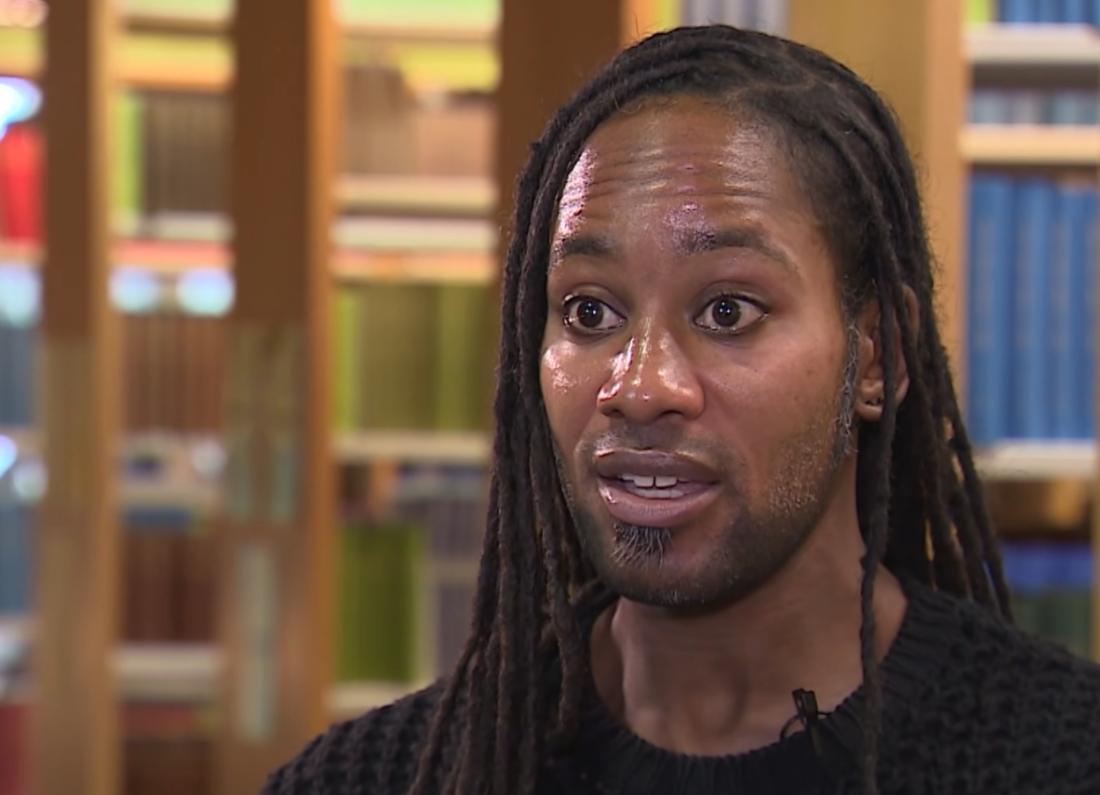
A fresh investigation into the academic work of Professor Jason Arday has concluded without substantiating allegations of plagiarism, more than two months after the former Cambridge academic died aged just 41.
The development concerns a research paper published in 2020 which became the subject of renewed scrutiny during the controversy surrounding Arday’s academic career earlier this year.
Scientific publisher Taylor & Francis has withdrawn the notice stating that the paper was under investigation, returning it to its previously corrected status.
The latest development follows earlier investigations into Arday’s doctoral thesis and other academic publications which did not establish that he had committed plagiarism.
Arday, who became Cambridge University’s youngest Black professor in 2023, resigned from his position in August after weeks of intense public scrutiny over allegations concerning his research, qualifications and personal achievements.
Nine days later, on 14 August, he was found dead at his home in Battersea, south London.
His death prompted an outpouring of grief and serious questions about how universities, journalists and social media users treat academics facing public allegations.
Cambridge has since commissioned an independent review into the support it provided Arday and the decisions taken during the period leading up to his death.
Academic publisher withdraws investigation notice
The latest development concerns a paper titled Attempting to Break the Chain: Reimagining Inclusive Pedagogy and Decolonising the Curriculum Within the Academy.
It was published in 2020 and subsequently became one of several pieces of Arday’s academic work subjected to public scrutiny.
Questions about the paper resurfaced during the summer when allegations concerning plagiarism and research integrity attracted national media coverage.
Taylor & Francis had previously examined the paper and issued a correction in 2024.
That distinction is important because an academic correction does not necessarily mean a study has been withdrawn or that its author has been found guilty of misconduct.
Corrections can address referencing errors, missing information and other problems while leaving the underlying publication in place.
Following renewed allegations, Taylor & Francis placed the paper under investigation again.
That notice has now been removed, with the publication reverting to its earlier corrected version.
The development was identified in reporting published by Byline Times on 21 October.
There has been no detailed public explanation from Taylor & Francis of the latest review, and the publisher has not provided a substantive response to requests for clarification reported by the newspaper.
Nevertheless, the withdrawal of the investigation notice means the renewed allegations have not resulted in a published finding of plagiarism or a retraction of the paper.
Previous investigation found errors rather than misconduct
The latest outcome follows an earlier investigation into Arday’s doctoral thesis by Liverpool John Moores University, where he completed his PhD in 2015.
That examination considered concerns about passages which appeared to overlap with previously published research.
The university concluded that the problems amounted to honest and reasonable errors rather than established academic misconduct.
Arday acknowledged mistakes in his earlier work, including problems with citations and referencing.
He maintained that he had never deliberately plagiarised another researcher’s work and argued that the errors should be understood in the context of the support and supervision he received during his studies.
Cambridge previously confirmed that allegations relating to his thesis and academic publications had been investigated by the institutions and journals responsible for the work.
The university explained that research misconduct complaints were ordinarily investigated by the organisation where the research had been undertaken, because that institution would have access to the relevant records.
The distinctions between corrections, investigations and retractions subsequently became central to the dispute surrounding Arday’s reputation.
Some reporting treated amendments to his published research as evidence of more serious misconduct, despite the absence of findings establishing deliberate plagiarism.
The latest Taylor & Francis development adds to the evidence that allegations about Arday’s publications were not substantiated through the formal processes reported so far.
However, it does not resolve every separate question that was raised about his qualifications, honorary appointments or accounts of his personal achievements.
Arday resigned after weeks of intense public scrutiny
Arday became professor of sociology of education at Cambridge in 2023, aged 37, making him the university’s youngest Black professor at the time.
His appointment attracted national attention, particularly because of his account of overcoming substantial challenges during childhood.
Arday had spoken publicly about being autistic, experiencing developmental delays and learning to read and write later than most children.
His academic career focused on education, racial inequality and barriers affecting disadvantaged students.
But during the summer of 2026, his published work and aspects of his personal history became the subject of extensive scrutiny.
Critics questioned his doctoral thesis, research publications and claims concerning his charity fundraising and sporting achievements.
Arday denied academic dishonesty but acknowledged that some mistakes had been made.
The allegations attracted extensive newspaper coverage and online commentary.
Cambridge subsequently announced a separate investigation after receiving new information concerning his academic qualifications and honorary appointments.
That inquiry was distinct from the earlier plagiarism investigations.
On 5 August, Arday resigned from his position.
In his resignation letter, he said the sustained public accusations had affected both him and his loved ones.
“While criticism is an inevitable part of academic life, what I have experienced has gone far beyond scholarly disagreement.”
He insisted that his resignation should not be interpreted as accepting the allegations made against him.
Arday said he had reached the limits of what any individual could reasonably be expected to endure.
Professor found dead nine days after resignation
On 14 August, Arday was found unresponsive at his home in Battersea by members of his family.
He was 41.
An inquest was subsequently opened at London Inner South Coroner’s Court, with senior coroner Dr Julian Morris ordering an investigation into the circumstances surrounding his death.
The proceedings have not established a final cause of death.
His family spoke of their devastation and raised concerns about what they described as a campaign of misinformation directed against him.
Tributes came from academics, students, public figures and supporters who remembered Arday’s work in education and his efforts to make universities more accessible.
Thousands attended a vigil in Trafalgar Square, while others questioned the intensity and tone of the public scrutiny he had faced.
The circumstances also prompted debate about racism within academia and the responsibilities of institutions when allegations against their staff become the subject of sustained public attention.
It would be inappropriate to conclude that the media coverage or allegations caused Arday’s death before the relevant investigations and inquest have reached their findings.
But the personal toll of the controversy was something Arday himself had described before his death.
His resignation letter made clear that the experience had become overwhelming for him and his family.
Cambridge orders independent review into its handling of the case
In September, the University of Cambridge announced an independent review examining its decisions, policies and support arrangements during Arday’s final weeks.
The review was divided into two parts.
The first, led by former chief prosecutor Nazir Afzal, is examining the support, interventions and welfare protections available to Arday before his death.
It will consider whether university officials took reasonable steps to protect his wellbeing while responding to allegations and public criticism.
The second part will examine broader institutional processes, including academic recruitment, professional support and the handling of research misconduct complaints.
Cambridge vice-chancellor Professor Deborah Prentice acknowledged that the university needed to examine whether more could have been done.
“We worked very hard to support Professor Arday during an appalling period of external criticism and focus, but given the devastating outcome, we are all asking ourselves whether we could have and should have done more.”
The terms of the review make clear that it will not determine the truth of the academic allegations against Arday.
Instead, its focus is on the university’s conduct, the decisions it made and whether its procedures provided appropriate protections during an exceptionally difficult period.
Afzal has said the process must be willing to identify mistakes and make recommendations that lead to practical changes.
A separate private inquiry is now examining his appointment
Alongside Cambridge’s official review, a separate inquiry has been launched by the Committee for Academic Freedom.
The organisation says its investigation will examine the circumstances surrounding Arday’s appointment to Cambridge, the standards applied during recruitment and the university’s handling of subsequent concerns.
It is chaired by Professor Swaran Preet Singh, with journalist Nick Wallis leading evidence-gathering.
The investigation is separate from Cambridge’s review and has no role in determining the cause of Arday’s death.
The inquiry has attracted controversy because the Committee for Academic Freedom previously supported some of those who criticised Arday’s academic record.
Byline Times has also reported that the organisation has received support from cryptocurrency billionaire Ben Delo, who donated £36 million to Reform UK.
The amount of money Delo provided to the committee has not been publicly established.
Wallis has acknowledged that he previously criticised Arday and the institutions involved in his appointment, while maintaining that the new investigation will consider the available evidence fairly.
The committee argues that an independent examination of the appointment process is necessary to address unresolved questions about university governance.
Its investigation is therefore concerned with the circumstances of Arday’s appointment and the standards applied by Cambridge, rather than representing a fresh finding that he committed plagiarism.
Questions remain about how the allegations were reported
The latest development has renewed scrutiny of the media coverage which surrounded Arday before his death.
Byline Times has argued that some reports failed to distinguish clearly between academic corrections and formal retractions.
That distinction can be decisive when allegations involve research integrity.
A corrected article may remain part of the academic record, while a retracted paper has been withdrawn because of problems considered sufficiently serious to undermine its publication.
Neither outcome automatically establishes deliberate dishonesty.
The 2020 Taylor & Francis paper has now returned to its corrected status following the removal of the latest investigation notice.
Byline Times has also reported that four formal investigations into aspects of Arday’s work have failed to substantiate plagiarism allegations.
Other questions concerning his career and personal claims were raised separately and should not be treated as having been resolved by decisions about particular academic papers.
Cambridge’s independent review will examine how the university responded as those various allegations accumulated and became the subject of national attention.
The central issue for that review is whether legitimate scrutiny of an academic’s work was accompanied by adequate safeguards for the person subjected to it.
Arday’s death has made that question particularly urgent.
Two months after he died, the latest review of his research has ended without a published finding of plagiarism, while the university where he worked is still examining whether it did enough to support him during the controversy.






Leave a Reply