

An 18-year-old far-right social media activist who was arrested following an allegation that he used a racist slur has appeared in newly circulated footage defending the term as an abbreviation of Pakistan or Pakistani.
Thomas Moffitt, better known online as Young Bob, has attracted attention for filming confrontational exchanges with members of the public about immigration, race and British identity.
But a video shared on social media on Monday has prompted renewed scrutiny of his language, showing an exchange in which he reportedly argues that the P-word is acceptable because it is simply a shortened version of a nationality.
The term is widely recognised in Britain as a racist slur, having been used for decades in abuse and violence directed at people of South Asian heritage.
The footage follows Moffitt’s arrest in London on Sunday, 25 October, after an allegation involving his use of the same word.
He has since said he was released on bail and subjected to restrictions preventing him from entering central London and attending or reporting on certain protests.
Moffitt disputes the allegations surrounding his arrest and says the police action is an attempt to prevent him from carrying out his work.
Footage emerges of Young Bob defending the P-word
The latest video was circulated on X by a user posting as @I_amMukhtar, who challenged Moffitt’s explanation of the term.
The video is available to watch below:
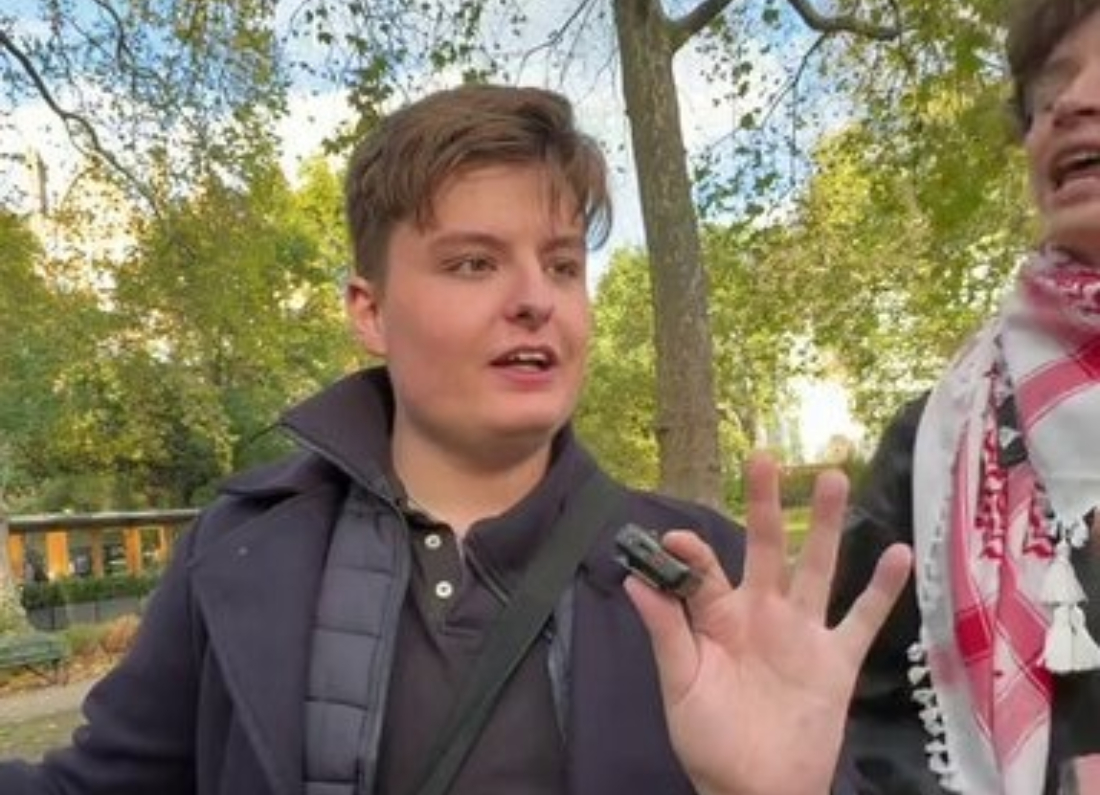
The footage features a discussion between the young activist and a woman of Asian heritage, who attempts to explain why the word is regarded as deeply offensive.
Moffitt is reported to argue that it can be used as an abbreviation for Pakistan or Pakistani, treating the meaning of the shortened word as though it were determined solely by its linguistic origin.
But the history of the term in Britain makes that explanation deeply contentious.
During the 1960s, 1970s and 1980s, the P-word became closely associated with racist abuse and attacks against South Asian communities.
The phrase used to describe those assaults incorporated the same slur, which was frequently directed at people regardless of whether they were actually Pakistani.
British Indians, Bangladeshis and other people of South Asian heritage were among those subjected to the abuse.
The word’s offensive meaning therefore cannot be separated from the wider history of racism and violence associated with its use.
The woman in the video reportedly attempts to explain that context while challenging Moffitt’s justification.
The exchange has renewed questions about the political messages promoted by the young activist and the treatment of racial minorities in his confrontational street videos.
Arrested following an allegation of racist language
Moffitt’s latest controversy follows his arrest during an appearance in Westminster on Sunday.
Footage circulated online showed police officers taking the activist away following reports that he had used the P-word during an interaction with a woman.
The exact circumstances of the allegation have not been independently established.
It remains unclear from the available reporting precisely what was said immediately before the arrest, what evidence police gathered or what offence officers suspected had been committed.
The videos circulating online should not be treated as proof that Moffitt committed a criminal offence.
He has disputed the basis of the police action and maintains that he was unfairly targeted.
There has been no independently confirmed announcement of a criminal charge or conviction arising from Sunday’s incident.
The distinction is important because the use of offensive language does not automatically establish that the legal threshold for a criminal offence has been met.
Police would need to consider the context of the remarks and the applicable law before any prosecution could proceed.
Young Bob says police have banned him from central London
Following his release, Moffitt published a statement on X condemning the conditions he said had been imposed.
He claimed he had been prohibited from entering central London, including Westminster, and from attending or reporting on certain protests described as Gen Z-style events.
“I’ve just been released on bail, and the case they’re trying to bring against me is an absolutely shocking attack by the establishment,” he wrote.
The activist argued that the restrictions prevented him from carrying out his usual activities, which include filming political discussions and confrontations in public places.
He said that, in his view, the conditions were designed to stop him from conducting his work.
Moffitt also claimed that investigators had been unable to produce witness statements supporting the allegation during his police interview.
“Nobody involved in the Gen Z protests came forward with a statement or any evidence against me, yet they’re still attempting to pursue a case,” he said.
Those claims represent Moffitt’s account of the investigation and have not been independently verified through police records.
His statement also criticised the legal representation he received during questioning.
The restrictions he describes are bail conditions rather than a court-imposed punishment following a conviction.
Their existence, if confirmed, would not establish that he is guilty of the alleged offence.
Who is Young Bob?
Moffitt has developed an online following through videos documenting confrontations with political opponents, anti-racism campaigners and members of the public.
He has presented himself as a Christian nationalist and supporter of stricter immigration policies, frequently appearing in public spaces to discuss immigration and British identity.
In September, he travelled to York, where he set up a gazebo decorated with the Union Jack and filmed exchanges with passers-by.
Local anti-racism campaigners gathered to oppose his appearance, chanting slogans against racism and displaying placards supporting refugees.
Police officers were present as the confrontation unfolded, with the gazebo eventually being taken down.
Moffitt has also faced criticism following previous confrontations with activists in other British cities, including Manchester and London.
Some of those incidents have resulted in competing allegations about physical altercations and the conduct of those involved.
He has argued that his activities amount to legitimate journalism and political discussion, while opponents accuse him of deliberately provoking confrontations that generate attention online.
His latest arrest has become another flashpoint in that wider dispute over public protest, freedom of expression and the responsibilities of people who film strangers for political content.
Why the word’s history matters
The justification reportedly offered by Moffitt rests on the suggestion that shortening the name of a nationality makes the resulting term acceptable.
But a word’s meaning is not determined solely by the words from which it originated.
In Britain, the P-word carries a history extending far beyond its literal association with Pakistan.
It was used extensively as a term of racial abuse during a period when South Asian families faced discrimination, harassment and violent attacks.
Campaigners organised against racist violence in neighbourhoods across the country, including areas where Asian communities were subjected to intimidation by organised far-right groups.
That history is why the term is widely understood as a slur rather than an ordinary abbreviation.
It is also why people of South Asian heritage have challenged attempts to present its use as harmless.
Language can acquire social meanings that are inseparable from the way it has been used against particular communities.
Moffitt’s reported explanation does not address that history or explain why the word should be considered acceptable despite its long association with racist abuse.
The legal question surrounding Sunday’s arrest is separate from the social question of whether the language is offensive.
A person can express a controversial or offensive opinion without necessarily committing a criminal offence, but that does not prevent others from challenging the words they use.
The case remains unresolved
Moffitt says he intends to release further footage relating to the events surrounding his arrest and subsequent police interview.
He has maintained that the allegations against him are unfounded and has described the restrictions on his movements as excessive.
The available reporting does not establish whether police have completed their investigation, whether the bail conditions have been independently confirmed or whether any charge will follow.
Nor does the latest circulated video, by itself, establish the precise circumstances of the incident that prompted Sunday’s arrest.
What it does show, according to the account accompanying the footage, is a political activist attempting to justify a word with a long history of racist abuse by presenting it as an abbreviation.
The woman challenging him reportedly explained why that argument ignores the experiences of people who have been subjected to the slur.
Moffitt, meanwhile, continues to insist that he has been unfairly targeted by the authorities.
He has promised to publish more footage of the incident, while the allegation behind his arrest remains unresolved.





Leave a Reply