

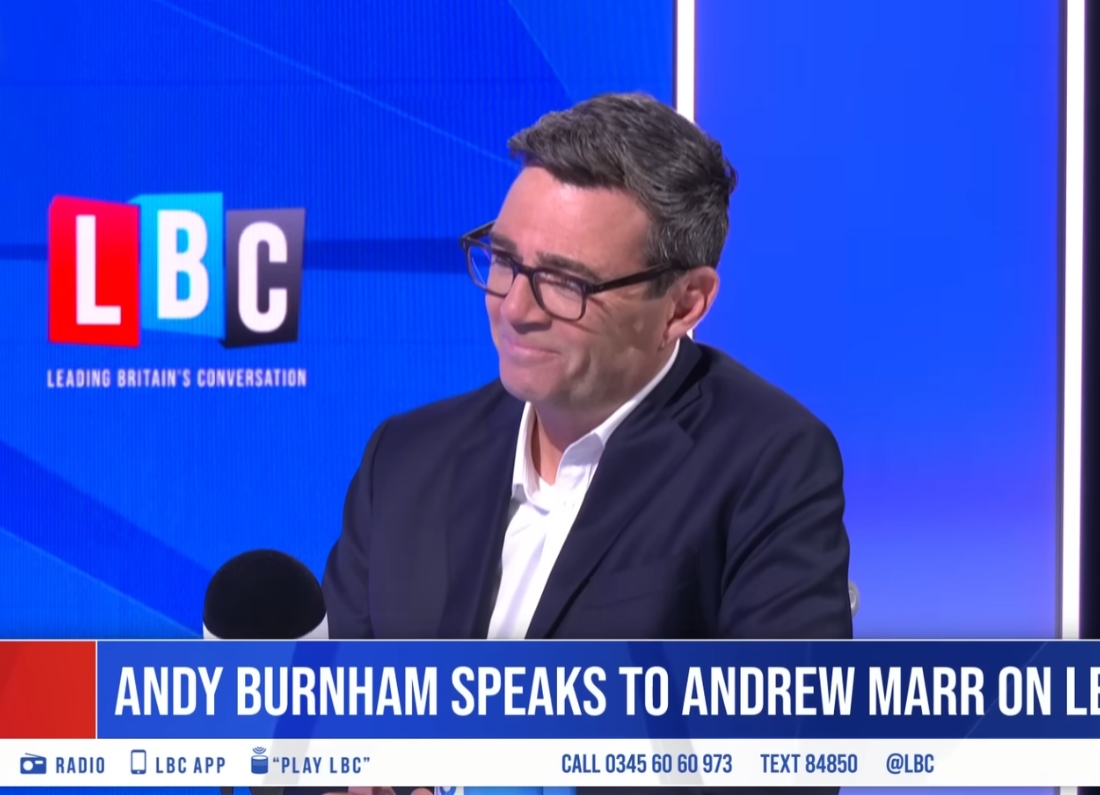
Andy Burnham has become the first British prime minister to publicly say that Russia interfered in the 2016 Brexit referendum, after revealing that he asked officials for a clear answer when he entered Downing Street.
Speaking on The Rest Is Politics, Burnham said he wanted to know whether Moscow had attempted to influence the vote and was told that it had.
He said:
“I asked the question coming to Downing Street, well was there interference in the 2016 referendum from Russia? I’ve had the clear answer that yes, there was.”
Burnham added that he believed it was important to put that information formally on the record because voters across Europe needed to understand the extent to which hostile states were trying to interfere in democratic politics.
The intervention is significant because successive British governments have spent years avoiding such a direct statement about the referendum, despite parliamentary investigations identifying Russian attempts to influence political debate and criticising ministers for failing to properly assess what happened.
It does not, however, mean the government is saying Russia changed the result.
Downing Street and Foreign Office minister Stephen Doughty have both stressed that while Russia attempted to interfere, there is no evidence that those efforts were successful or that the 52-48 Leave result was invalid.
Burnham says he wanted a straight answer after entering Downing Street
Burnham said one of the questions he raised after replacing Keir Starmer this summer concerned the extent of Russian interference in British democracy.
He told Rory Stewart and Alastair Campbell:
“These things are important now to put clearly on the record and I believe help voters in Germany and France understand that some of this politics is instigated via our enemies, namely Russia.”
He added:
“I think we’ve been too much on the back-foot on that actually and we haven’t informed people sufficiently about the extent to which people are seeking to disrupt the political process from overseas.”
The comments came after Burnham discussed the threat of Russian disinformation with German Chancellor Friedrich Merz, including concerns over the far-right AfD and Russian efforts to influence political debate in Germany.
Burnham had already used a speech to the United Nations last month to accuse Russia of mounting an “industrial-scale assault” on Western democracies through bots, fake websites, forged newspaper branding and other forms of information warfare.
At that time, he also said the British government had evidence that Russia tried to interfere in the 2019 general election.
The 2020 Russia report never said there was no interference
Burnham’s comments reopen one of the most contentious parts of the long-delayed parliamentary Russia report published in 2020.
That report was frequently described at the time as finding “no evidence” of Russian interference in Brexit, but its actual conclusion was more awkward for the government.
The Intelligence and Security Committee said ministers and intelligence agencies had not properly investigated the question in the first place.
The committee said it had:
“not been provided with any post-referendum assessment of Russian attempts at interference”
and criticised the government for failing to seek evidence in the way US intelligence agencies had after Russia’s interference in the 2016 American presidential election.
The committee also pointed to open-source research showing pro-Brexit and anti-EU material from Russian state broadcasters RT and Sputnik, as well as the use of bots and troll accounts.
It said that if British intelligence had carried out a proper assessment before the referendum, it was “inconceivable” that it would not have identified the Russian state’s intent to interfere in democratic processes.
That is an important distinction.
The 2020 report did not establish that Russia changed the outcome, but neither did it establish that nothing happened. Its central criticism was that the British state had failed to investigate properly enough to know the full extent of the activity.
Burnham’s government says the result still stands
The government has moved quickly to separate Burnham’s statement about interference from any suggestion that the referendum should be declared illegitimate.
Foreign Office minister Stephen Doughty told Sky News that Russia had attempted to interfere but said those efforts had not succeeded.
He said:
“They’ve attempted to, [but] they haven’t succeeded.”
Doughty also declined to go into detail about the intelligence behind Burnham’s comments, saying the government would not discuss the specifics of Russian operations against Britain.
A government spokesperson similarly reaffirmed that the referendum result remains legitimate.
That means Burnham’s claim should not be interpreted as an official declaration that Brexit was “caused by Russia” or that Leave would otherwise have lost.
The government’s position is narrower: Russia interfered, but there is no evidence the interference determined the outcome.
Farage calls Burnham ‘a liar’
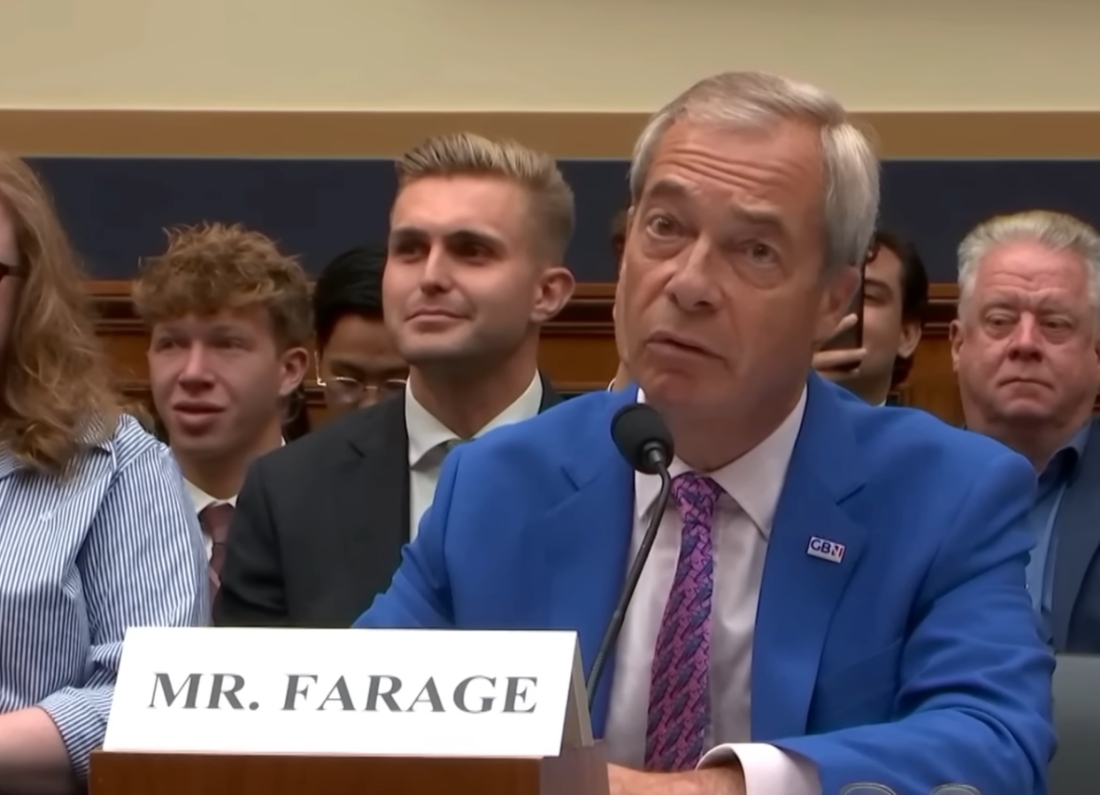
Nigel Farage reacted angrily to the prime minister’s remarks.
Speaking at a press conference in Hythe, the Reform UK leader said:
“There was no Russian interference, and the Russia hoax has run all the way through this.”
He accused Burnham of using Russia to undermine Brexit and reopen an argument the country had already settled.
Farage has long rejected claims that Kremlin activity played any meaningful role in the referendum.
When the Russia report was released in 2020, he said “some serious apologies” were due and argued that it had produced no evidence of Russian interference.
His critics have pointed to a different part of his record. Brexit Party MEPs voted in 2019 against stronger European Parliament measures aimed at countering Russian propaganda and disinformation, arguing at the time that they opposed giving more power and money to the EU.
More recently, Farage attacked Burnham’s new National Centre for Information Defence, which has been set up to tackle foreign disinformation and deepfakes, describing it as a potential “Ministry of Truth”.
The timing matters because Burnham is reopening Britain’s EU relationship
Burnham’s intervention also comes just as his government prepares for a major UK-EU summit in Brussels next month.
He has already said Brexit caused “more harm than good” and has left open a wide range of options for Britain’s future relationship with the bloc, including closer customs arrangements, single-market alignment and potentially even full membership at some point in the future.
He is expected to tell MPs that refusing to seek a better relationship with Europe would amount to a “dereliction of duty”, while insisting that any major change would require public consent.
That inevitably makes the Russia comments politically explosive.
Brexit supporters will argue Burnham is trying to weaken the legitimacy of the 2016 result just as he prepares to move Britain closer to the EU.
Pro-European campaigners, meanwhile, say confirmation of Russian interference strengthens the case for greater transparency about what happened during the referendum and for reconsidering Britain’s long-term relationship with Europe.
Burnham himself has been careful not to connect the two points directly. He has not said Russian interference invalidates the vote, and his government has explicitly rejected that conclusion.
Russia has always denied meddling
The Kremlin has consistently denied interfering in Britain’s democratic processes.
Russia has made similar denials over accusations of interference in elections in the United States and elsewhere, although Western intelligence agencies have repeatedly accused Moscow of using cyber operations, state-backed media, social-media manipulation and covert influence campaigns against democratic states.
The British government commissioned the Rycroft Review in 2025 to examine foreign financial influence and interference in UK politics. Published this year, it made 17 recommendations for strengthening the system against foreign influence and political finance risks.
Burnham’s government has since gone further by creating a dedicated centre intended to identify and counter foreign information operations.
What we still don’t know
The biggest unanswered question is what exactly Burnham was shown after becoming prime minister.
He has not identified the intelligence, the agencies involved or the specific forms of interference that led officials to give him what he described as a “clear answer”.
The government has also not said whether the assessment relies on intelligence gathered since the 2020 Russia report or whether agencies have simply become more willing to state conclusions publicly that were previously kept classified.
That distinction matters because Burnham’s wording is much firmer than anything previous governments were willing to say.
For the first time, a serving prime minister has put the basic point on the record: according to the information he was given after entering Downing Street, Russia did interfere in the 2016 Brexit referendum.
What remains unresolved is how extensive that interference was, what form it took and whether the public will ever see the evidence behind that conclusion.



Leave a Reply