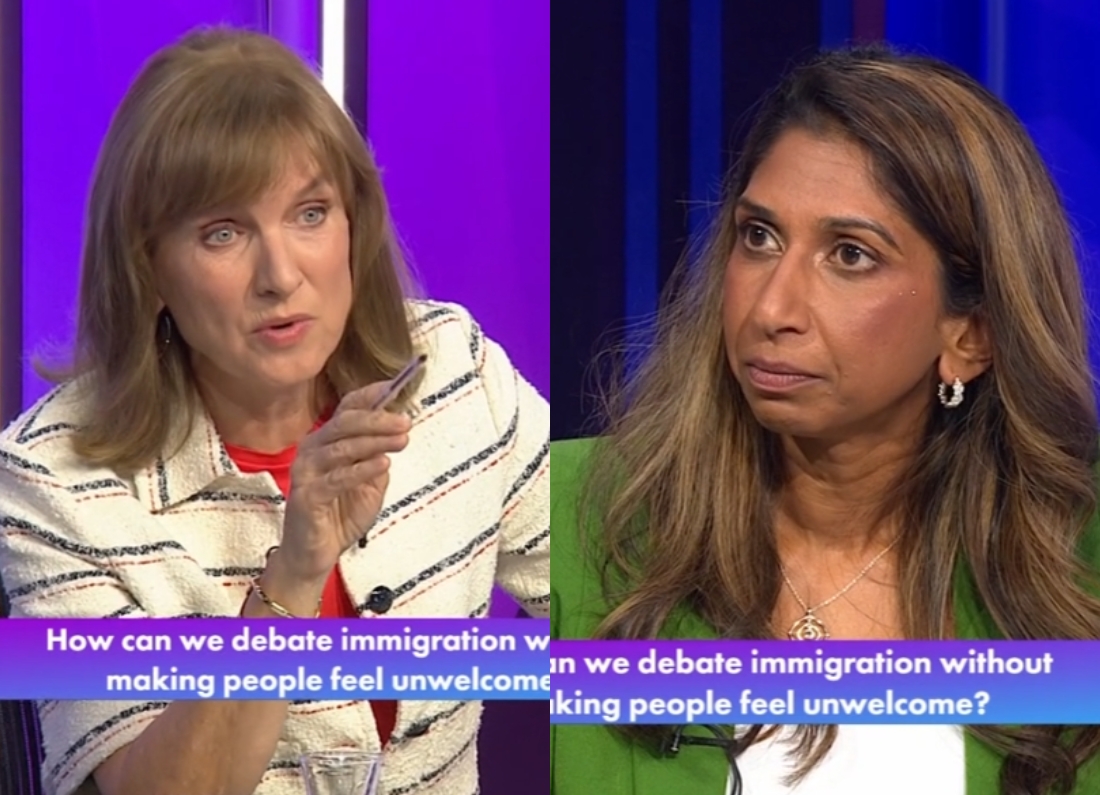
Suella Braverman complained that the Question Time audience was stacked against her on Thursday night, prompting Fiona Bruce to immediately explain how the BBC had actually selected the people in the room.
The Reform UK MP had faced repeated criticism during the programme in Tottenham, including over her views on English identity, immigration and the state pension.
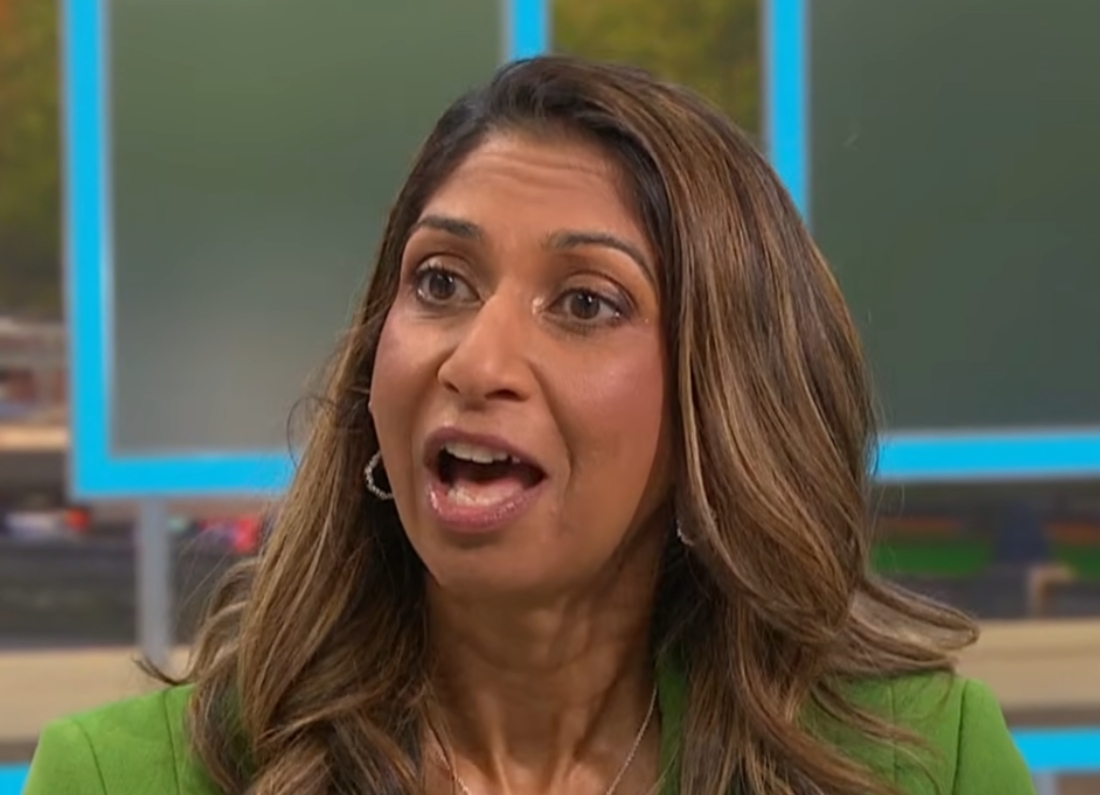
Towards the end of the show, Braverman appeared to suggest the hostile response she was getting was down to the political make-up of the audience.
She said:
“Very Labour audience. Very Conservative-Labour audience.”
Bruce paused before asking:
“Er, would you like to know the make-up of the audience, Suella?”
She then explained that Question Time asks audience members how they voted at the last election, how they intend to vote at the next election and checks their social media before putting together the final group.
Bruce said:
“You have a number of Labour people here, more Labour people than Reform people. We have Conservatives, we have Reform, we have Green, we have ‘don’t know’s.”
She then pointed out something fairly basic.
People who vote Conservative, Liberal Democrat, Green or do not yet know how they will vote are also perfectly capable of disagreeing with Reform.
“They may not agree with you,” Bruce said.
She added:
“That may feel like a lot. But there are Reform supporters here as well, who I’m sure do share your view.”
The complaint came after a rough evening for Braverman
Braverman had already been challenged several times by both the panel and members of the audience before raising the issue of bias.
One woman told her:
“Suella, I would say, I’ve not heard her say anything positive, once, throughout this whole debate.”
She continued:
“I would say it’s rhetoric like Suella’s and from the Reform party that is feeding discontent, lack of hope, and I think it’s really seeping into the nation’s morale.”
Bruce actually intervened at that point to remind viewers that Reform voters were present.
“I should point out, there are plenty of Reform voters in this audience that will not share that view, but I hear what you have to say.”
Braverman then made her complaint about the audience’s political make-up.
It was not the only difficult exchange she had during the programme.
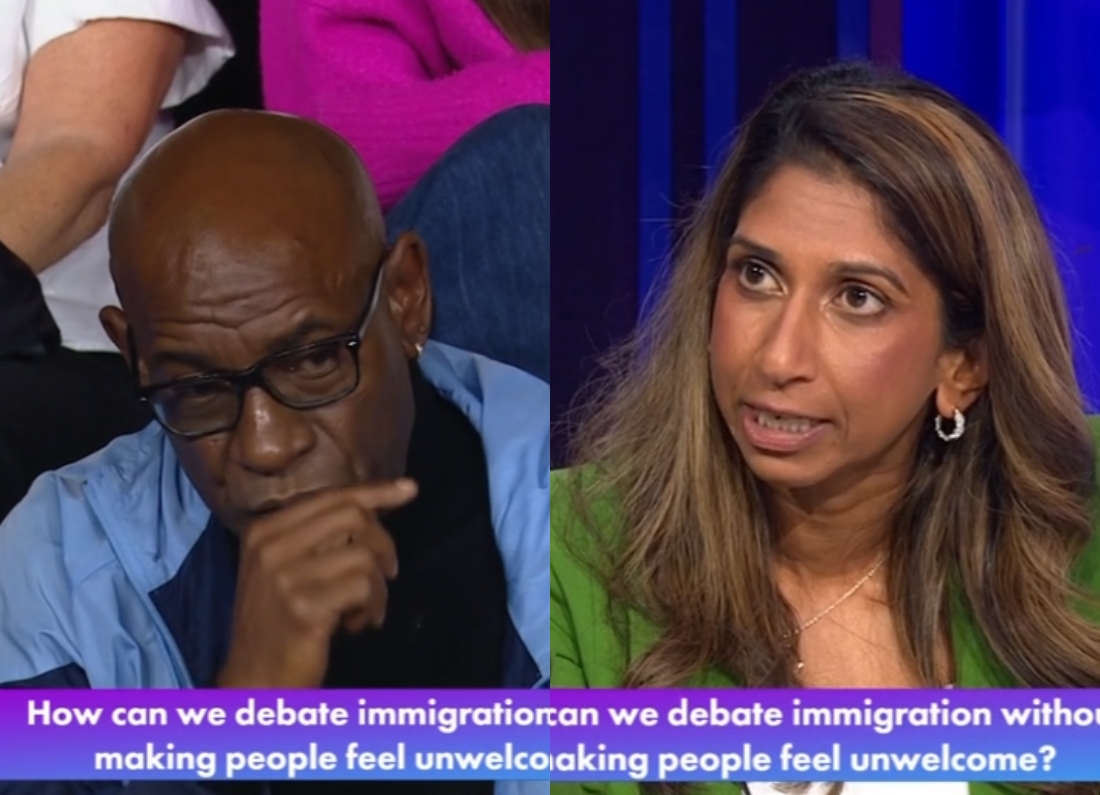
Earlier, a Black audience member confronted Braverman over her claim that Englishness should be understood as an ethnic identity.
He told her that her comments had “reinforced the racist argument” he had heard throughout his life from people telling him he was not English despite being born in the country.
Journalist Oli Dugmore later argued that the effect of Braverman’s position was to suggest that only white people could be English.
Bruce repeatedly asked Braverman whether a non-white person could be English and eventually told her:
“Ok, you’re not answering the question. I’m giving you lots of chances.”
That exchange had already begun circulating widely before the audience row took off.
Braverman had also clashed with Labour over pensions
The first question of the evening focused on Andy Burnham’s proposed reform of the state pension triple lock.
Braverman attacked the government over the plans, while Labour minister Miatta Fahnbulleh defended the policy.
At one point Fahnbulleh responded to Braverman by saying:
“It’s really important we don’t make things up.”
The line drew applause from the audience.
The government says the triple lock will remain unchanged until 2030. After that, pensions would still rise every year by at least inflation or 2.5 per cent, with additional increases where needed to keep their value in line with average earnings over time.
Burnham has admitted pension payments would rise more slowly than if the current triple lock remained in place indefinitely, with the savings intended to help fund a National Care Service.
Braverman and Reform oppose the change.
Clips of Fahnbulleh’s response also spread quickly online after the broadcast.
Reform has complained about Question Time audiences before
Braverman is not the first Reform politician to accuse the programme of having an audience biased against the party.
Zia Yusuf made a similar complaint earlier this year, claiming there were only a handful of Reform supporters in the audience during his appearance.
Bruce challenged that claim at the time too.
Question Time’s audience is not supposed to mirror the national vote exactly.
The programme is recorded in different locations around Britain, and producers attempt to include a range of political loyalties and views while also reflecting the area where the programme is being filmed.
Thursday’s episode was recorded in Tottenham, an area with strong Labour support.
Bruce made clear that there were still Labour, Conservative, Reform and Green supporters present, alongside undecided voters.
The reaction online was immediate
Mike H shared the clip of Bruce correcting Braverman.
@mikoh123 wrote:
“Suella Braverman is fact checked live on #bbcqt by Fiona Bruce.”
@shatners144143 wrote:
“Sooner Braverman is out of politics the better.”
@dave43law wrote:
“Braverman owned yet again BUT BY BRUCE this time”
@iskibar14 wrote:
“Wouldn’t know a fact if it bit her on the nose”
@MaxFRobespierre wrote:
“Nigel will be demanding an apology by tomorrow morning”
@_leegray picked out Bruce’s line:
““I know that might feel like a lot” 😂😂😂”
@DanielYorkLoh wrote:
“When a Deformer gets out of the insane Reform echo chamber”
Those reactions were collected by The Poke after the clip began spreading online.
There were also viewers who agreed with Braverman and accused the BBC of bias.
One reaction quoted by AOL said:
“Oh god. I just watched BBC Question Time and it’s evident that the audience is handpicked to be as woke and left-wing as possible. You can almost predict the response before anyone’s even finished speaking.”
Another viewer criticised Bruce’s questioning of Braverman over Englishness and said the Reform MP had handled the exchange well.
Braverman was therefore right about one thing: plenty of people watching at home shared her frustration with the programme.
Jordon Scott is a digital media specialist and editor at The Daily Britain. He focuses on political coverage, platform strategy, and ensuring journalism remains accessible without compromising editorial standards.
He oversees publication structure, reach, and transparency across the site.






Leave a Reply