

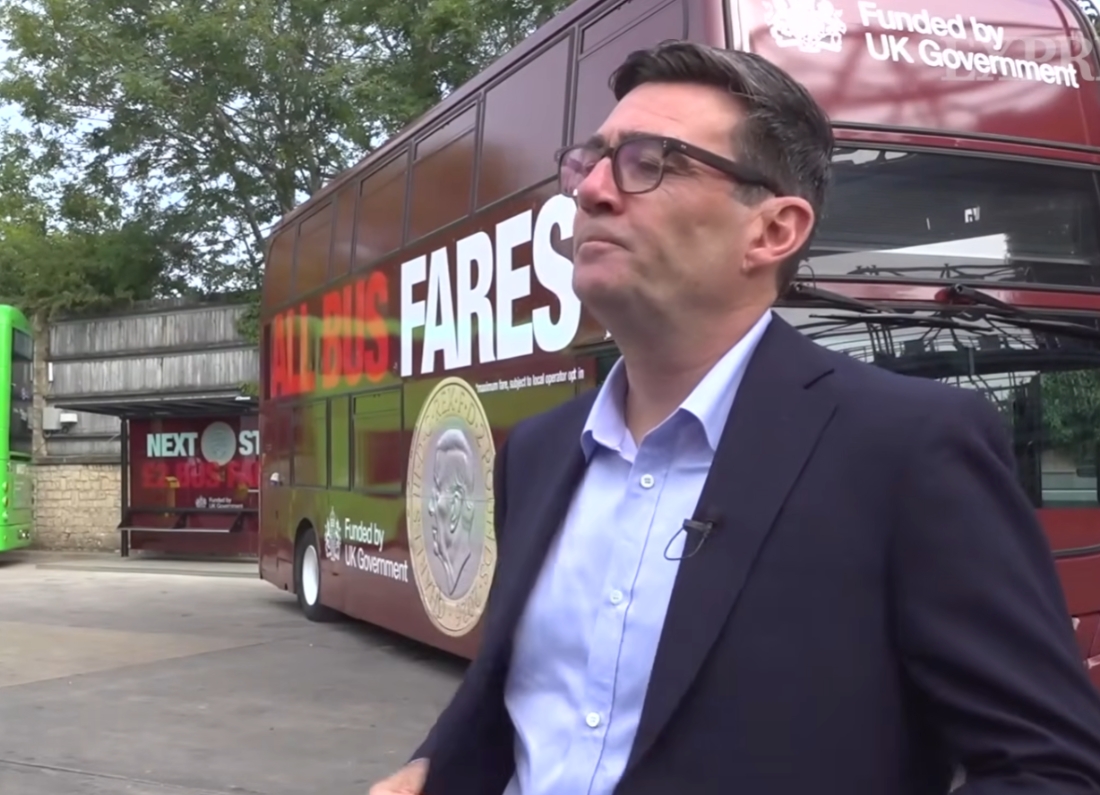
Disabled people across England will be able to use their bus passes at any time of day under a change announced by Prime Minister Andy Burnham.
From 1 April 2027, anyone with an eligible disabled person’s bus pass in England will be able to travel free regardless of the time. Currently, the national scheme generally only guarantees free weekday travel between 9.30am and 11pm, though some councils already pay to extend that locally. The government says it’ll provide £60m to remove those restrictions nationally, ending a system where support for disabled passengers varies considerably depending on where they live.
Burnham described buses as a “lifeline” and said it was wrong that disabled passengers could hold a free bus pass but still have to pay if they needed to travel early in the morning.
What this actually changes
The change matters most for disabled people who need to travel during morning rush hour, for work, education, healthcare or other appointments. Right now, someone trying to catch a bus to work at 8am can find their pass simply doesn’t entitle them to free travel yet. Councils have been able to offer more generous arrangements themselves, which is exactly why different parts of England have ended up with different rules. From next April, the time restriction disappears nationally.
“Buses are a lifeline for so many people, making it easier to get to work, education and healthcare,” Burnham said. “It’s simply not right that many disabled people cannot travel using their pass during certain times of the day. So we’re fixing that.” He said disabled people would now have “unlimited free bus travel 24/7.”
This isn’t new territory for Burnham specifically. Greater Manchester permanently removed time restrictions from disabled concessionary passes earlier this year, following previous trials. The government’s now taking that same approach nationwide.
Ending the ‘postcode lottery’
Of the £60m behind the policy, £40m comes from the Department for Work and Pensions, the remaining £20m from the Department for Transport. Transport Secretary Heidi Alexander said the government was ending a “postcode lottery” that left disabled people with different levels of support depending on where they lived. The government argues removing the restriction could also make it easier for some disabled people to access employment and training. Work and Pensions Secretary Pat McFadden said disabled people had for too long held a free bus pass that didn’t actually let them get to work for free.
This lands alongside a wider government push on bus costs, with the £2 bus fare cap confirmed through all of 2027, and free travel for under-16s on local buses through August.
Disability charities welcome it, with caveats
The decision’s been welcomed by disability organisations, though campaigners are clear that wider accessibility problems remain. James Taylor of Scope said many disabled people face additional everyday costs and often need to travel early in the morning, and that round-the-clock free travel would put money back in people’s pockets while removing a real barrier to work, education and healthcare.
Bus Users UK chief executive Lydia Horbury put the core criticism of the old rules simply: “Disabled people don’t live off-peak lives.” Disability Rights UK also welcomed the change but warned it doesn’t resolve everything, research it cites found 37% of disabled people surveyed said the 9.30am restriction was a genuine barrier. The group points out that eligibility and the application process still vary between local authorities, and that this new national entitlement only covers buses, not other forms of public transport. It’s also raised concerns about companion passes for disabled people who can’t travel independently.
Sophia Kleanthous, policy and campaigns officer at Disability Rights UK, said removing the time restriction gives disabled people real freedom to travel when they actually need to, but called it “only part of the journey.”
Who actually qualifies for a disabled person’s bus pass
This change doesn’t create a new pass or automatically make everyone on disability-related benefits eligible. Existing eligibility rules stay in place. Under the legislation governing the English National Concessionary Travel Scheme, the statutory categories include people who are blind or partially sighted, profoundly or severely deaf, unable to speak, or unable or virtually unable to walk because of a disability. People without arms or unable to use both arms can also qualify, as can people with a learning disability and some people who’d be refused a driving licence on medical grounds. Local authorities remain responsible for processing applications and assessing eligibility.
For anyone who already holds an eligible pass, though, the change itself is simple. From 1 April 2027, the national restriction on using it before 9.30am on weekdays is gone. Instead of the system deciding when a disabled person should need to travel, the pass works whenever they actually need it.











Leave a Reply