

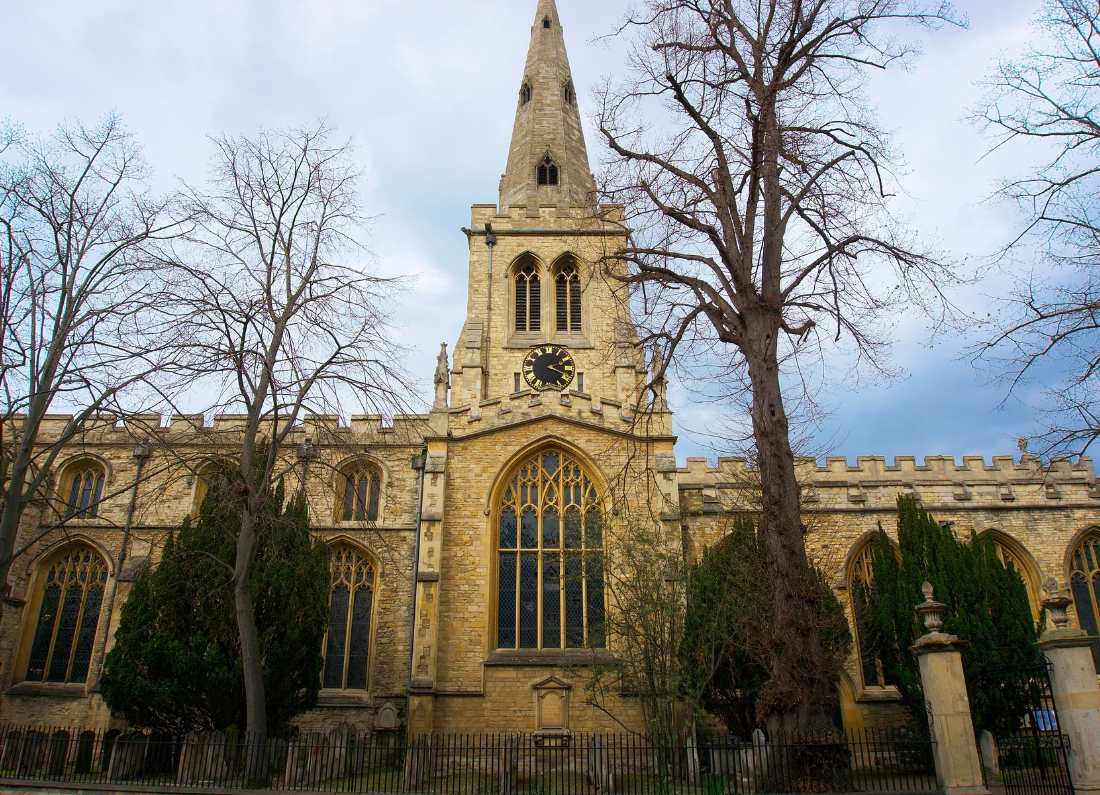
The Church of England has insisted it is pressing ahead with plans for a £100m slavery reparations fund despite receiving a legal challenge, with church leaders declaring they “continue to be outraged” by the institution’s historic links to the slave trade.
The Bishop of Norwich, the Right Rev Graham Usher, told the General Synod, the church’s governing assembly, that a legal challenge is delaying plans to establish the church’s “Fund for Healing, Repair and Justice,” also known as Project Spire, a grant-making programme intended to benefit black communities.
How the fund came about
The project was proposed after research published by the Church Commissioners, who control more than £11bn of church assets, found the church had invested some of its historical wealth in the slave-trading South Sea Company during the 18th century, funded in part through money granted by Queen Anne.
Questions from within the church
The proposal has faced sustained questioning from Synod members over its progress, legitimacy and legality, with debate running throughout this week’s session. Some historians have specifically challenged the 2023 Church Commissioners research, arguing the church invested relatively little directly in the South Sea Company’s slave-trading operations, and that most of its money went into South Sea annuities, a form of government debt, rather than the trading company itself.
Neil Burgess, a lay Synod member from the York diocese, pressed the point directly: “What profit did Queen Anne’s bounty specifically make from direct slave trading activity, as opposed to investing in government debt through South Sea annuities?”
Usher defended the research’s central finding: “Expert historians have demonstrated that South Sea annuities were enmeshed in the enslavement business of the South Sea Company and separating these annuities from the trade is unreasonable.” Whether that historical entanglement is close enough to justify treating the annuities as slavery-linked investment remains genuinely disputed among historians, and is likely to be a central question in whatever legal challenge the church is now navigating.
Where the fund actually stands
Usher confirmed the programme has “not been abandoned” despite the criticism and legal difficulties. “We had planned by now to apply to the Charity Commission to register the proposed Fund for Healing, Repair and Justice. We have, however, not totally unexpectedly, received a legal challenge in relation to this work. This must be respected, considered in a disciplined manner, and factored into our planned timetable for progress.”
He was direct about the church’s continued position on the underlying issue: “We continue to be outraged by our historic links to African chattel enslavement and our part in the responsibility for the enduring legacies of this abhorrent past that continue to affect the lives of people today.”
What the fund would and wouldn’t do
The Church of England has been clear that the fund will not pay direct reparations to descendants of enslaved people. Instead, it would distribute grants to businesses and community projects benefiting black communities more broadly, a distinction that separates it from the direct-payment model some reparations campaigners have called for elsewhere, including recent calls for the UK itself to address reparations claims from Commonwealth nations.
Wider tensions in the church
The Archbishop of York, the Most Rev Stephen Cottrell, told Synod on Friday that the Church of England continues to find it “a challenge” to improve diversity in its clergy and congregations, and has been “wrestling” with reports suggesting institutional racism within the church. “We have seen Project Spire envision a work of healing, justice and repair,” he said. “Yet honest reflection requires us to acknowledge that our response has not always been equal to our aspirations, and that the work of justice, repentance and repair remains unfinished.”
The Archbishop of Canterbury, the Most Rev Sarah Mullally, said shortly before taking up the post in January that the church had a “gospel imperative” to create the fund, while seeking to reassure financially struggling parishes that the money would not come from the separate, much larger pot of funding provided directly to them.
Parish-level concerns
Josile Munro, a lay Synod member, said parishes still needed “accurate information about the part our church played in slavery and the vision and aims of Project Spire,” reflecting ongoing uncertainty at the local level about the project’s rationale and scope. Usher said an “explainer” document had been produced for circulation to parishes to address exactly this gap.
The cost so far
A total of £1.15m has already been spent by the Church Commissioners on research and other fees associated with launching the project, according to figures disclosed after John Brydon, a lay Synod member from the Norwich diocese, asked for a breakdown of costs incurred to date.
Where this sits in the wider debate
The Church of England’s fund is one of several reparations-related initiatives currently generating debate in Britain. Reform UK has proposed banning visas for people from countries formally seeking slavery reparations from Britain, a policy Commonwealth leaders have said will not deter them from continuing to press their case. Suella Braverman has separately argued the relationship should run in the opposite direction, claiming former colonies owe Britain for the empire’s “investment,” a claim that runs directly counter to the historical premise underlying the Church of England’s own position.
The legal challenge facing Project Spire means the fund’s actual registration with the Charity Commission remains on hold, with the church saying it will factor the challenge into its timetable “in a disciplined manner” rather than abandon the initiative altogether.











Leave a Reply