

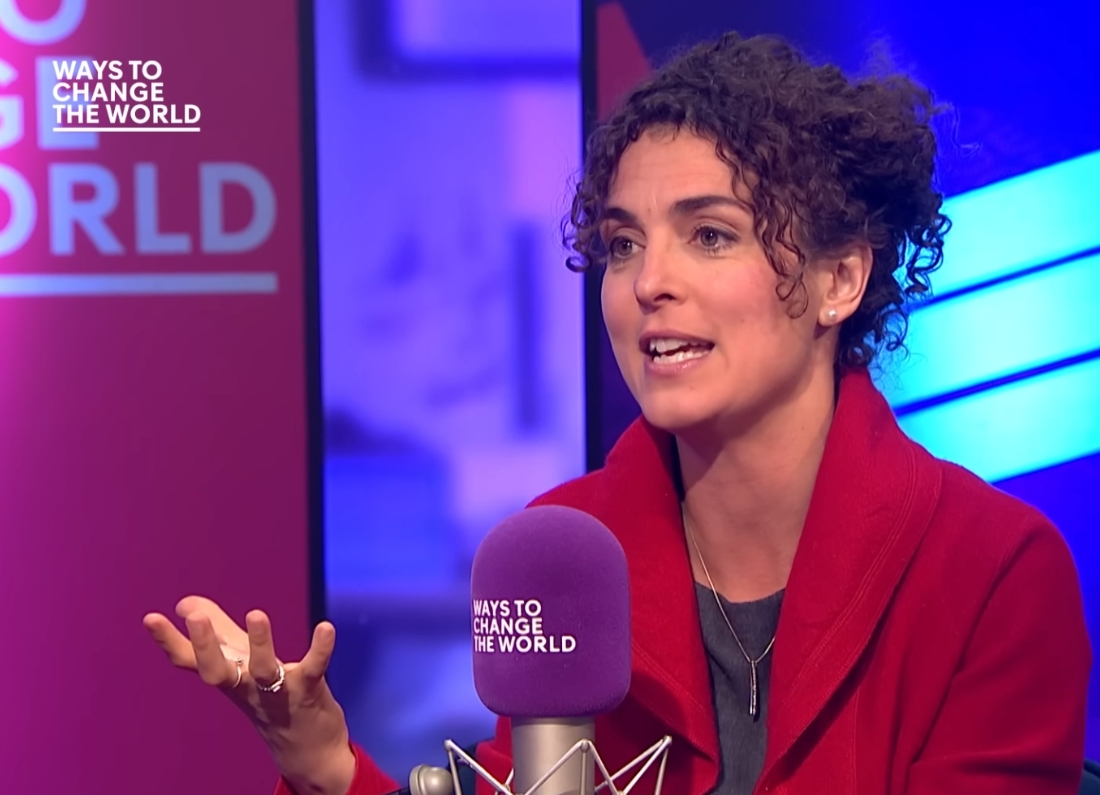
A Channel 4 interview with economist Clara Mattei has been generating significant attention online, with the YouTube clip accumulating tens of thousands of comments from viewers saying they have been “waiting their entire life” for this kind of conversation to reach mainstream television. The reason is straightforward: Mattei says, plainly and accessibly, something that most economics coverage never does – that capitalism is not the natural order of things, that it was built through violence, and that it can be changed.
Mattei is a professor of economics and the author of Escape from Capitalism, which argues that the problems most people experience as inevitable – poverty, unemployment, inflation, unaffordable housing – are not failures of the system but features of it. Here is what she said, and why it is resonating.
Capitalism was not spontaneous
The first and most fundamental point Mattei makes is that capitalism did not emerge naturally from human nature. It was constructed – and specifically constructed through the exclusion of ordinary people from the means of subsistence. The clearest example, she says, is the enclosure system in Britain: the historical process by which common land was enclosed by private owners, removing people’s ability to feed and sustain themselves independently and forcing them into the labour market.
“Economics as a discipline is deeply ahistorical – purposefully – to make you think that this is a natural spontaneous order,” she told the interviewer. “The reality is that if you look at history, our economic system was born through violence.” Once people could no longer be self-sufficient, they had no option but to go and work for whatever wage was on offer. That dependency – that lack of alternatives – is the foundation the system rests on, and it requires active maintenance to preserve.
The implication is uncomfortable but logical: if capitalism required violence to establish and requires continuous enforcement to maintain, then the idea that it simply reflects human nature is not a description of reality but a story told to make the current arrangement seem inevitable.
Austerity is not a mistake – it is a feature
One of the most striking parts of the interview is Mattei’s argument about austerity. The standard framing is that austerity is a painful but necessary response to debt – an unfortunate technical requirement. Mattei’s argument is that this framing is itself part of the ideology. Austerity is not irrational, she says. It is extremely rational – for the logic of profit.
“Austerity keeps us in a subordinate condition. It keeps us needing to go work for whatever job to pay our bills.” Cut social services and people become more dependent on the labour market. Keep unemployment at a certain level and workers lose their ability to demand better conditions. The system needs a pool of people desperate enough to accept whatever is on offer. That is not a design flaw. It is the design.
She makes a similar argument about inflation. Economic models, she points out, typically identify workers as the cause of inflation – wages are too high, people are consuming too much. The proposed solution is higher interest rates, which create unemployment, which reduces workers’ bargaining power. The models present this as neutral technical analysis. Mattei argues it is deeply political: the workers are defined as the problem so the solution can be to discipline them.
The numbers that frame the argument
Mattei grounds her argument in figures that, placed together, are difficult to dismiss. Twelve people in the world own more than the bottom four billion. In Britain, 157 billionaires now own wealth equivalent to 22% of GDP – up from 5% in 1990. One in three British children lives in poverty. In the United States, 77% of workers live paycheck to paycheck and half of the homeless population has a job. The world’s first trillionaire is making $137 million a day in passive income on assets that are growing at around 40% annually in an economy growing at 1%.
Mattei’s point – which echoes what economists like Gabriel Zucman and Gary Stevenson have been making – is that none of this is accidental. The system is working as designed. The question is who it was designed for.
Why the poorest people support the system that harms them
The interviewer put to Mattei one of the most persistent questions in left economics: why do the people most harmed by the system so often support it? Her answer centres on what the Italian theorist Antonio Gramsci called hegemony – the idea that capitalism stays in power not only through coercion but through consent, by convincing those who are suffering that the system is actually serving their interests.
The mechanism, she argues, is mainstream economics itself. The discipline teaches that those at the top are there because they saved, worked harder, behaved more rationally. If you are poor, it is because you deserve to be. That mythology – built into textbooks, encoded in mathematical models, repeated by think tanks funded by the people it protects – makes it very difficult to look upward at the 12 people who own more than four billion others and ask why. It is far easier to look sideways or downward and find someone to blame.
“People have internalised it so deeply that the only explanation they have for the fact that they’re living a dehumanising life is to blame it on those who are even weaker than them, because those are the ones they fear the most – because they can’t see who is actually benefiting.”
What she thinks should happen instead
Mattei is clear that she is not arguing for a return to Soviet-style state control. She describes herself as inspired by Marxian political economy but explicitly rejects the idea that Marx was a statist – his critique, she says, was precisely of the capitalist state as an oppressive machine in service of capital. What she is proposing is more local, more participatory and more grounded in immediate material needs.
She points to participatory budgeting – invented in Brazil in the 1980s – as a concrete example of democratic decision-making over economic resources. In Tulsa, Oklahoma, where she is based, she runs an organisation called the Forum for Real Economic Emancipation, which holds public assemblies, organises around food sovereignty and campaigns for the wealthy to be taxed locally so that money is allocated according to need rather than political priority.
Asked what she would do if she could change the world with one fell swoop, her answer was characteristically grounded. “I would prioritise the two most important issues right now: the physical violence and the killing of people, and food as a primary resource. And I would try to organise these two priorities as society’s priorities.” Her point is that virtually everyone, whatever their politics, can agree that children should not go hungry and people should not be killed. Starting from those two non-negotiable needs and working outward is, she argues, more genuinely revolutionary than almost anything else on offer.
Why the interview went viral
The top comment on the Channel 4 YouTube clip reads: “I’ve been waiting my entire life for this conversation to be mainstreamed.” More than 7,000 people have liked it. Others called it “brilliant,” credited the interviewer for “challenging her fairly,” and urged Channel 4 to platform her again.
The reason is not hard to understand. Mattei is saying something large numbers of people privately believe but rarely hear articulated on mainstream television: that the system they are struggling inside was not designed for them, was not inevitable, and is not permanent. The empowering element of the argument – the part that makes it feel different from standard left-wing critique – is the final move. We built it, she says. We built the system. That means we are the architects. And if we are the architects, there is space for something else.
That is a harder message to dismiss than people might expect.
You can watch the interview below:
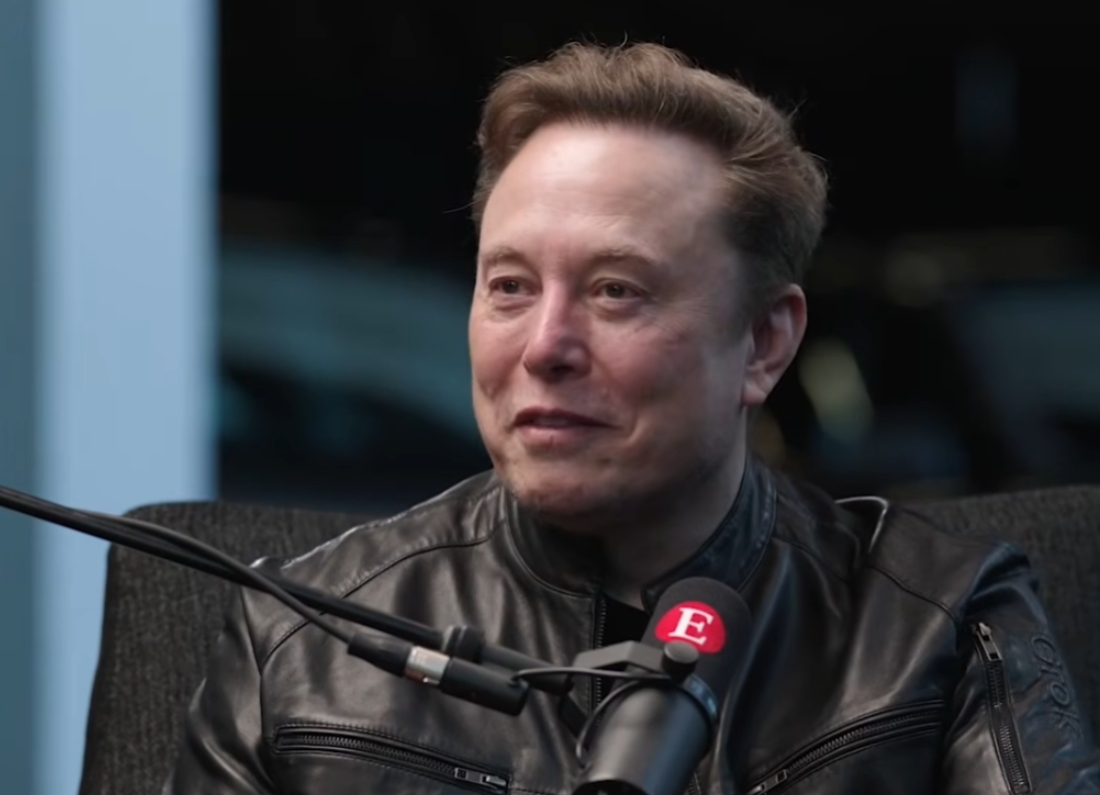
You may also like: Gary Stevenson’s warning about Elon Musk’s trillionaire fortune is genuinely terrifying






Leave a Reply