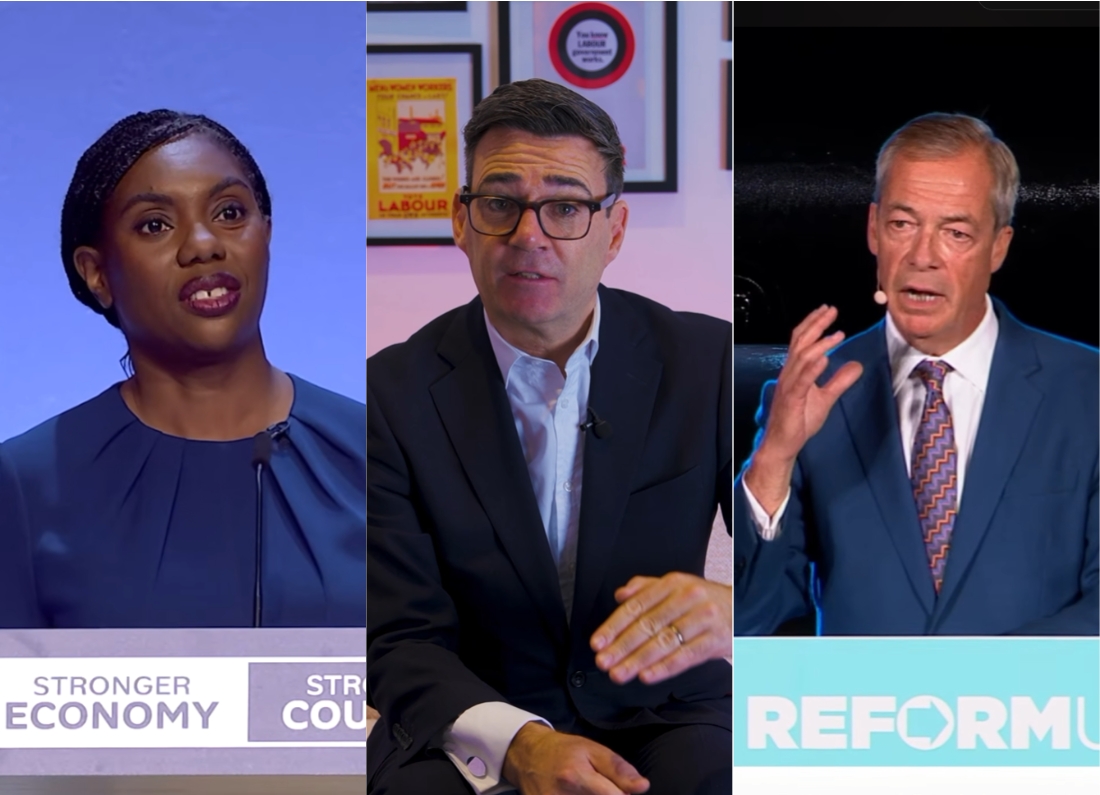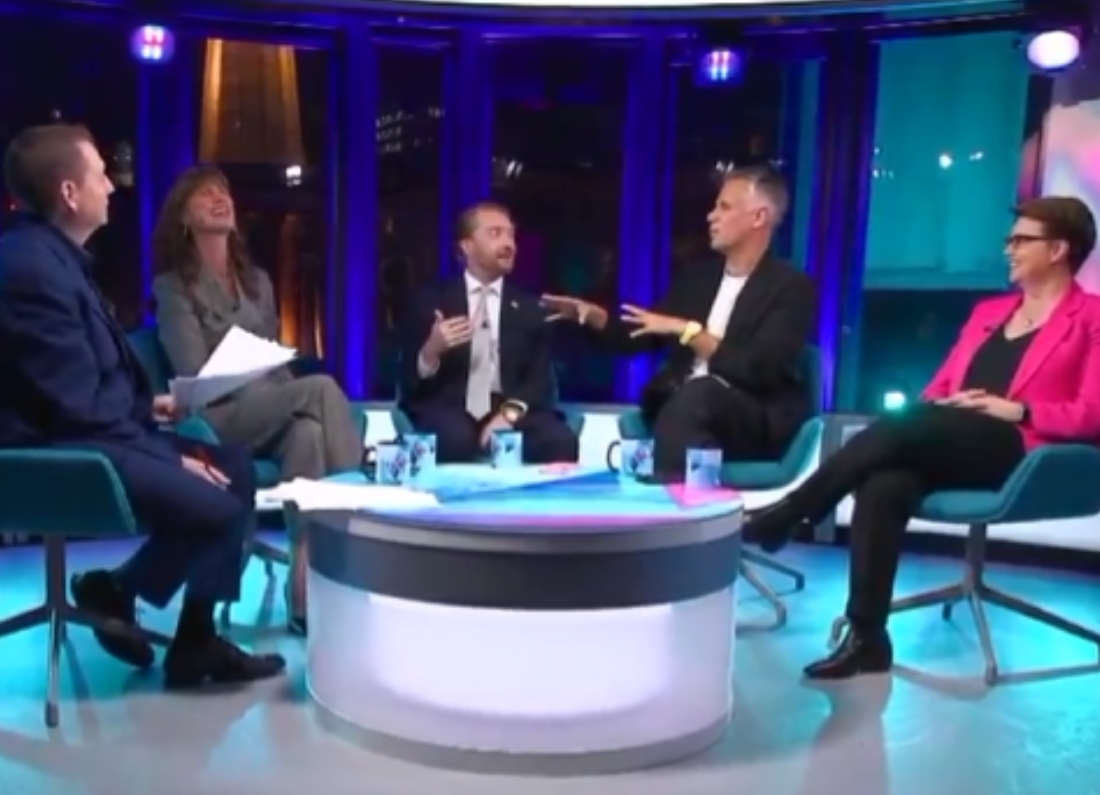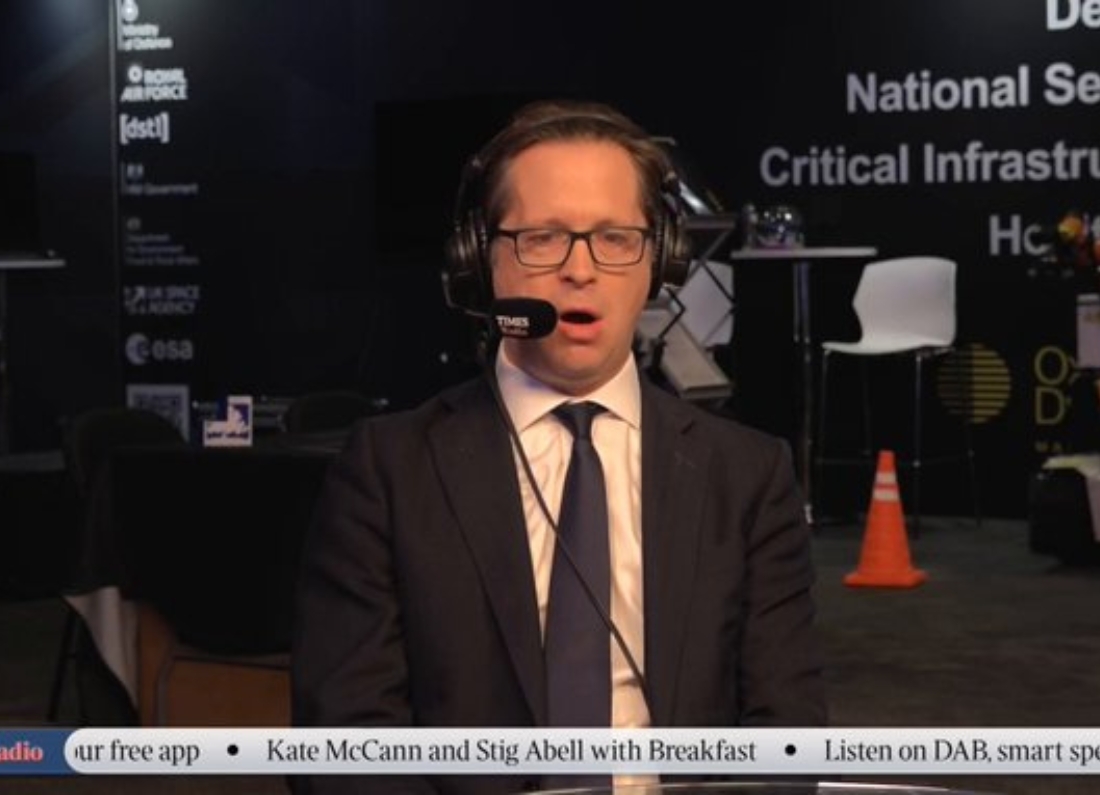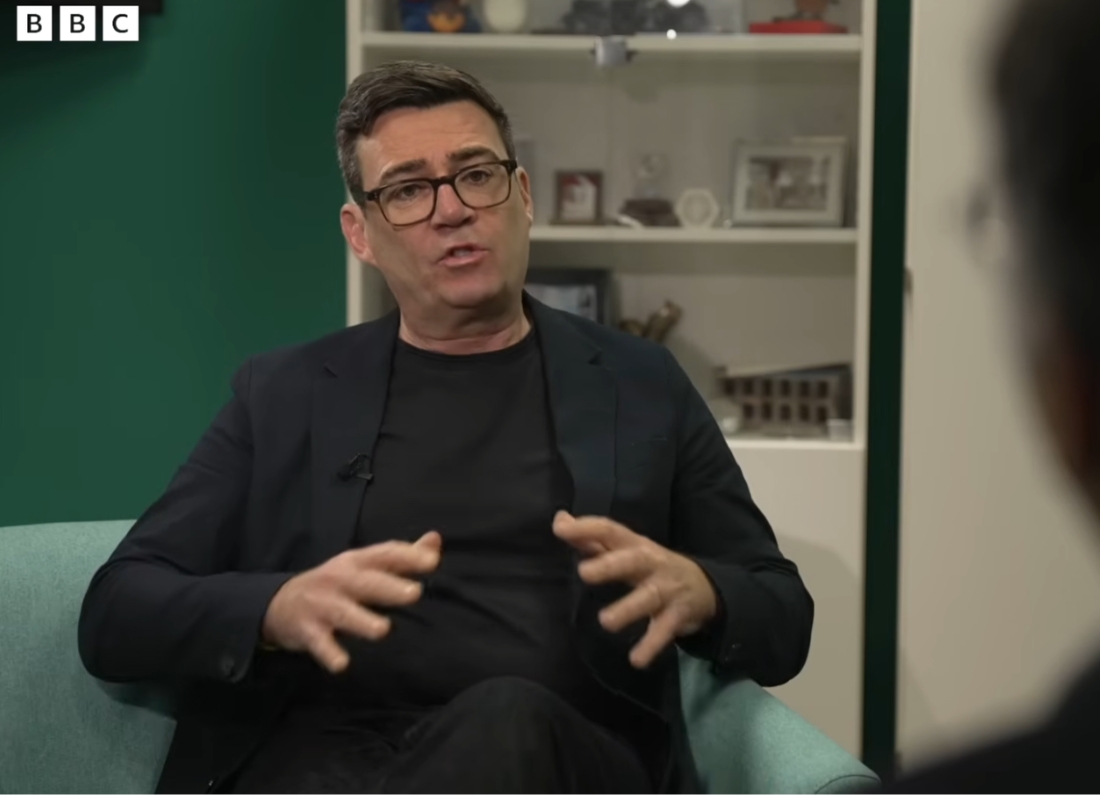
Andy Burnham has set out the most specific vision of any Labour leadership candidate in a weekend of interviews, calling for mass renationalisation of energy, water, housing and transport, accusing Reform’s leading figures of being the “arch-Thatcherites” whose deindustrialisation left northern communities devastated – and, on the most immediately relatable policy question of the parliament, declaring that VAR should be scrapped entirely.
“Gone. Get rid,” Burnham told ITV on Saturday when asked about the Video Assistant Referee system, speaking as a self-declared Everton season ticket holder whose patience with the technology is clearly exhausted. The Greater Manchester mayor’s ability to make a specific, unhedged statement that millions of football fans across the country will immediately understand is precisely the quality his supporters believe makes him the Labour figure most capable of reaching the voters the party has lost.
The VAR verdict – and why it matters politically
Burnham’s case against VAR was not a throwaway line. He set it out in full.
“It’s killing spontaneity in the ground. I’m a season ticket holder at Everton. Killing spontaneity. You can’t celebrate a goal because you think someone somewhere in an industrial unit is going to rule it out. So that’s a bad thing. But number two, it doesn’t get decisions right. You could put up with it if it then got decisions right, but it doesn’t get the decisions right and it’s not consistent. It takes a decision one week for one favoured team and then doesn’t do the same thing the next. So it’s killing spontaneity, it’s not getting decisions right. Get rid.”
The Football Supporters’ Association has consistently found large majorities of supporters wanting VAR scrapped or fundamentally reformed. The League of Ireland scrapped it after one season. Every major fan consultation has found the same pattern: the technology was sold as a tool to correct clear errors and has instead become a mechanism for manufacturing uncertainty where certainty previously existed.
It will resonate particularly in Coventry, where Frank Lampard’s Sky Blues are heading to the Premier League for the first time in 25 years. VAR arrives at the CBS Arena next season. Every supporter who has watched a celebration cut short by a flag they couldn’t see or a check for an infringement nobody in the ground noticed will recognise Burnham’s “someone in an industrial unit” description immediately.
The platform – mass renationalisation
Beyond VAR, Burnham used a Channel 4 News interview to set out the broadest economic programme of any Labour leadership candidate so far. His framing was direct: deindustrialisation and privatisation had left communities like Makerfield “without good jobs and people unable to afford the basics,” and the answer was to reverse course.
“We need a different path completely. What is that path? Put more things back under stronger public control: energy, housing, water, transport.”
He drew explicitly on his own record in Greater Manchester: “I’ve done that with buses in Greater Manchester. I was the first to do it. Margaret Thatcher deregulated them and then they just work for the private shareholders and not for the paying public. I put them back under public control with the £2 fares, so you take that principle and apply it to energy and apply it to the water. That’s what I think we need to do.”
The renationalisation platform is considerably more ambitious than anything Starmer’s government has delivered. It goes beyond Labour’s current policy of nationalising rail franchises and British Steel. It positions Burnham explicitly to the left of the current government on economic policy – and directly at the point where the Equality Trust’s ghost GDP data, as we reported in our billionaires and GDP piece, shows that the privatisation era has concentrated wealth and extracted value from communities rather than creating it.
“The country gave away its control with basic things that people depend upon every day and that was a big mistake in my opinion,” Burnham said.
On Reform – “arch-Thatcherites” who devastated the north
Burnham’s attack on Reform in a BBC interview was sharper than anything Labour’s leadership has managed. Asked about the party that won 50.4% of the vote in Makerfield’s wards at last week’s local elections, he went to the historical argument directly.
“Deindustrialisation began in the 1980s when some central figures in Reform were arch-Thatcherites. That was devastating all of those years ago and communities were left with nothing.”
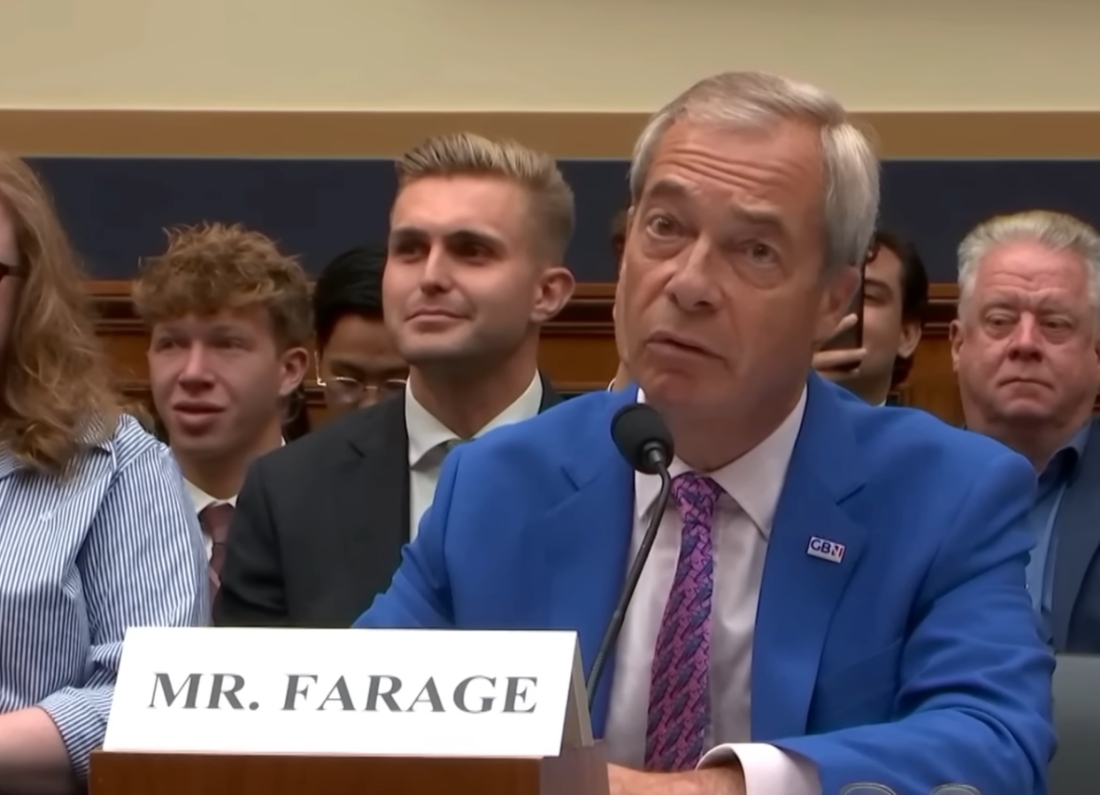
The argument is specific and potent. Farage, Zia Yusuf and the figures shaping Reform UK’s agenda are the political and intellectual descendants of the Thatcherite movement that closed the mines, deregulated the buses, privatised the utilities and left communities like Makerfield without the industrial base that had sustained them for generations. Burnham is saying: the people offering themselves as the solution are the same people – or their political children – who created the problem.
As we reported in our Question Time piece on Danny Kruger, an audience member won a round of applause calling Reform “a party of billionaires.” Burnham’s “arch-Thatcherites” line makes the same argument through a specifically northern lens: these are not your people. They never were.
The Makerfield connection – not carpet-bagging
Burnham was explicit about why Makerfield specifically. He has faced questions about whether he is parachuting into a convenient seat rather than representing a genuine community.
“I wouldn’t have just gone anywhere to carpet bag, you know, any old constituency. It matters to me that I have a connection – I live literally on the edge of this constituency, my kids went to school a few hundred yards down the road. I know people here, I know how they think, how they feel.”
He described the shared frustration he and Josh Simons – the MP who is standing aside to make way for him – have felt: “We both felt the frustration of facing a Westminster system that just does not have answers for these streets, these communities.”
And on the byelection campaign itself: “I’m going to be really honest about that on doorsteps. I’m not going to spend my time point-scoring. I would say no, I’m hearing you. We’re going to really change things and put the country on a different path. We’ve got to talk seriously about reindustrialising the north-west, getting those good jobs, changing education so it’s not all about the university route but it’s also about the technical paths for kids to get into those good jobs.”
You can watch it in full below:
The challenge ahead
As we reported in our full Makerfield byelection analysis, Reform won 50.4% of the vote across Makerfield’s wards in last week’s local elections, with Labour on just 22.7%. Burnham won the same constituency with 62% in his mayoral race. The gap between those two numbers – his personal pull versus Labour’s current brand appeal – is the byelection in miniature.
Farage has vowed to “throw absolutely everything” at Makerfield. Reform regards Burnham as a far tougher long-term opponent than Starmer and understands that stopping him in Makerfield would be one of the most significant blows they could deliver to Labour’s recovery. As we reported in our Labour leadership rules explainer, Burnham cannot formally enter a leadership contest without a Westminster seat. Everything depends on Makerfield.
The platform he has set out this weekend – renationalise energy, water and housing, scrap VAR, call Reform the “arch-Thatcherites” who destroyed the north – is a pitch aimed squarely at the specific voters who have moved from Labour to Reform in constituencies exactly like this one. Whether it is enough to bridge a gap of 27 percentage points is the question only the byelection can answer.