Wes Streeting has resigned as Health Secretary with one of the most devastating ministerial resignation letters in recent Labour history, telling Keir Starmer that “where we need vision, we have a vacuum” and that “it is now clear that you will not lead the Labour Party into the next general election” – as Angela Rayner was simultaneously cleared by HMRC and paid her outstanding tax bill, freeing her to enter the leadership race.
The resignation, confirmed Wednesday, triggers the formal beginning of a Labour leadership contest that has been building since last Thursday’s catastrophic local election results, in which the party lost more than 1,500 councillors, was reduced to third place in Wales and failed to make headway against the SNP in Scotland. More than 90 Labour MPs had publicly called for Starmer’s departure before Streeting moved.
What Streeting said – the full assessment
The resignation letter is worth quoting at length because its specific language signals both what Streeting believes and how he intends to campaign.
On the election results: “For the first time in our country’s history, nationalists are in power in every corner of the United Kingdom – including a dangerous English nationalism represented by Nigel Farage and Reform UK. This represents both an existential threat to the future integrity of the United Kingdom, but Reform UK also represent a threat to the values and ideals that have made this country great.”
On Starmer’s strengths – offered before the attack: “You have shown courage and statesmanship on the world stage – not least in keeping Britain out of the war in Iran.” He also credited the 2024 election victory and praised Starmer as someone he was “proud to fight alongside in the trenches of that campaign.”
On the failures: “Where we need vision, we have a vacuum. Where we need direction, we have drift. This was underscored by your speech on Monday.” He cited “individual mistakes on policy like the decision to cut the winter fuel allowance to the ‘island of strangers’ speech, all of which have left the country not knowing who we are or what we really stand for.”
On leadership style: “Leaders take responsibility, but too often that has meant other people falling on their swords. You also need to listen to your colleagues, including backbenchers, and the heavy-handed approach to dissenting voices diminishes our politics.”
On the inevitable conclusion: “It is now clear that you will not lead the Labour Party into the next general election and that Labour MPs and Labour Unions want the debate about what comes next to be a battle of ideas, not of personalities or petty factionalism. It needs to be broad, and it needs the best possible field of candidates.”
Significantly, Streeting stopped short of explicitly announcing his own leadership bid in the resignation letter. He did not name himself as a candidate. The letter clears the ground, states the conclusion and issues what amounts to an invitation to a broad contest – while preserving the formal announcement for a separate moment.
The NHS legacy claim
Even in resignation, Streeting sought to protect his record at Health. The letter welcomed new NHS waiting times statistics released Wednesday showing the government had surpassed its targets – and claimed the progress came from Labour’s work. As we reported in our Streeting donations and NICE piece, Streeting’s record on NHS waiting lists – a 330,000 reduction – has been his most defensible achievement in government and the centrepiece of his anticipated leadership pitch.
The attempt to bank that record before leaving the department is politically deliberate. His leadership campaign will be built, in part, on the argument that he delivered while others talked.
Angela Rayner – cleared and free
The timing of Rayner’s HMRC clearance, arriving on the same day as Streeting’s resignation, dramatically reshapes the contest. Rayner has paid the £40,000 she owed HMRC, who confirmed they were satisfied there had been no tax avoidance.
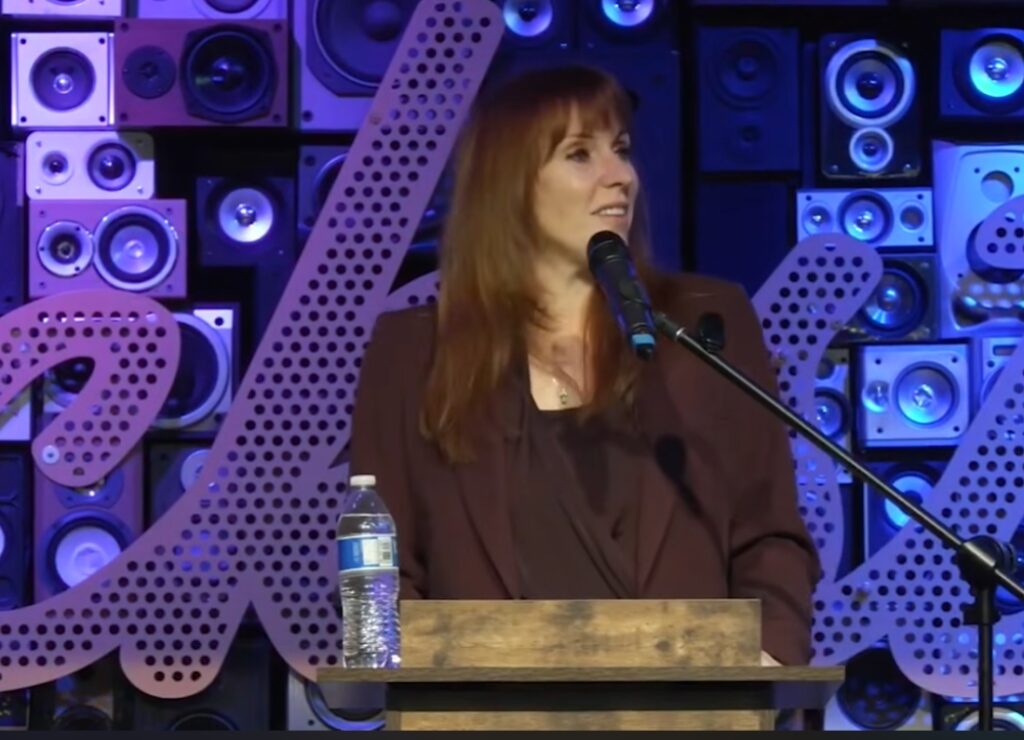
As we reported in our Miliband ‘stop Streeting’ piece, Rayner’s path to a leadership bid had been blocked by the outstanding HMRC investigation. That barrier no longer exists.
She refused to rule out standing in a contest but insisted she would not directly challenge Starmer. The distinction – not challenging Starmer directly but potentially running once a contest is formally underway – is the carefully hedged language of a politician who has not yet decided how far to go but is no longer constitutionally blocked from going there.
The field as it now stands
The Labour leadership race is shaping up as follows:
Wes Streeting – has resigned from cabinet without formally declaring. Expected to announce his candidacy imminently. Has significant MP support but, as one Labour MP noted this week, “Wes can’t win with the membership.”
Ed Miliband – as we reported in our Miliband soundings piece, his team has “gone dark – they are definitely organising” as a soft-left stop-Streeting candidate. Expected to stand if Burnham cannot get back to parliament.
Angela Rayner – now cleared by HMRC and technically free to run. Allies previously suggested she was no longer determined to go for the top job. That position may change given Wednesday’s developments.
Andy Burnham – the most popular candidate with members at 42% first preference in the Compass poll. Still requires an unannounced byelection to return to parliament. NEC sources have signalled they could reverse the Burnham block if Starmer’s authority crumbles.
Keir Starmer – has told allies he is determined to stand in any contest as the incumbent. As we detailed in our leadership rules explainer, he automatically enters any contest without needing nominations, confirmed by a 2016 court case.
The path to a formal contest
Any challenger needs 81 MPs – 20% of the parliamentary party – to formally submit their nominations to the party’s general secretary. With 90 MPs already publicly calling for Starmer’s departure and Streeting having resigned, the question of whether 81 can be assembled around a specific candidate is now the key procedural threshold.
As we explained in our structural explainer on Labour’s rules, the sitting leader is included in any contest automatically. This means a contest beginning does not end Starmer’s leadership – it begins a months-long process in which he can fight to survive through the membership vote.
The constitutional dimension
Starmer’s position as Prime Minister depends not only on party rules but on whether he retains the confidence of parliament and his cabinet. As we reported in our analysis of why prime ministers keep falling, Boris Johnson survived the party process but was brought down by the constitutional one when Rishi Sunak triggered a chain of ministerial resignations. Streeting is the most senior minister yet to resign. More are expected to follow.
The vision vacuum – and what it means for the contest
Streeting’s phrase “where we need vision, we have a vacuum” will define the terms of the contest that follows. It is a direct critique of the specific failure of Starmer’s reset Monday speech – which we covered in full in our make-or-break speech piece – to provide the kind of defining political mission that the moment demanded.
As we explored in our James O’Brien addiction to drama piece, O’Brien’s argument that Britain has developed a structural addiction to political crisis since 2016 is illustrated with precision by this moment: the Health Secretary who oversaw the largest fall in NHS waiting lists in years leaving government in a resignation letter that will be remembered and discussed long after the specific policy achievements have faded.
The contest has begun. Britain’s fifth prime minister in three years may be chosen in the coming months. The starting gun has been fired.