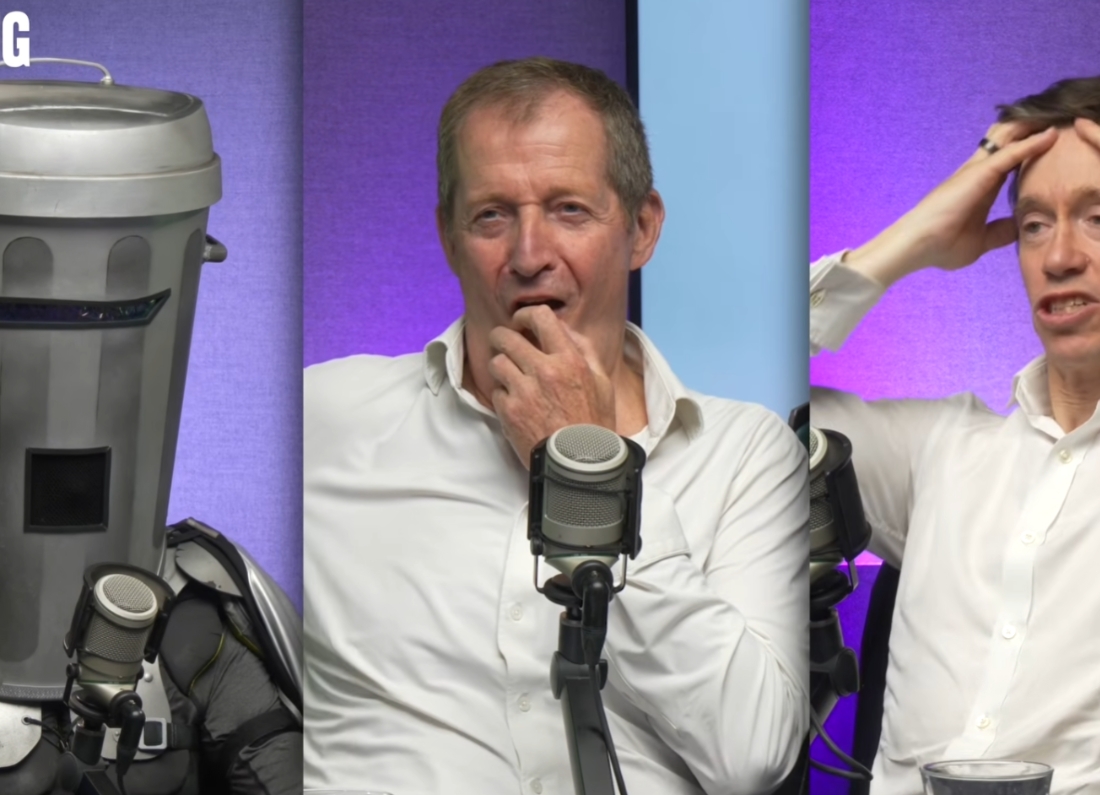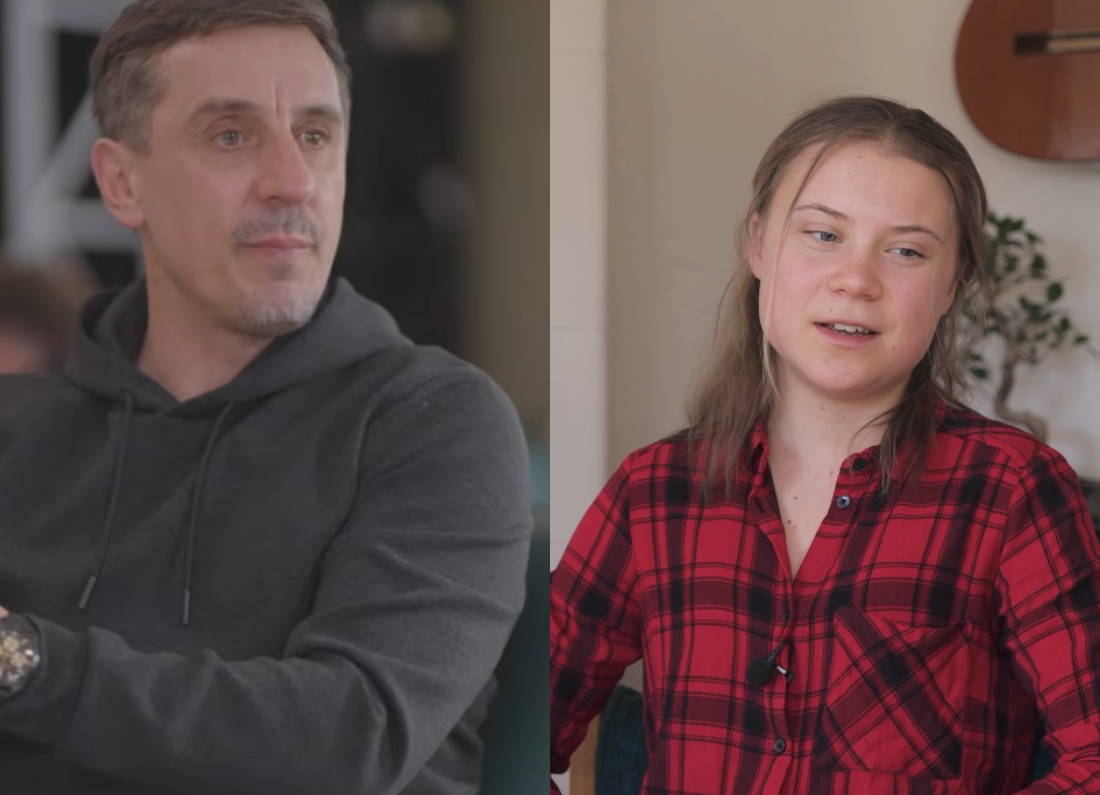
More than 245 public figures – including Greta Thunberg, Gary Lineker, Tracey Emin, Riz Ahmed and David Oyelowo – have signed an open letter defending Misan Harriman, the chair of the Southbank Centre’s board of governors, against what they describe as a “dishonest smear campaign” by media outlets who accused him of promoting Golders Green attack “conspiracies” and comparing Reform UK voters to Nazis.
The letter has generated more than 53,000 complaints to press regulator Ipso about the coverage – more than double the 26,000 people who complained about Jeremy Clarkson’s 2022 column in which he said he wanted the Duchess of Sussex “paraded naked through the streets of every town in Britain.”
What Harriman actually said – and what he was accused of saying
The controversy centres on two separate incidents during the week of the Golders Green terror attack and the local election results.
The first concerned Harriman sharing a social media post that questioned the proportion of media coverage given to the Muslim victim of the Golders Green attack, Ishmail Hussein, relative to the two Jewish victims. The Telegraph characterised this repost as promoting a “conspiracy” about the attack. Critics, including Labour MP David Taylor, said the repost “risked minimising the antisemitic nature of the attack.” Taylor said the posts were “incredibly inappropriate for the chair of a charity board.”
The second, and more contentious, incident concerned a video in which Harriman quoted the late American writer Susan Sontag while reflecting on the local election results. He said: “She said when thinking about the Holocaust, 10% of people in any population are cruel no matter what, and 10% is merciful no matter what and the other – this is important – the other remaining 80% could be moved in either direction. It’s such a profound way to look at us. In the context of yesterday’s election result it is something which I think is really topical.”
The Telegraph ran a story headlined: “Southbank Centre chief ‘compares Reform victory to Holocaust.'” Karen Pollock, chief executive of the Holocaust Educational Trust, criticised Harriman, asking: “How on earth could yesterday’s election results ever be comparable to the Holocaust?”
Robert Jenrick, the Reform MP who was dismantled by a Question Time audience member over the Westferry housing scandal – as we reported in our full piece on that exchange – called Harriman a “crass moron” and called for him to be removed from his position. He wrote: “This crass moron should be nowhere near a taxpayer-funded organisation.”
What the letter says
The open letter, signed by 245 individuals, directly contests the framing of both Telegraph stories. “The purpose of the smear campaign, which we repeat is entirely without foundation in fact, is to traduce and marginalise Misan,” it reads. “And it is intended to send a message to others that if they speak out, they will be subject to harassment and threats.”
The letter states that “trying to silence responsible critics of Israel by smearing them as antisemitic does not protect Britain’s Jewish community.”
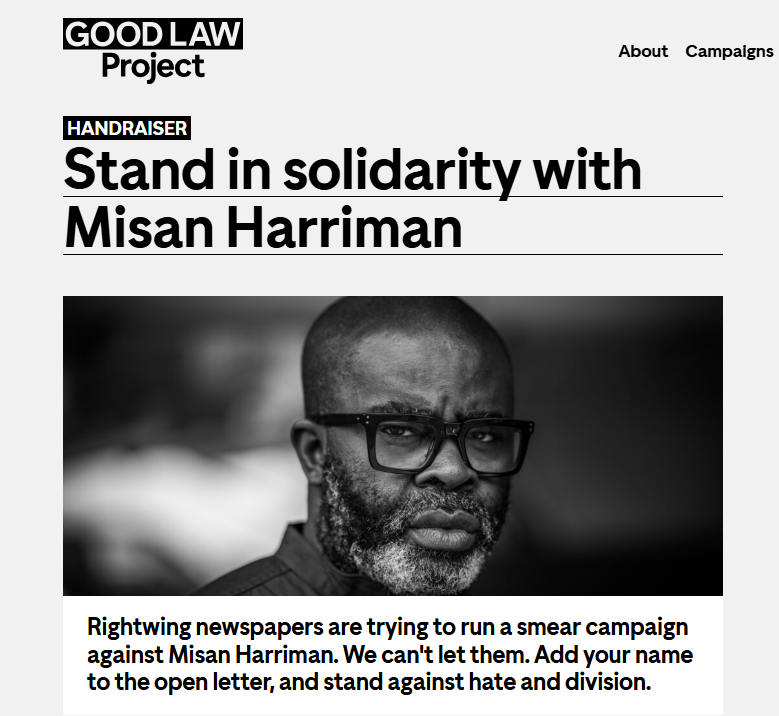
Several Jewish cultural figures signed the letter alongside the more prominent non-Jewish signatories – including Pulitzer prize-winning Sontag biographer Benjamin Moser, actor Morgan Spector and photographer Jillian Edelstein. Their inclusion is politically significant: it directly complicates the framing of the controversy as a straightforward case of antisemitism versus its critics.
What Harriman said in response
Harriman told the Guardian: “We have reached the point where truth itself is being crushed by the very institutions that are supposed to uphold it. I will never whisper about the oppressed. I stand with truth, I stand by my right to use my voice to help others.”
The specific question of the Sontag quote
The Sontag observation that Harriman cited – that in any population, 10% will always be cruel, 10% will always be merciful and 80% can be moved in either direction – is a genuine and widely cited piece of political philosophy about the nature of moral behaviour in populations. It is not a Holocaust comparison in the sense of saying that Reform’s election victory is equivalent to the Holocaust or that Reform voters are equivalent to Nazis.
The question of whether using that specific Sontag quote, in the context of reflecting on an election in which a far-right party made historic gains, was appropriate is a legitimate one. But the question of whether using a philosophical observation that Sontag originally made in the context of the Holocaust to analyse any other political situation constitutes “comparing” that situation to the Holocaust is a different and considerably more complex question.
The leap from “quoted Sontag, who was thinking about the Holocaust” to “compared Reform victory to Holocaust” requires several intermediate steps that the Telegraph’s headline elided entirely. Whether that elision was an honest summary of the video’s content or a deliberate framing choice is precisely the question the 53,000 Ipso complainants have asked the press regulator to consider.
The broader context – free speech and public figures
The Harriman case sits within a broader and increasingly contentious debate about the limits of free expression for people who hold positions at publicly funded cultural institutions, as we discussed in our coverage of the Polanski Times cartoon controversy and the Golders Green response.
The signatories of the open letter frame this as an attempt to silence legitimate speech through coordinated media pressure. Harriman’s critics frame it as appropriate scrutiny of a person in a position of public trust at a taxpayer-funded organisation during a week of heightened community tension.
The Southbank Centre’s statement attempted to thread the needle, affirming that it “condemns all forms of antisemitism, hatred and discrimination” while also noting that “all Southbank Centre board members, including the chair, have the right to exercise their freedom of expression within the law” and that “the personal views of individual members of our board do not represent the views of the Southbank Centre.”
Harriman has been chair since 2021. He built a significant public profile during the Black Lives Matter protests, was chosen by the Duke and Duchess of Sussex to shoot their portrait, has worked with children who fled Gaza and is an ambassador for Save the Children. He is the subject of a forthcoming documentary by Bafta-winning director Andy Mundy-Castle.
Whether those credentials insulate him from legitimate criticism of specific social media posts, or whether the criticism of those posts was legitimate in the first place, is a question the Ipso complaints process will now need to address. The 53,000 people who lodged those complaints clearly believe they know the answer.