Angela Rayner has issued a sweeping Sunday statement declaring that blocking Andy Burnham from parliament was a mistake, that Labour’s approach “isn’t working,” that the Mandelson scandal exposed “a toxic culture of cronyism,” and that this may be the party’s “last chance” to show it understands what the moment demands – in an intervention that significantly raises the stakes of Keir Starmer’s make-or-break speech on Monday morning.
The statement, published on X in two lengthy threads, is the most comprehensive public critique of Starmer’s leadership yet from someone who served in his cabinet, and comes as the parliamentary mathematics of his political survival grow more precarious by the hour.
As we reported in our piece on Catherine West’s ultimatum, the former Foreign Office minister has given the cabinet until Sunday evening to elect a new leader among themselves – or she will begin collecting 81 signatures to trigger a formal leadership election on Monday morning. Rayner’s statement lands into that specific window.
What Rayner actually said – and what it means
The statement is notable not for one line but for the cumulative weight of its contents. Read in full, it is a forensic indictment of the government Rayner was part of, delivered with the specific authority of someone who was in the room.
She named the Mandelson scandal directly: “The Peter Mandelson scandal showed a toxic culture of cronyism.” As we reported in our full coverage of the nine bombshells from McSweeney’s committee evidence, the scandal produced a fired ambassador, a sacked permanent secretary, a resigned chief of staff, 15 Labour rebels and a parliamentary standards investigation into whether Starmer misled the House.
She named the winter fuel cut: “Decisions like cutting winter fuel allowance just weren’t what people expected from a Labour government.” The cut – which removed the £300 payment from millions of pensioners who were not in receipt of pension credit – was one of the earliest and most politically damaging decisions of Starmer’s government.
She took aim at economic inequality in terms that echo the Green Party’s message more than Labour’s recent record: “For too long, successive governments have allowed wealth and power to concentrate at the top without a plan to ensure the benefits of economic growth are shared fairly.”
And she named Farage directly: “We must tackle the inflow of dodgy money in our politics – something that Nigel Farage, who took £5 million in a secret personal gift from an offshore crypto baron, will never do.” The framing of Harborne as an “offshore crypto baron” is the sharpest political attack yet on Farage’s financial arrangements, coming as the Standards and Electoral Commissions both investigate the undisclosed gift – as we detailed in our latest piece on the by-election threat.
The Burnham intervention
The most immediately consequential line in Rayner’s statement is the one on Burnham. “This is bigger than personalities, but it is time to acknowledge that blocking Andy Burnham was a mistake.”
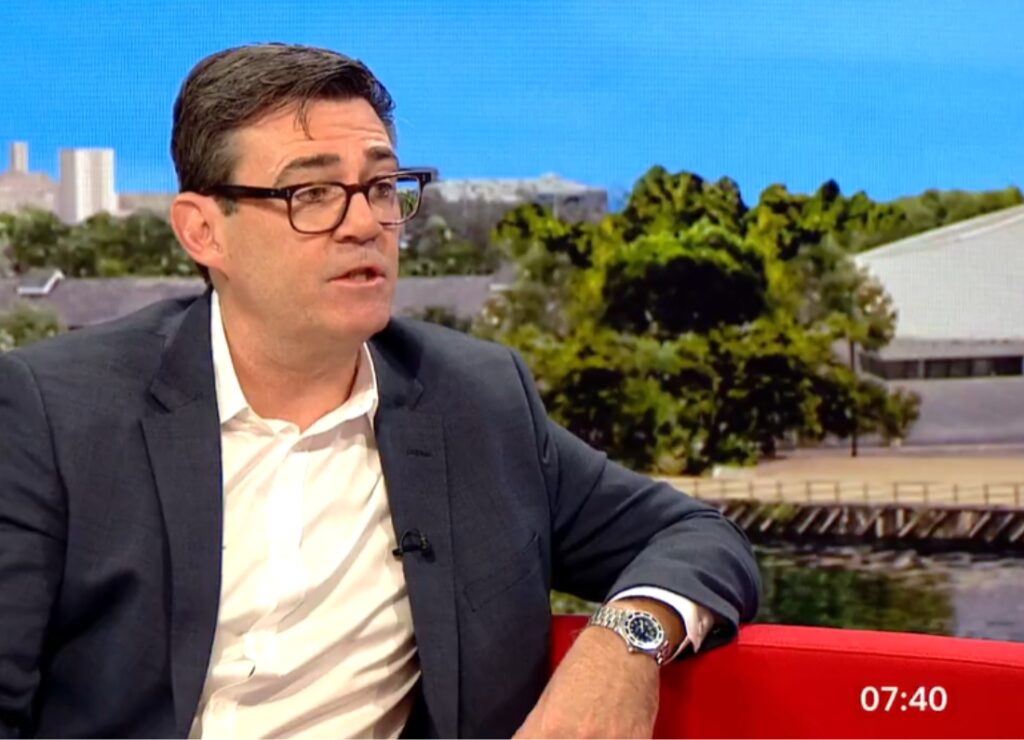
This is a direct challenge to the NEC, which blocked Burnham from standing at the Gorton and Denton byelection in February – as we reported at the time in our coverage of the Labour leadership crisis building ahead of May 7. Without a parliamentary seat, Burnham cannot formally enter a leadership contest. The NEC’s position – supported by Starmer – has been that allowing Burnham to stand would risk a Greater Manchester mayoral byelection the party could not afford to lose.
Rayner’s public statement that blocking him was a mistake is a direct attack on that position. She is explicitly calling for Burnham to be given a route back into parliament. She is also, implicitly, positioning herself within the emerging coalition of forces that want an orderly transition to a new leader rather than a messy formal challenge.
As the Compass poll of Labour members we reported on in our Starmer statement piece found, 42% of members prefer Burnham as next leader with a net favourability of 72%. Rayner, who is herself a potential leadership candidate, is publicly endorsing his claim ahead of her own.
What she proposed – the policy reset
Rayner’s statement is not purely about personalities. It contains a substantial policy programme that reads as a counterpoint to the government’s current direction – and a pitch for what a successor administration might look like.
She cited Spain and Canada as models of social democratic governments that have demonstrated “economies can grow and people can thrive when governments stay true to labour and social democratic values.” She called for immediate action to cut costs for households, a Fair Pay Agreement in social care, a building boom in social and affordable housing, deeper renters’ reform, community ownership of local assets from pubs to playgrounds and public ownership of buses and trains.
She also called for further action on dodgy money in politics and democratic reform that “puts power back into people’s hands.”
The policy substance of the statement is closer to the Green Party’s programme than to the current government’s – and its framing of the economy as “rigged against” working people echoes both Polanski’s rhetoric and, in different terms, Farage’s own pitch. This is deliberate. Rayner is arguing that Labour needs to compete for the same voters it is losing, not by moving toward Reform but by offering a genuine alternative to the system both Reform and the Greens are criticising.
What Streeting is doing
The statement arrives alongside new reporting from the Telegraph that Wes Streeting has told Downing Street he is preparing a “case” for a leadership challenge to present if the situation “falls apart.” Streeting reportedly told No 10 he is not planning to challenge Starmer directly – but has more than 81 MPs and is ready to move if a contest is triggered by another candidate.
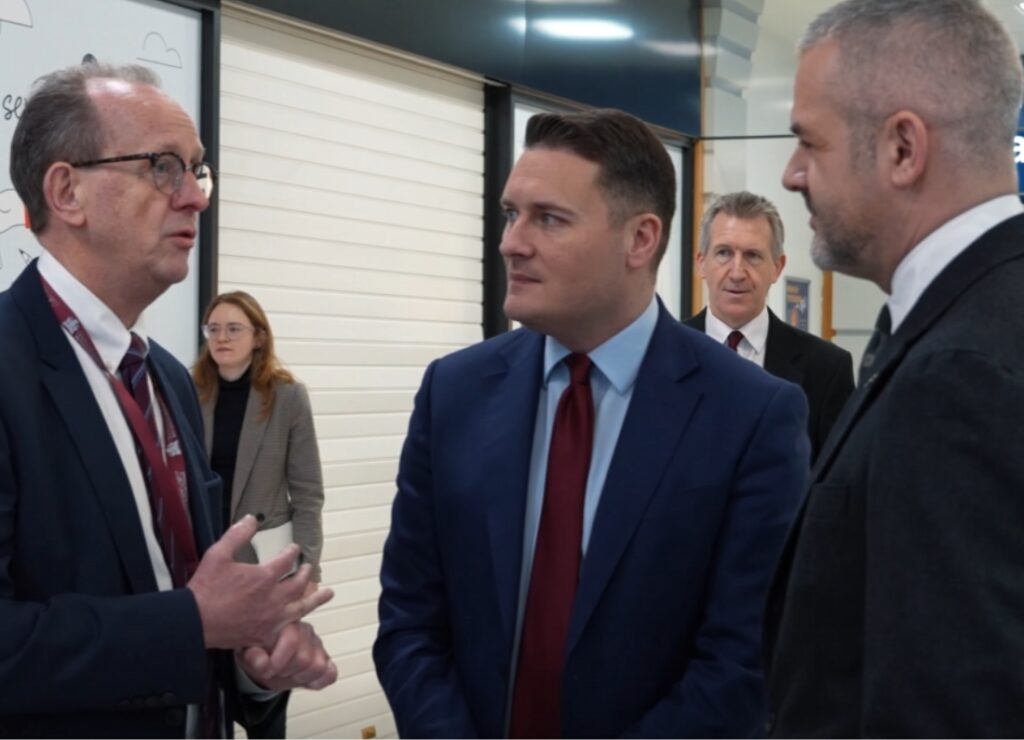
The picture that emerges is one of coordinated positioning rather than immediate action. West has set the Monday morning deadline. Rayner has named the Burnham mistake and outlined the policy reset. Streeting has told Downing Street he has the numbers and is watching. All three are waiting to see whether Monday’s speech is sufficient to change the political weather – or whether it is the final confirmation that the weather has permanently changed.
What Monday now means
Starmer’s speech, already described as “make-or-break,” now has to do significantly more than its original brief suggested. It must answer Rayner’s specific charges – on Mandelson, on winter fuel, on cronyism and on Burnham. It must persuade Catherine West that a leadership election is not necessary. It must give Streeting’s 81 MPs a reason not to move. And it must do all of this while simultaneously setting out a policy reset credible enough to begin the work of winning back the voters who went to Reform on Thursday and the voters who went to the Greens.
As we argued in our structural analysis of why prime ministers keep falling, the evidence from thirty years of polling suggests that replacing leaders rarely saves governing parties in the current political environment. But the same evidence shows that the post-Truss collapse in public tolerance for political failure has set a new and lower threshold for survival.
Rayner’s statement says “this may be our last chance.” Whether she means Labour’s last chance, or Starmer’s last chance, or both, the urgency of the framing is the message.