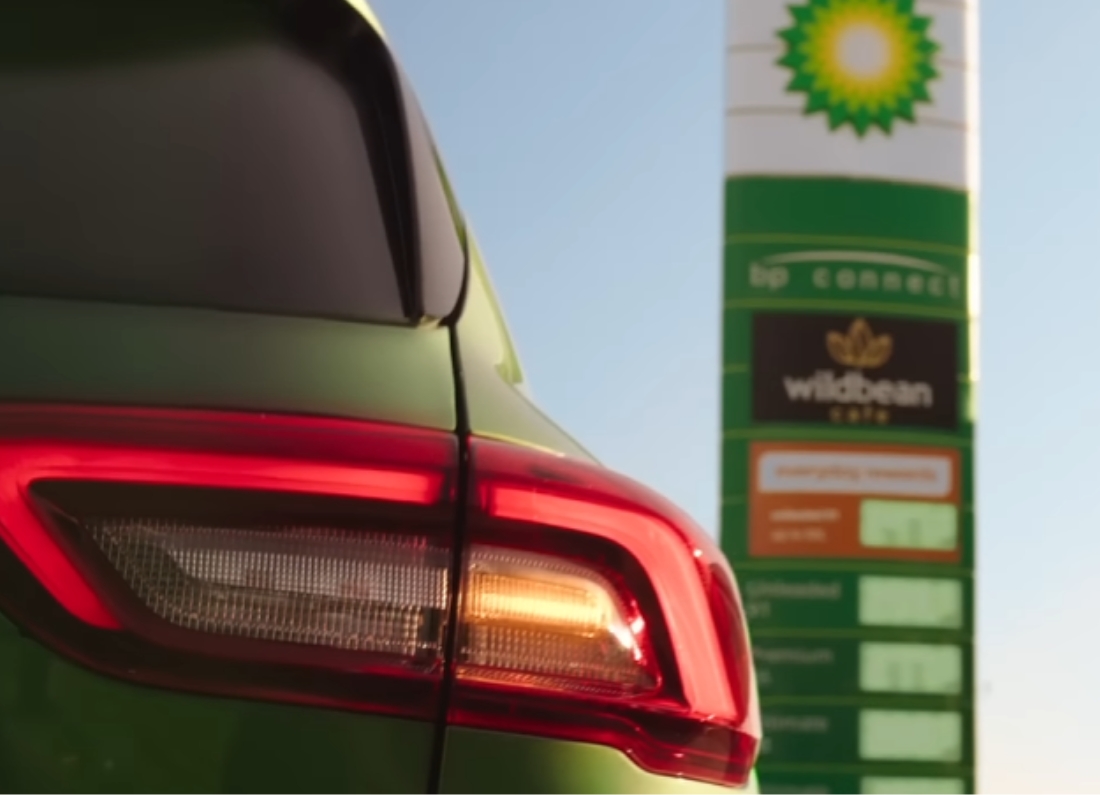
BP has reported profits of $3.2 billion for the first three months of 2026 – more than double the figure from the same period last year and beating analyst expectations by around 20 per cent – as the Iran war’s disruption to global oil markets delivered what the company itself described as an “exceptional” windfall for its trading division. Campaigners are now calling for a new windfall tax as British households face a £300 rise in their energy bills when the Ofgem price cap is reviewed in July.
The results, the first under new chief executive Meg O’Neill who took over on 1 April, represent BP’s highest quarterly profit since 2023. The underlying profit figure surged from $1.38 billion in the first three months of 2025 to $3.2 billion in the same period this year – well above the $2.7 billion forecast by analysts.
The exceptional performance was driven almost entirely by BP’s oil trading division, with underlying profits at its refining and trading arm soaring to $2.2 billion in the first quarter of 2026 from just $469 million in the same period last year. Traders benefit from volatility because sharp price swings create larger spreads between buyers and sellers, more opportunities for arbitrage and increased demand for hedging from airlines, utilities and other customers – precisely the conditions that the Iran war has produced.
The oil price that’s making BP rich – and costing you at the pump
The price of oil has risen from the mid-$60s range in February to over $100 a barrel now, spiking close to $120 several times during the course of the Iran war. Brent crude – the global benchmark – is currently trading at about $110 a barrel, compared to around $73 before the conflict began on 28 February.
The driver is the Strait of Hormuz – the narrow waterway through which roughly a fifth of the world’s crude oil and liquefied natural gas normally passes. Iran’s closure of the strait has effectively removed a significant portion of global supply from the market. The disruption around Hormuz has turned what began as a regional conflict into a global energy pricing event – and for companies with the trading desks, storage capacity and supply chain infrastructure to exploit that volatility, the financial rewards have been substantial.
The International Energy Agency has described the ongoing disruption as the biggest energy security threat in history.
What BP’s new chief executive said
O’Neill described the results as sending the company “in the right direction” and “strengthening the balance sheet.” In a carefully worded statement designed to address the obvious political sensitivity of announcing record profits during a cost of living crisis, she said BP had been “working relentlessly” to maintain reliable production and was helping countries “get fuel where it is needed” to minimise disruption from the conflict.
“The teams across BP are playing their part to keep oil, gas and refined products flowing during an incredibly challenging time,” she said. “We are working with customers and governments to get fuel where it’s needed, helping minimise disruption and the impact it can have on people’s lives.”
O’Neill plans to reorganise the company, clearly separating its upstream and downstream activities. Her aim is to make BP “a simpler, stronger, more valuable company.” She faces the challenge of proving that stronger earnings can support balance sheet repair – BP’s net debt rose to $25.3 billion during the quarter, up from $22.18 billion at the end of last year, while its variable operating costs increased 46 per cent to $7.2 billion.
At BP’s annual general meeting last week, shareholders largely rejected two board proposals in what was described as a stinging rebuke, particularly regarding climate strategy. One proposal aimed to revoke resolutions requiring BP to publish climate-related information. Around 18 per cent of shareholders voted against the election of BP chairman Albert Manifold.
The households paying the price
The political problem with BP’s results is one of timing and optics that no statement about “minimising disruption” can fully address.
Ofgem’s current energy price cap runs from 1 April to 30 June 2026 and is set at £1,641 for a typical dual-fuel household. Wholesale energy movements feed into later cap decisions, so the pressure created by higher oil and gas prices shows up after the corporate profit headlines have moved on. Ofgem’s July review is expected to push the average annual bill up by nearly £300 to £1,929.
That timing gap – BP reports higher profit now, consumers face higher bills later – drives the political heat around these results. The money does not move evenly or at the same speed. Companies with trading capacity see the market move first. Households meet the cost after suppliers, regulators and pricing formulas have passed it through.
Petrol and diesel prices have meanwhile climbed to their highest level since late 2022. The RAC has said oil prices would need to stay lower for several weeks before drivers see any meaningful reduction at the pumps.
‘Astronomical profits’ – calls for a windfall tax
The End Fuel Poverty Coalition immediately called for a new windfall tax on companies profiting from the Iran-related energy crisis. The campaign group’s co-ordinator, Simon Francis, said: “These astronomical profits are a startling reminder that when conflict drives up the price of oil and gas, energy companies profit and households pay.”
The existing energy profits levy – the windfall tax introduced after the Russia-Ukraine conflict drove similar energy profits – is focused on profits from UK oil and gas extraction rather than trading profits. That distinction matters significantly given that BP’s Q1 windfall was generated almost entirely by its trading division rather than its production operations, meaning much of the profit escapes the existing levy’s scope.
Any serious debate on a new windfall tax has to start with that split. For businesses outside the energy sector, higher oil prices behave like a drag on cash flow – transport firms face higher fuel costs, retailers face delivery pressure, food producers face energy and distribution strain, manufacturers face input-cost uncertainty. If those costs are passed on, inflation pressure persists. If they are absorbed, margins shrink. BP’s profit surge is tied to that wider cost-of-money squeeze.
A pattern that keeps repeating
BP’s Iran war profits are not the first time the company has benefited enormously from a geopolitical crisis at the expense of ordinary households.
In the wake of Russia’s invasion of Ukraine in 2022, BP posted staggering profits amid gas market chaos – a period that also triggered the windfall tax whose revenues the government used to fund the energy price guarantee that limited household bills. Shell reported similarly record profits in the same period.
A 2024 report found that BP had extracted over £15 billion worth of Iraqi oil in the years following the British and US invasion of that country.
The pattern – global conflict, oil price spike, energy company windfall, household energy bills crisis, calls for windfall tax, partial government response – has now repeated itself sufficiently often that it can reasonably be described as a structural feature of Britain’s relationship with fossil fuel markets rather than a series of unfortunate coincidences.
Ed Miliband’s electricity market reform – announced last week to delink household energy bills from the global gas price – was explicitly designed to break that cycle over the long term. But it will not affect the July price cap review, and it will not return the profits BP is announcing today to the households whose bills funded them.
You may also like: Why AI shouldn’t be used even to decide ‘simple’ court cases