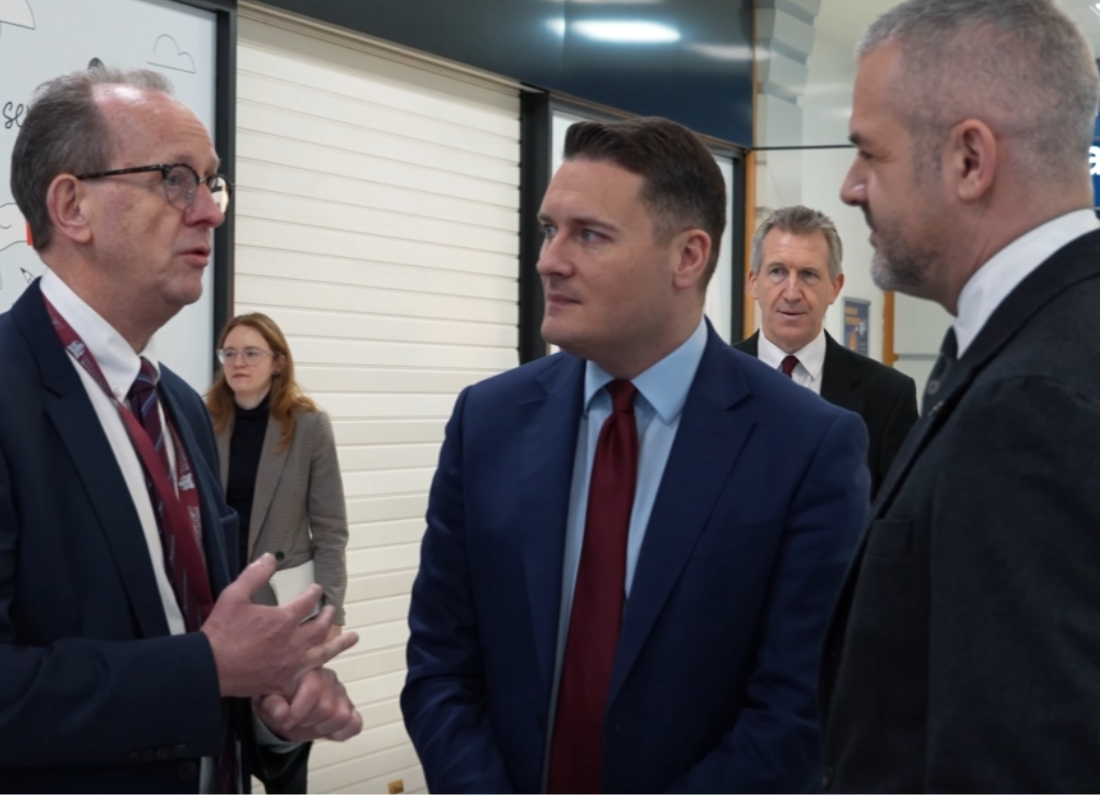
The Health Secretary overseeing the biggest reorganisation of the NHS in a generation has accepted £372,000 from companies and individuals with links to the private health sector since entering parliament in 2015 – and the money keeps coming in at a rate of nearly £10,000 a month since he took office. That figure takes on a new dimension this week, as we report on his controversial decision to give himself the power to override NICE – the independent body that protects the NHS from being overcharged by pharmaceutical companies.
The latest figures, compiled by the Good Law Project and reported across multiple outlets, show that Streeting took a further £58,000 from private health-connected sources after becoming Health Secretary in July 2024 – on top of a long-running pattern of financial support from the same sector. The Department of Health and Social Care did not respond when the Good Law Project put these figures to them.
Who is paying – and how much
The biggest single source of private health money flowing to Streeting is Peter Hearn, a recruitment executive whose companies work with both senior NHS management and private healthcare providers. The largest contribution to Streeting’s political project has come from MPM Connect and OPD Group Ltd, two companies controlled by Hearn, which have given the Ilford North MP a total of £144,900. Hearn personally donated a further £40,000 to Streeting between 2017 and 2019.
In February this year, Streeting accepted £53,000 from OPD Group Ltd specifically to fund staffing in his constituency office. OPD is owned by Hearn, whose companies are described by EveryDoctor as working with “senior NHS executive recruitment” and helping “private sector providers recruit healthcare professionals”. The nature of OPD’s business – placing people into NHS management roles while also serving private healthcare clients – sits uncomfortably alongside its role as a major funder of the man responsible for NHS policy.
Next on the list is John Armitage, a hedge fund manager with interests worth more than $500 million in UnitedHealth – the largest healthcare insurer in the United States. Armitage has bankrolled Streeting, including for staffing costs, to the tune of £95,000 since 2022. UnitedHealth is one of the most significant potential beneficiaries of NHS privatisation, having spent millions lobbying US politicians against healthcare reform.
In the same month as the OPD payment, Streeting also accepted £5,000 from Sir Trevor Chinn, a senior adviser to a firm holding investments in several private health companies.
The pattern over time
Good Law Project research shows that more than 60% of the money donated to Streeting since he entered parliament in 2015 has come from companies and individuals with links to private health. These are not one-off payments from opportunistic donors – they represent a decade-long pattern of financial support from a specific sector that has a direct commercial interest in the decisions Streeting makes as Health Secretary.
Since assuming the role of Health Secretary in July 2024, Streeting has continued to receive financial support from private health-connected sources at a rate of nearly £10,000 a month – adding to a total of £372,000 in declared donations from such entities since 2015.
All donations are declared and legal. Streeting has consistently argued that the pattern is not evidence of improper influence. But legality and transparency are not the same thing as an absence of conflict of interest – and the sheer scale and consistency of the financial relationship between the Health Secretary and the private health sector has drawn sustained criticism from across the political spectrum.
The NICE connection – why the timing matters
This story does not exist in isolation. As we reported last week, Streeting recently used a statutory instrument – secondary legislation that bypasses a full parliamentary vote – to give himself the power to direct the National Institute for Health and Care Excellence on the “applicable cost-effectiveness threshold” it uses when deciding whether a drug is worth paying for.
NICE was created in 1999 specifically to protect the NHS from being overcharged by the pharmaceutical industry. Its independence – the fact that no politician could instruct it on how much the NHS should pay for medicines – was central to its value. Streeting’s new power removes that independence in a targeted but significant way.
Thirty-one MPs from six parties have signed a parliamentary motion opposing the change. Andrew Lansley, the Conservative former health secretary who created the legislative framework, has tabled a motion of regret in the Lords warning the new rules may be illegal. The British Medical Journal’s editor-in-chief called it “sacrificing population health for corporate wealth.”
The new statutory instrument was introduced as part of the UK-US drug pricing deal struck with the Trump administration. Critics argue it will require the NHS to pay more for medicines than NICE’s independent assessment would justify – ultimately diverting money from frontline services to pharmaceutical company profits.
Read that alongside the donation figures and the question becomes unavoidable.
What the critics say
Jo Maugham, executive director of the Good Law Project, was direct: “The private healthcare market is worth about £13bn in the UK – a fraction of 1% of GDP. Yet Wes Streeting’s financial backing comes overwhelmingly from those with interests in private healthcare. Those backers are not stupid and this is not a remarkable coincidence. What do those backers think they are getting for their money? It’s our NHS and we have a right to know.”
Economist Faiza Shaheen, appearing on BBC Question Time, said the donations raised difficult questions: “You have to look behind every politician.”
Doctors for the NHS, alongside seven other organisations including We Own It and EveryDoctor, wrote an open letter to Streeting calling on him to publish his communications with private health-linked donors – in the same way he published his WhatsApp messages with Peter Mandelson. “With 60% of your donations coming either from the private healthcare sector, or from individuals with a financial interest in the private healthcare sector, you can demonstrate that your NHS reforms are driven by principle, rather than undue influence,” the letter said.
Streeting has not published those communications. The Department of Health and Social Care did not respond to requests for comment on the donation figures.
Streeting’s defence
Streeting has consistently argued that treating NHS patients in the private sector is not only “pragmatic” but “principled” – that using private capacity to cut waiting lists is in patients’ interests regardless of where the money to fund his office comes from.
His supporters point to genuine achievements: NHS waiting lists have fallen by more than 330,000 since he took office, to their lowest level in nearly three years. The NHS delivered 18.4 million treatments in 2025 – the highest in its history. These are not trivial accomplishments.
But his critics argue that the question is not whether the NHS has improved under his tenure – it is whether his reforms are being shaped by the evidence about what is best for patients, or by the financial relationships he has cultivated with a sector that stands to profit enormously from the direction of travel he is choosing.
The bigger picture
It is worth considering whether Streeting will follow former Labour health secretary Alan Milburn and former Tory health secretary Andrew Lansley in the revolving door between government and the private healthcare sector – both took on lucrative roles in companies benefiting from increased private healthcare after delivering such an increase in government.
That revolving door is exactly what the Palantir investigation – which we also reported last week – documented in forensic detail: a tech company with £670 million in government contracts systematically hiring officials from the departments awarding those contracts. The pattern at Palantir and the pattern in Streeting’s donation history are different in mechanism but similar in character.
The question in both cases is the same one Jo Maugham asks: what do the backers think they are getting for their money? And in both cases, the public has a right to know.
You may also like: Palantir hired 32 senior UK government officials including NHS and MoD AI chiefs, investigation finds