

On 23 June 2026, Britain will mark ten years since the referendum that changed everything. A decade since 17.4 million people voted Leave on the basis of promises that were, in almost every measurable particular, false. A decade since the country began the long, slow, expensive process of discovering what the sunlit uplands actually looked like.
They look like this: the economy is between 6% and 8% smaller than it would have been had we stayed. Business investment has been between 12% and 18% lower than comparable countries. Bloomberg Economics estimates the annual cost to the British economy at between £100 billion and £200 billion. A former chief economist at Goldman Sachs – a Conservative peer and former Treasury minister – described it as “a colossal economic shock” causing more permanent damage than the Iran war energy crisis. And 63% of the British public would vote to rejoin the EU if given the chance today.
This is the Brexit balance sheet. And nobody who sold it to us has faced any consequences for it whatsoever.
What they promised
Let us be specific, because the specific lies matter. The Leave campaign was not merely wrong in its optimistic projections – it was, in several key instances, demonstrably dishonest.
The most famous promise was on the side of a bus: “We send the EU £350 million a week. Let’s fund our NHS instead.” The figure was false before the campaign began and everyone in the campaign knew it. The UK’s actual net contribution to the EU, after the rebate and after accounting for EU spending in Britain, was approximately £8 billion a year – around £150 million a week, less than half of what was claimed. The UK Statistics Authority wrote to the campaign to say the figure was misleading. The chair of the Vote Leave campaign, Michael Gove, was asked repeatedly whether it was accurate and declined to correct it. Boris Johnson, whose face appeared on the side of that bus, continued to cite the £350 million figure long after it had been debunked.
But the bus is only the beginning.
Nigel Farage promised that leaving the EU would allow Britain to “take back control” of immigration. In the year ending June 2024, net migration to Britain hit 906,000 – a number that would have seemed inconceivable when he was standing in front of posters of refugees. The figure was driven almost entirely by non-EU migration, which the Leave campaign had claimed would be reduced by a more flexible, globally-oriented immigration system. EU migration to Britain did fall. The total went up. The “control” that was promised did not materialise.
Boris Johnson promised “the easiest trade deals in the history of man.” Britain did sign trade deals – mostly rollovers of deals it had previously benefited from as an EU member. The UK-Australia deal, cited repeatedly as the proof of Brexit’s global ambitions, was assessed by the government’s own economists as likely to increase UK GDP by 0.1% over 15 years. Against the 4-8% loss from leaving the single market, the maths of the global trading revolution do not add up.
David Davis, appointed the first Brexit Secretary, promised that trade talks would be “the most straightforward” in history and that discussions with Germany alone would produce a comprehensive deal within weeks of the vote. Germany, correctly, pointed out that trade negotiations were a matter for the EU, not individual member states. The talks took four years and produced a deal that the Office for Budget Responsibility assessed as reducing UK productivity by 4% in the long run.
And then there were the sunlit uplands themselves – the phrase used by Boris Johnson to describe the promised land of post-Brexit Britain. There would be a “Brexit dividend.” Freed from EU regulations, British business would flourish. Freed from EU budget contributions, the government would have billions to spend on public services. A new era of British confidence and global engagement was at hand.
What we got
The research is now comprehensive, consistent and damning. A landmark study by economists at Stanford University and the Universities of Nottingham and King’s College London, published in late 2025, combined macroeconomic data with firm-level survey evidence to produce the most detailed assessment yet of Brexit’s economic impact.
The findings were unambiguous. By 2025, Brexit had reduced UK GDP per capita by between 6% and 8% compared to what it would have been had we remained. Business investment was between 12% and 18% lower than in comparable economies. Employment was 3% to 4% lower. Productivity was 3% to 4% lower. The researchers noted that pre-referendum forecasts were directionally correct but had underestimated the long-run impact – meaning the damage has been worse than economists predicted, not better.
Bloomberg Economics puts the annual cost to the British economy at between £100 billion and £200 billion – a figure so large it is difficult to comprehend. It is the equivalent of losing several NHS budgets’ worth of economic activity every single year, permanently.
Consumer prices in Britain have risen by 31% since the 2016 referendum. In the Eurozone, they rose by 24%. In the US, by 27%. Goldman Sachs attributed part of that inflation differential specifically to Brexit – trade friction increasing costs throughout the supply chain, passed on to British consumers at the checkout.
On trade, the Office for Budget Responsibility estimated that Brexit would reduce trade intensity by 15% compared to what it would otherwise have been. Exports to the EU have fallen. Imports from the EU have become more expensive and more bureaucratic. The creative industries – which were net exporters before Brexit – have seen exports to the EU fall by 32%. British touring musicians, who once moved freely across European venues with a van and an instrument, now face a labyrinth of work permits, visa requirements and customs paperwork that has made many smaller tours financially unviable.
The free trade deals – that glittering prize, the proof that the world was waiting eagerly to trade with Global Britain on better terms than the EU offered – have produced, in the government’s own assessment, an improvement of around 0.1% of GDP per deal. The Centre for European Reform calculates that even the most optimistic assessment of Keir Starmer’s EU reset would add 0.3% to 0.7% to GDP over ten years. Against an 8% structural loss, that is rounding error.
The people who lied
This is where the accountability argument becomes uncomfortable – because the people who made these promises are, almost without exception, doing fine.
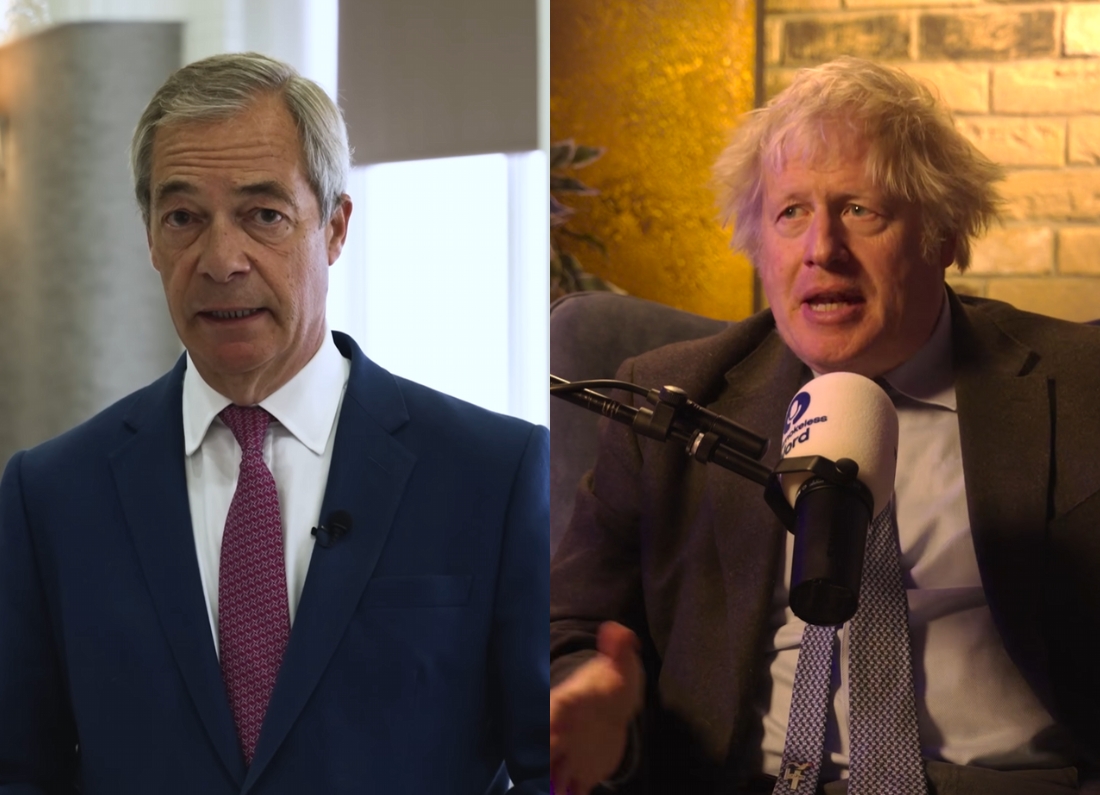
Boris Johnson left Downing Street and went on the after-dinner speaking circuit, earning six-figure fees to address audiences who wished he was still in charge. He wrote a book. He makes regular appearances at Conservative events. The Privileges Committee found that he had misled Parliament. He resigned before the report was published and the censure could be implemented. He faces no legal consequences of any kind.
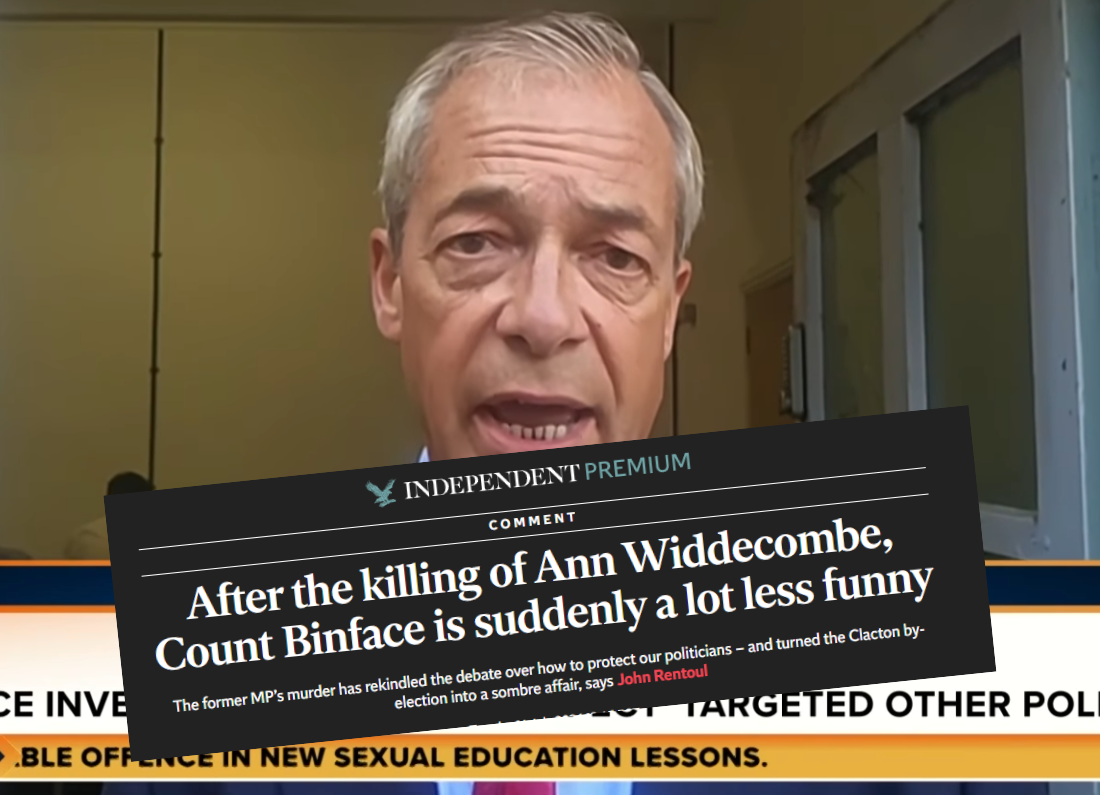
Nigel Farage was wrong about immigration. Wrong about trade deals. Wrong about the economic bounty. His former chief economist Jim O’Neill – who served as a minister in the government that implemented Brexit – has called it “a colossal economic shock” doing “more permanent damage” than the worst global energy crisis since the 1970s. Farage now leads a party polling joint first nationally, still promising to fix the problems that he helped create, still standing in front of pints and telling people the establishment is to blame.
Dominic Cummings, the architect of the Vote Leave campaign and the man who placed the £350 million on the bus, has since acknowledged that many of the campaign’s claims were misleading. He argues, with some consistency, that the problems of Brexit were not inherent but were caused by how it was implemented. What he has never done is apologise to the 17.4 million people who voted Leave partly on the basis of false information his campaign generated and amplified.
David Davis left politics. Liam Fox, who promised free trade deals, left politics. Andrea Leadsom left politics. All of them with their parliamentary pensions and their lecture fees and their consultancy roles intact.
The 63% question
Perhaps the most significant data point in the entire Brexit decade is not an economic one. It is a polling figure: 63% of Britons would vote to rejoin the European Union if a referendum were held today. Among 18 to 25-year-olds, that figure is 86%. Even among retired voters – the demographic that delivered the Leave majority – 60% would now vote to rejoin.
That shift in opinion is not the result of liberal propaganda or Remainer sore-loser politics. It is the result of ten years of lived experience. Of the NHS that did not receive the £350 million a week. Of the trade deals that did not transform the British economy. Of the immigration levels that were not controlled. Of the energy bills that were made worse because Britain was more exposed to global market shocks than it would have been inside the EU. Of the wages that did not rise, the public services that did not improve, and the sense – growing and insistent – that the Brexit dividend never arrived because there was no Brexit dividend to collect.
What strikes me, on the eve of the tenth anniversary, is not the anger. It is the sadness. Many of the people who voted Leave did so for entirely understandable reasons. They lived in towns that had been abandoned by deindustrialisation. They watched their high streets hollowed out, their children unable to afford houses, their NHS waiting lists stretching into years. They were told, by people who should have known better, that the problem was Europe. That if we only took back control, things would be different.
They were lied to. Not by accident, not by honest misjudgement, but deliberately and systematically. The lies were crafted by people who knew they were false. They were amplified by newspapers owned by billionaires who had their own reasons for wanting Britain outside the EU’s regulatory framework. And the people who told the lies have never been held to account.
Where we go from here
The question now is not whether Brexit was a mistake – the evidence is clear enough on that. The question is what to do about it.
Keir Starmer’s EU reset is a step, but a small one. The Centre for European Reform’s most optimistic assessment puts it at 0.7% of GDP over ten years. Against a structural loss of 8%, that is the equivalent of handing someone who has lost a leg a plaster for their knee.
The honest argument – the one that Jim O’Neill has made and that Zelensky, of all people, has most recently advanced – is that the only real solution is the one that is currently politically unsayable: rejoining the single market, and eventually the EU itself. Sixty-three percent of the public already agree. The political class has not yet caught up.
Ten years is a long time to pretend otherwise. At some point, someone in power will have to say what the evidence has been saying for a decade: it did not work, it was based on lies, and the people who told those lies owe the country an honest reckoning.
We are still waiting.
6 responses to “Ten years of Brexit: what we were promised, what we got, and who lied to us”
-
What is telling is by how much the fortunes of the most vociferous campaigners for and against Brexit changed between the 2016 referendum and the 2020 date when we actually left. I would imagine that these wealthy people would be delighted at the prospect of a second referendum so that they can make even more money as each deadline passes the stock markets.
If we do hold another referendum on this issue I suggest that the people who do not vote be counted as a fractional vote for the ‘status quo’, in this case remaining out of the EU on the basis that they are not concerned enough to vote for change. If that had happened in 2016 and the fraction was as low as 1/10th of a vote then we would still be in the EU. -
One other issue that few people have mentioned is the value of the Pound. On the 22nd of June 2016, the day before the referendum £1 was worth €1.31. After the referendum the Pound almost immediately started to slide. By November 2016 it was worth €1.11. What this means is essentially is that the value of the whole of the UK fell by 15% compared to the rest of the world. And this has clearly contributed to inflation. In the decade since 2016, the Pound has never fully recovered. Today £1 equals €1.16.
-
And the establishment continue to mislead the people for their own ends. and continue to profit from that, protect by their peers of all persuasion.
-
Farage still benefits from his lies Why?
-
-
I voted remain and have been devastated by the way things have gone.
-
We have been deceived by countless politicians..i would never ever trust a tory again and as for reform..well in my opinion they started the ball rolling.
I think starmer could and should be tackling the immigration problem a lot quicker andstronger..we could stop the boats to.orrow.
Id vote labour against the other parties..the Greens frighten me.














Leave a Reply