

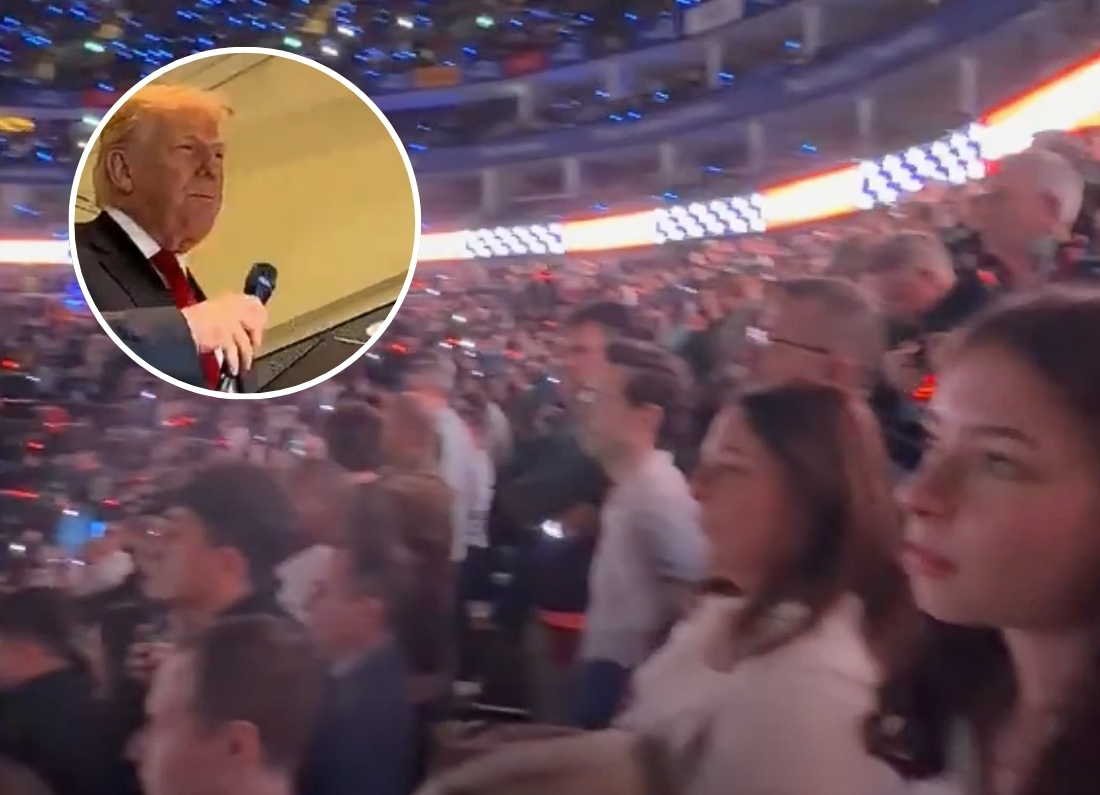
A spectator at a National Basketball Association (NBA) game in London on Sunday drew an unexpected burst of applause after interrupting the performance of the United States national anthem with a pointed shout about geopolitics.
As Vanessa Williams – known for her work on Broadway and in film – sang “The Star-Spangled Banner” before the Memphis Grizzlies’ 126-109 victory over the Orlando Magic at the O2 Arena, a fan in the crowd shouted “Leave Greenland alone!”, drawing cheers from sections of the audience.
The outburst referenced mounting tensions surrounding Donald Trump’s controversial push to assert greater U.S. influence over Greenland, the vast Arctic territory that is part of the Kingdom of Denmark and currently enjoys a degree of self-government. Trump has recently threatened to impose tariffs on a group of European nations – including the UK and Denmark – that oppose his push for increased U.S. control of the island.
🏀 A political moment at a sporting event
The interruption occurred during the pre-game ritual of performing the U.S. national anthem, a moment usually associated with solemn patriotism. Instead, it briefly became a stage for political protest, as the heckler’s comment elicited audible cheers and applause from the crowd, reflecting a degree of resonance with the message among some spectators in the London arena.
Videos shared on social media captured the moment the chant broke through the anthem. While reactions were mixed – some spectators appeared surprised, while others appeared to cheer and applaud – the performance continued without further incident.
🌍 The broader political backdrop
In recent days, Trump, in his second presidency, has escalated a campaign to bring Greenland under greater U.S. influence, arguing that the Arctic island is vital to American national security. As part of this effort, he announced on Saturday that eight European countries – Denmark, the UK, Norway, Sweden, France, Germany, the Netherlands and Finland – would face a 10% tariff on imports from February 1, rising to 25% on June 1, unless a deal is reached for what he described as the “Complete and Total purchase of Greenland”.
European leaders have strongly rejected the notion that Greenland should be ceded to the U.S., calling Trump’s threats “blackmail” and warning that they risk a “dangerous downward spiral” in transatlantic relations. Denmark’s prime minister and foreign officials have reaffirmed that decisions over Greenland’s future rest with its people and the Danish government.
The so-called “Greenland crisis” has also sparked protests in Copenhagen and Nuuk, where thousands have taken to the streets to oppose any move that could undermine the territory’s autonomy. Observers and diplomats warn the escalating rhetoric could strain NATO unity, particularly as the U.S. and European allies find themselves at odds over trade and Arctic security.
📊 Public opinion and political friction
Despite Trump’s assertions about the strategic importance of Greenland, a CNN poll released last week found that 75% of Americans oppose taking control of Greenland, indicating that opposition to the proposed acquisition extends beyond Europe into the U.S. populace.
The political controversy has also been reflected in sports and cultural arenas, as evidenced by Sunday’s incident in London. The heckler’s chant – seemingly spontaneous – struck a chord with some spectators and underscored how foreign policy disputes can permeate public life far from diplomatic chambers.
🏁 What it means for U.S.–Europe relations
Trump’s aggressive approach to Greenland – tying trade penalties to geopolitical goals – marks one of the most significant recent rifts between Washington and its closest allies. European governments have responded with united criticism, signaling that tariff threats and demands for territorial concessions could have broader consequences for transatlantic cooperation on defence, trade and security.
Whether the heckler’s chant will become emblematic of wider public sentiment remains to be seen. But the moment at London’s O2 Arena illustrates how international disputes can capture public imagination and spotlight fault lines in global politics – even at a basketball game.






Leave a Reply