


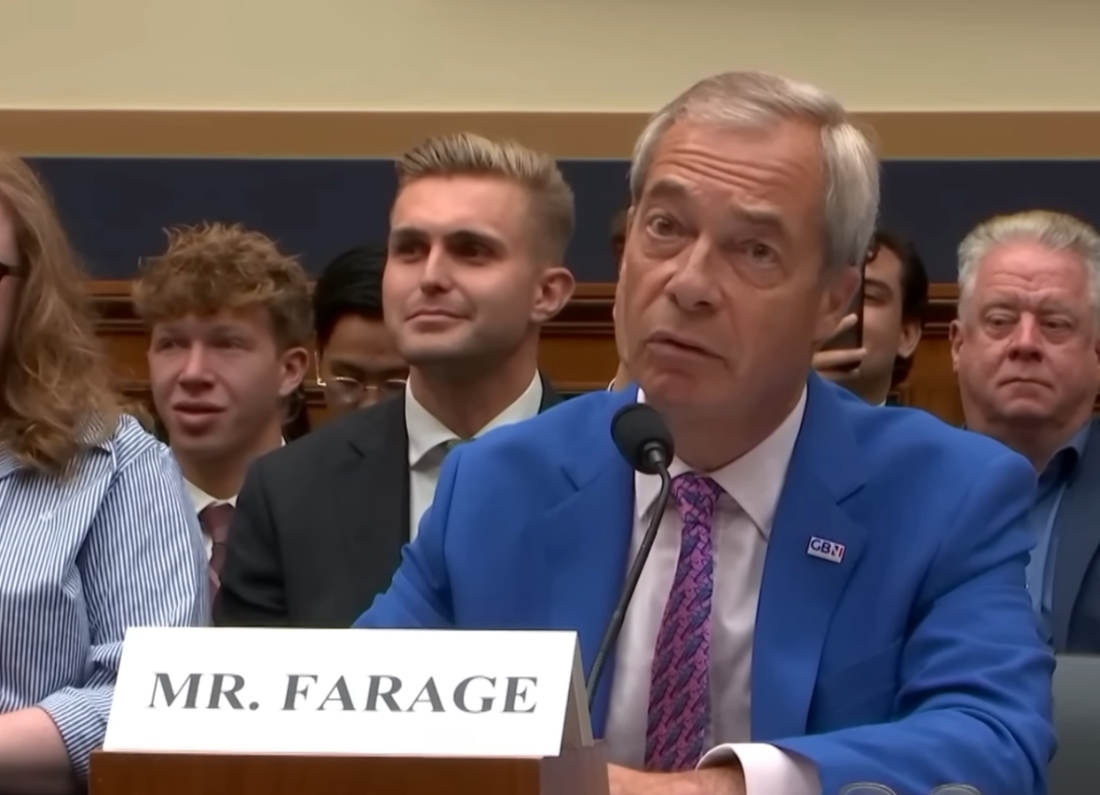
Laura Kuenssberg challenged Nigel Farage to provide evidence that investigations into Reform UK were part of an establishment plot, telling him that his repeated defence sounded like “poor me”.
The BBC presenter confronted Farage after he claimed there was “huge political prejudice against Reform” throughout the corporate world and British establishment.
Kuenssberg disputed the suggestion that Reform was being subjected to scrutiny not experienced by other parties, pointing to controversies involving Sir Keir Starmer, Boris Johnson and Green Party leader Zack Polanski.
The tense exchange came as Farage attempted to contain the fallout from an undercover Channel 4 News investigation into alleged discussions about foreign political donations.
‘Where’s your evidence?’
Farage has repeatedly claimed that Reform and its senior figures are being targeted because the party represents a threat to the established political system.
During his appearance on BBC One’s Sunday with Laura Kuenssberg, he referred to previous rows involving his bank account and pension provider as evidence that he had been treated differently.
Kuenssberg challenged him to separate those disputes from the current questions about Reform’s finances.
She also raised the 17 occasions on which Farage failed to declare outside payments to parliamentary authorities within the required deadline.
“Where’s your evidence that’s some stitch-up, some big plot?” she asked, before adding: “It sounds like you’re just saying ‘poor me’.”
Farage denied that he was seeking sympathy and insisted he understood the scrutiny faced by politicians seeking high office.
Kuenssberg points to other political investigations
Kuenssberg said Farage was wrong to suggest that he was the only party leader whose financial affairs had attracted sustained media and regulatory attention.
She recalled the scrutiny Starmer faced over the purchase of land used by his mother to care for rescued donkeys, as well as questions about clothes and glasses provided by donors.
The presenter also referred to the investigation into whether a wealthy Conservative donor had helped pay for the refurbishment of Johnson’s Downing Street flat.
Polanski’s failure to pay council tax while living on a narrowboat was also raised as another example of a party leader facing uncomfortable questions.
“You have repeatedly told the public, ‘it’s unfair, it’s only on you’. It’s not true,” Kuenssberg said. “That is the scrutiny that comes with you seeking to be prime minister.”
Farage argued that the comparisons did not capture what he and his family had experienced.
He said other party leaders had not been debanked or removed by their pension providers and claimed there had been an attempt to “wipe them out of society”.
“There is no doubt there is huge political prejudice against Reform,” he said.
Farage says he ‘wasn’t listening’ during donation discussion
The interview followed the broadcast of undercover footage showing senior Reform figures discussing a proposed donation from a fictional wealthy American businessman.
British political parties cannot accept donations directly from foreign individuals or overseas companies. Permissible donations must come from eligible UK voters or qualifying UK-registered organisations.
Undercover reporters posed as representatives of a potential American donor and discussed a proposed £500,000 contribution with Farage’s former chief of staff Dan Jukes and the party’s head of policy James Orr.
The footage allegedly showed possible methods of routing the money through a British intermediary.
Both men stood down from their positions pending an internal Reform investigation. The Metropolitan Police and Electoral Commission have been assessing reports connected to the material.
Reform denies accepting illegal foreign donations and says no money from the proposed donor entered the party.
Farage was present during part of a meeting with the undercover reporters and was filmed responding that the proposed arrangement was “above board” after assurances were offered.
When Kuenssberg questioned him about the conversation, Farage said he “frankly wasn’t listening” while the details were being discussed.
He maintained that he believed he was dealing with a legitimate family trust operating from London and said compliance decisions were handled by other people within the party.
Farage admits the footage ‘looks bad’
Farage conceded that the undercover material had created a damaging impression, although he continued to reject any suggestion that Reform had broken electoral law.
He described the comments made by Jukes and Orr as “injudicious at best” and said the party would learn from its investigation.
“This looks bad,” he acknowledged, before referring to previous controversies involving contracts and political donations in other parties.
As The Daily Britain previously reported, ITV political editor Robert Peston also challenged Farage over his response to the undercover operation.
Peston questioned why Farage had not immediately ended the meeting when the supposed donor described money being transferred from his American father.
Farage told Peston that he had asked whether the proposal was legal and had been assured that it was.
Previous declaration breaches raised
Kuenssberg also referred to Farage’s previous breaches of parliamentary disclosure rules.
A parliamentary inquiry found that he failed to declare 17 outside payments, worth approximately £380,000 in total, within the required 28-day period.
The payments included earnings from GB News and online platforms.
Farage accepted responsibility and apologised, while explaining that the failures resulted from administrative and staffing problems. The Parliamentary Commissioner for Standards concluded that the breaches were inadvertent, according to Reuters.
Kuenssberg used the episode to question why further scrutiny of Reform’s financial arrangements should be interpreted as evidence of an organised political campaign.
Farage maintained that Reform’s position as a disruptive political force made it a particular target for complaints and investigations.
Reform’s anti-establishment defence faces scrutiny
Reform has frequently responded to controversies by accusing political opponents, regulators or sections of the media of attempting to damage the party.
Farage used a similar defence during his ITV interview, predicting that Reform would face several more investigations within six months.
Kuenssberg’s challenge focused on whether the existence of repeated scrutiny proves political prejudice, particularly when senior figures from other parties have faced investigations over their finances and conduct.
The question has become more difficult for Reform following the resignation of two senior officials and Farage’s admission that the undercover footage appeared damaging.
No illegal donation from the fictional American businessman was completed, and Reform continues to insist that its procedures comply with electoral law.
The party’s internal investigation and the assessments being conducted by the authorities will now determine whether the affair ends as an embarrassing conversation or develops into a more serious problem for Farage.


Leave a Reply