

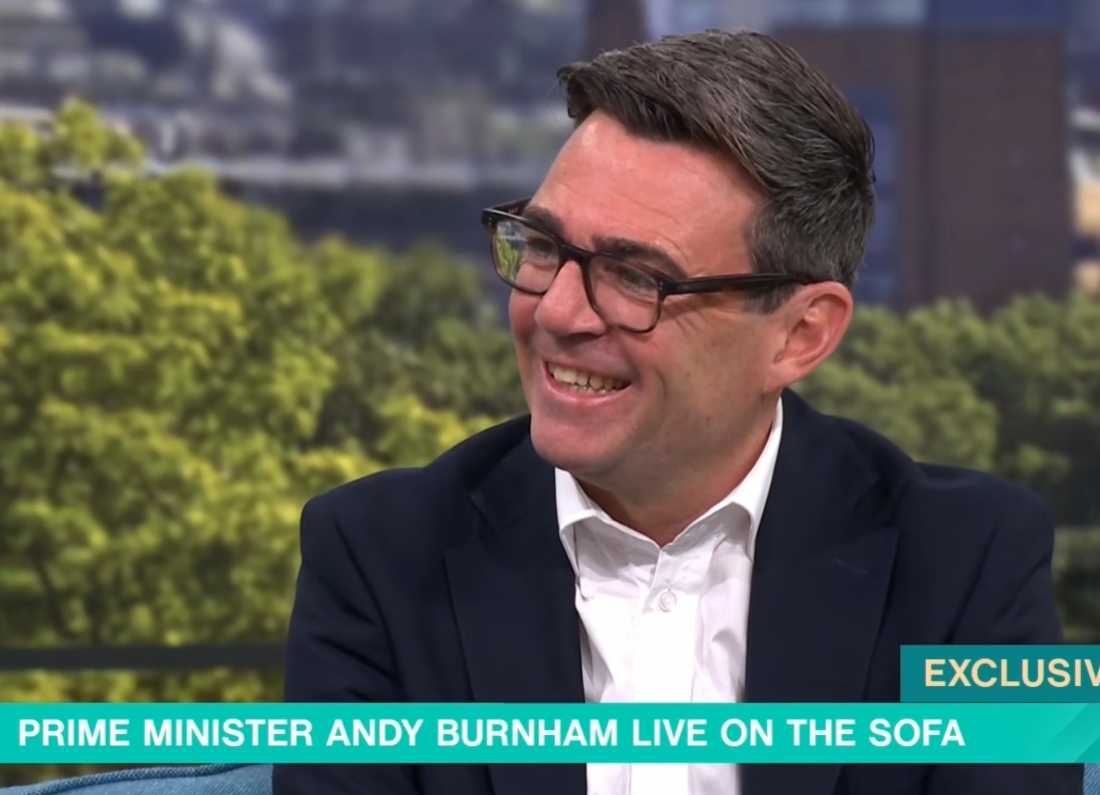
Andy Burnham is reportedly refusing to grant The Sun exclusive interviews or write articles for the newspaper, in a move said to be causing “consternation” inside Rupert Murdoch’s News UK.
If Burnham maintains the position, he would become the first prime minister since Jim Callaghan in the late 1970s to neither write for nor be interviewed by the tabloid while in office.
Three sources close to the prime minister told The Observer that he intends to offer The Sun “no special favours”.
That does not amount to a complete ban. The newspaper continues to attend official Downing Street lobby briefings and receives responses from Burnham’s media team. Senior ministers, including the chancellor and home secretary, have also given it interviews.
The reported position is more personal. Burnham himself is not expected to provide the exclusive access that newspapers have traditionally sought from prime ministers.
News UK reportedly concerned by Downing Street stance
The approach is understood to have surprised executives at News UK, which owns both The Sun and The Times.
The company has long enjoyed access to senior figures across the political spectrum. Successive prime ministers have written articles for The Sun, sat for interviews and sought its backing before general elections.
The relationship between Burnham and The Times appears to be markedly different. According to The Observer, Burnham has given the paper three interviews during the past two months.
The Sun, however, has received no comparable access to the prime minister.
Neither Burnham nor Downing Street has publicly announced a boycott. News UK has also avoided discussing the reported standoff in public.
For now, The Sun remains inside the normal government communications system. What it appears to have lost is the expectation that the prime minister will personally cooperate with its requests.
Hillsborough remains at the heart of the divide
Burnham’s position is closely tied to The Sun’s reporting of the 1989 Hillsborough disaster.
Ninety-seven Liverpool supporters died as a result of the crush at an FA Cup semi-final between Liverpool and Nottingham Forest.
Four days after the disaster, The Sun published a front page headed “The Truth”. It carried false allegations against Liverpool supporters and blamed them for behaviour which had not taken place.
The claims formed part of a broader attempt to shift responsibility away from the policing failures which led to the disaster.
The newspaper has issued numerous apologies since then, but it remains widely boycotted across Liverpool. Many newsagents in the city still refuse to stock it.
Burnham, who was born near Liverpool and later became mayor of Greater Manchester, has repeatedly described Hillsborough as one of the defining issues of his political career.
The Anfield moment that changed Burnham
In 2009, Burnham attended a memorial service at Anfield to mark the 20th anniversary of the disaster.
He was culture secretary at the time and was heckled by grieving families and supporters calling for justice. Burnham later described the experience as a “turning point”.
The moment led him to pursue the release of official documents relating to Hillsborough and support the establishment of the Hillsborough Independent Panel.
Its findings helped overturn the original inquest verdicts. A jury later concluded in 2016 that the victims had been unlawfully killed and that supporter behaviour did not contribute to the disaster.
Burnham subsequently became a prominent supporter of the families’ campaign for accountability.
His relationship with The Sun deteriorated further when Ed Miliband posed with a copy of the newspaper in 2014. Burnham joined Merseyside Labour MPs in criticising the decision.
During his 2015 Labour leadership campaign, he said he had not forgiven the newspaper for its Hillsborough coverage and promised not to give it interviews if he became party leader.
The Sun previously turned its fire on Burnham
The newspaper responded by highlighting an interview Burnham had given it during an earlier leadership campaign.
It published a picture of him beside a taxi carrying The Sun’s branding and asked: “Is two-faced Burnham the most hypocritical politician in Britain?”
Relations worsened later that year when the paper ran allegations that a supporter had asked an undercover reporter for £5,000 to arrange access to Burnham.
Burnham complained to the press regulator. His complaint was rejected, although the regulator expressed sympathy because Burnham had not personally behaved improperly.
That history helps explain why the current relationship is more than a disagreement over media strategy.
Former Sun editor leaving Whitehall role
Another sign of the changing relationship is the departure of David Dinsmore from his role overseeing government communications.
Dinsmore, a former editor of The Sun, is due to leave the civil service post at the end of September.
His appointment had been criticised by Steve Rotheram, the mayor of the Liverpool City Region and one of Burnham’s closest political allies.
Rotheram said the idea of a former Sun editor holding such a senior position in government communications “sent shivers down my spine”.
There is no suggestion that Burnham personally ordered Dinsmore’s departure. However, the timing is likely to be viewed as further evidence that News UK will not have the same relationship with Downing Street under the new prime minister.
Prime ministers have courted The Sun for decades
The last prime minister to maintain a comparable distance from The Sun was Jim Callaghan.
The newspaper helped popularise the phrase “winter of discontent” during the industrial disputes of 1978 and 1979. It also turned Callaghan’s comments after returning from an overseas summit into the famous headline “Crisis? What crisis?”, despite him never using those words.
The Sun backed Margaret Thatcher at the 1979 general election and became an influential supporter of her government.
Tony Blair later travelled to Australia to address News Corporation executives as part of Labour’s effort to secure Murdoch’s support before the 1997 election.
That relationship established a pattern followed by later political leaders. Even when relations became hostile, Downing Street generally continued to seek The Sun’s audience and avoid turning the newspaper into a permanent opponent.
Keir Starmer gave the paper repeated access and received its qualified endorsement before the 2024 election. The relationship subsequently deteriorated after Labour entered government.
Burnham may believe the political calculation has changed
The Sun’s influence is no longer what it was at the height of Britain’s newspaper industry. Its print circulation is now reported to be roughly one eighth of the four million copies it sold each day during the 1980s.
Political communication has also moved online, allowing parties and prime ministers to reach millions of people directly without relying on a single newspaper.
Alastair Campbell, who played a central role in Tony Blair’s courtship of The Sun, believes Burnham understands that the media landscape has changed. He also argued that Burnham’s history with Hillsborough makes any attempt to build a close relationship with the paper politically impossible.
The distinction remains important. Burnham is not preventing The Sun from attending briefings or asking questions. Its journalists retain the same basic access available to other lobby reporters.
What he appears unwilling to provide is a privileged relationship with the prime minister himself.
If that position holds, it would end a Downing Street tradition stretching back almost half a century.


Leave a Reply