

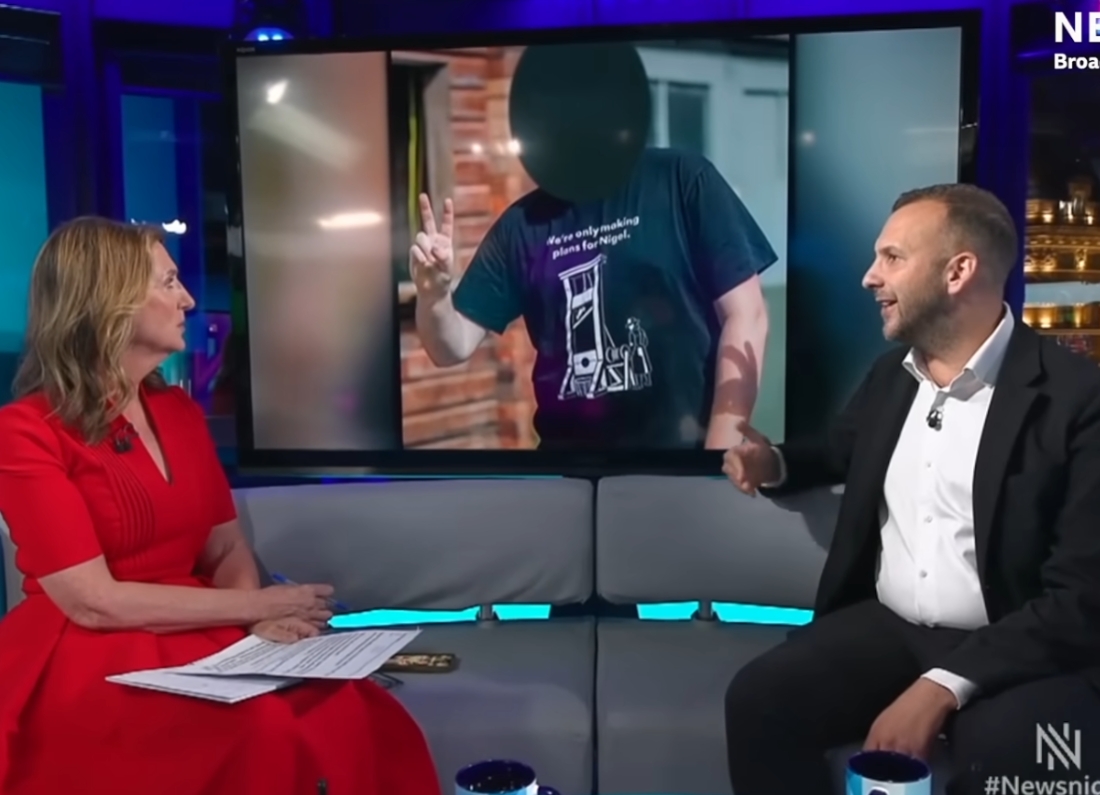
Zack Polanski isn’t apologising to Nigel Farage.
The row goes back to Sunday, when Polanski accepted a collaborator request on an Instagram post carrying several photos from a Green Party event in Bristol. Buried among 20 images was one showing a man wearing a T-shirt featuring a guillotine alongside the words “we’re only making plans for Nigel,” a line borrowed from the 1979 XTC song, widely read as a reference to the Reform UK leader.
Farage and Reform reported Polanski to the police over it, with Farage posting on X: “If I was to post anything as inciteful then I would expect to be arrested, and so should Polanski.” Zia Yusuf went further still, calling the post incitement to murder.
What actually happened, according to Polanski
Speaking to Victoria Derbyshire on Newsnight in his first interview since the row broke, Polanski walked through exactly what he says went wrong. He’d accepted nine separate collaboration requests from the Green Party that Sunday night, and simply didn’t scroll carefully enough through this particular one. “This was not my post. It was a collaboration from a photographer. It had 20 images, and I just didn’t look carefully enough, and I accepted it. As soon as I was aware of what happened, I unaccepted it and took it down.”
Pressed on why he hadn’t read it properly, he said the image in question was the fifth of twenty. “The man had a colourful hat on like a rainbow hat. I remember seeing that and just carried on flicking through. I didn’t even know this was a song lyric from XTC. Didn’t read the T-shirt. That was a mistake. I accept that, but it’s an inadvertent mistake.” He was unambiguous about the substance: “I condemn all political violence. I condemn violent imagery. I condemn violent metaphors. I do my best to avoid them in my day-to-day speech. So I think the idea that I would click this knowing what I was doing, I think most people just know that isn’t true.”
Three refusals to apologise
Derbyshire asked him directly, more than once, whether he’d apologise to Farage. Each time, no. “Well, if I’d done it deliberately, I’d be apologising, but because this was a mistake, I think the important thing is that I point out it’s a mistake, that I also make sure that I condemn political violence, and also crucially, I make a commitment to be better on my social media.”
Pushed again, Polanski explained the distinction he was drawing, and pointed to what he says actually made this story travel. “The reason for that is because Nigel Farage, when I posted this, or when the person posted it, it got less than a thousand likes. Nigel Farage then took it, cropped it, so it made it look like I posted it, which I think was fundamentally dishonest. It’s now had 3.2 million views. So actually, this whole conversation has been seen more because Nigel Farage, the Yousaf, and I think Richard Tice posted it.” He added: “I also think the reporting to the police, the ramping up of the language to say this is incitement to murder me, feels like that’s also putting me in a dangerous spot.”
Derbyshire put it to him plainly: he’d accepted responsibility and called it a mistake, so why not just say sorry? Polanski’s answer was that apologising would hand Farage exactly what he wanted. “The moment I do that, Nigel Farage would run all over social media saying he was correct about incitement to murder, and this would all ramp up again. And I think it’s important that I draw a line and don’t play his game, and actually say it is important that he’s kept safe, it is important we condemn political violence, but I also recognise this is a political attack that it is.”
When Derbyshire read back the Greens’ own statement, that Polanski “unequivocally does not support this type of dangerous message”, and asked how that squared with refusing to apologise for sharing a message he’d just called dangerous, Polanski held his line: “I accept it’s a dangerous message that I shared inadvertently and I corrected that immediately.” Pressed once more on the apology specifically, he turned it back on Farage: “If Nigel Farage wants to apologise for all the times that he’s put other people in danger, then I’ll be happy to make an apology.”
The threats question, and where Polanski drew his own line
Derbyshire raised Farage’s claim of 597 death threats since February, and Yusuf’s description of the post as incitement to murder. Polanski didn’t dismiss the threats against Farage, he was explicit that they’re unacceptable regardless of politics. “It’s totally unacceptable for Nigel Farage to receive a single death threat. So I condemn any incitement towards him or any violence towards him, no matter how much I disagree with his political views or anyone else. Everyone in the political sphere has a right to express their views.” But he separated that from the specific claim being made about him: “At the same time, the idea that’s incitement to murder when it wasn’t my photograph, it’s not my T-shirt. I accepted a collaboration post and unaccepted it the moment I read the T-shirt.”
He also raised what he said was a double standard in how threats against him get treated. “In May I experienced lots of threats, including today, by the way I experienced a death threat. But in May a Nazi who was near a reform banner threw a salute at me and was arrested. No one ever spoke about it. No one ever reported it.”
Not the first apology-adjacent moment this year
Derbyshire raised a separate incident from three months earlier, when Polanski retweeted criticism of the police’s handling of the Golders Green attack and later apologised for “sharing the post in haste.” Asked why he hadn’t learned from that, Polanski drew a distinction between the two episodes: “That was a totally different situation where I did make a misjudgment and that’s why I apologised for it. It wasn’t inadvertent. I read it and then reshared it.” This time, he said, he hadn’t read it at all before it went out.
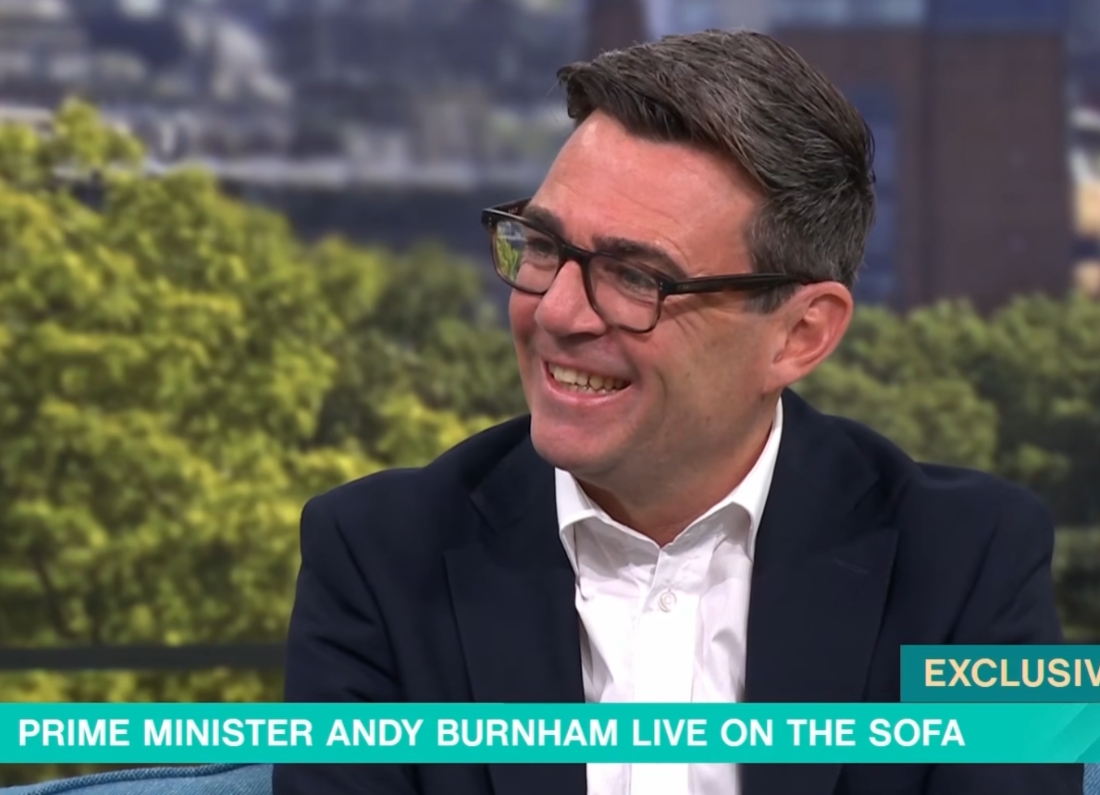
Derbyshire suggested that still left a real question about his judgment, and noted his own YouGov approval ratings had dropped since the Golders Green episode and hadn’t recovered to where they stood in February and March, even as Labour under Andy Burnham appeared to be pulling support away from the Greens. Asked whether he was worried the Greens might have peaked under his leadership, Polanski pushed back, arguing Burnham had identified the right problems, rip-off Britain, high bills, low wages, but that his solutions wouldn’t actually fix them. He pointed to rent controls specifically: “If we brought in rent controls, we could save the average UK household up to £2,400 a year and save government £2 billion a year.”
Asked whether his own conduct might be the thing actually damaging the Greens, Polanski disagreed, saying people he meets tell him his rougher edges are part of what draws them to his politics. “I’m not focus grouped, I’m not kind of run by some kind of corporate company. I’m listening every day to what I can do to make this country better, and working as hard as I can in the face of incredibly hostile press.”
Derbyshire put it to him directly that voters might reasonably conclude, from these repeated social media missteps, that he could be careless or even dangerous with their safety if he held power. Polanski accepted the premise rather than dismissing it: “It’s my job to make sure that I build trust, that I demonstrate through my actions and through my behavior that I have people’s values and their best interests at heart.” He argued the real test isn’t whether mistakes happen, but what follows them: “The point is what do you do about that mistake? How do you learn and how do you move on from it?”
Social care, and a still-unresolved council tax question
The interview also touched on social care, following news that Burnham had invited Kemi Badenoch and Keir Starmer to cross-party talks on reform the next day. Asked if he should have been included, Polanski said he’d welcome an invitation but that the real issue was policy, not who’s in the room: “Social care is a ticking time bomb. It makes no sense that if someone is ill with cancer, they get free health care, as they should, but if they have dementia, they don’t.” He pointed to private providers making up to £240m in three UK regions over three years through outsourced social care contracts, money he argued should be going into the NHS instead.
Asked, almost in passing, whether his own council tax situation had been resolved, Polanski said it hadn’t: “The council still don’t know if I owe council tax or not. Obviously, I want to pay it as soon as I can if I have to pay anything.”
One final chance, declined
Before wrapping up, Derbyshire gave Polanski one more opening to apologise. He didn’t take it. “I believe in authenticity, and I don’t think I’ve done anything wrong here. I’ve made a mistake, but it wasn’t a purposeful mistake. Be very easy to apologise, but actually, I think it’d be false, and if nothing else, I’m always going to stand by my convictions.”
James O’Brien had already made a related argument on LBC in the days before this interview aired, pointing to Farage’s own history of loaded language and Reform’s celebration of convicted offender Lucy Connolly at its own conference. Polanski’s Newsnight answer leans on the same underlying point: an apology now, without any comparable accountability from Farage, wouldn’t settle the row so much as hand it back to him to use again.
Whether that calculation holds as the story continues to run is a separate question. For now, Polanski’s position hasn’t moved an inch across the entire interview: sorry the image went up, not sorry to Farage specifically, and still calling the whole episode a political attack rather than a genuine safety concern.




Leave a Reply