


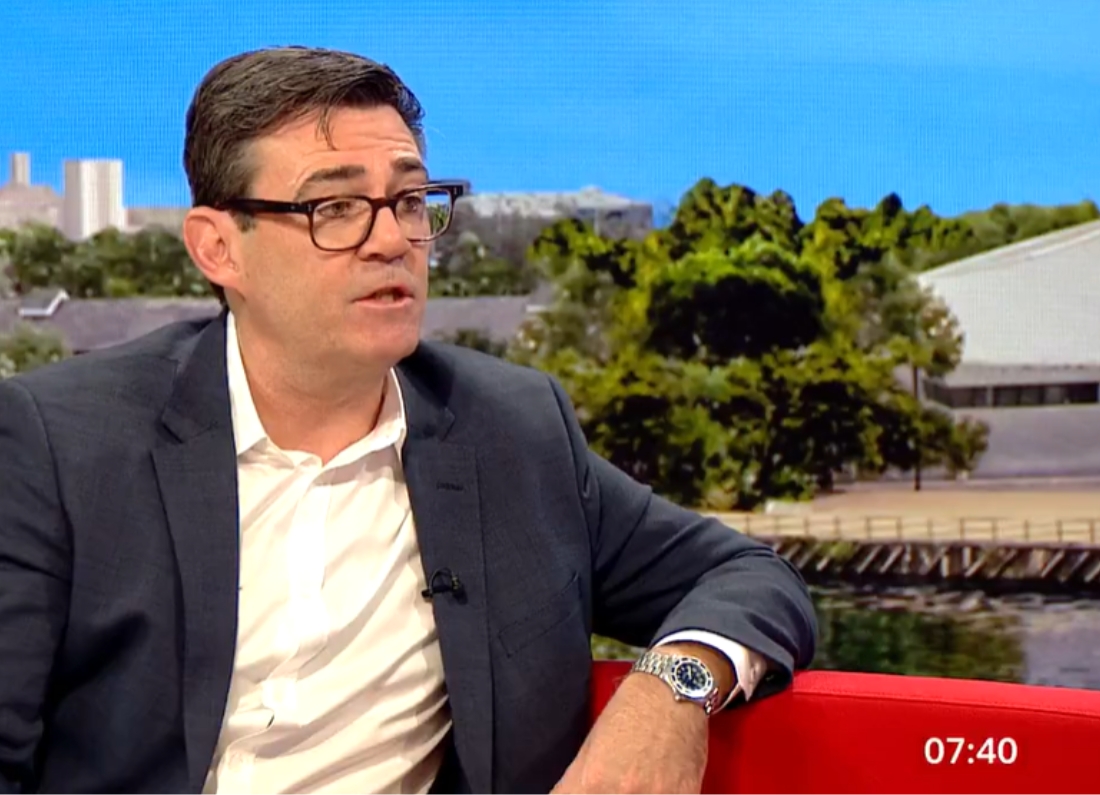
Fourteen-year-olds in England are getting new routes into technical education, part of Andy Burnham’s response to a genuinely alarming youth unemployment problem.
From Year 10, pupils will be able to study core subjects like English and maths alongside vocational courses built around whatever jobs are actually available where they live. Depending on the local economy, that could mean training linked to healthcare, construction, manufacturing, clean energy, AI, or the creative industries.
These courses are meant to include real work experience, practical skills, and direct input from local employers, with schools, colleges, councils and regional mayors all helping design them. The first pathways are expected to start from September 2028.
Burnham’s aim, he says, is to kill off the assumption that university is the only respectable way to build a decent career. “For too long in this country, students have been told that you must take the academic path to do well and to be respected,” he said. “The whole school system has been built around it and that has let down young people seeking technical qualifications.” He added: “From today, Britain will value the hard hat every bit as much as the graduation cap.”
Catchy line, and it captures exactly what he wants this to achieve. Whether schools can actually pull it off, and whether employers will provide enough genuinely meaningful placements to make it real, is where things get harder.
Local courses, tied to local jobs
Under the plan, technical education stops being something offered mainly to pupils who struggle academically, sitting on the margins of school life. The government wants it presented as an equally valid choice, with pupils still doing essential GCSEs alongside building knowledge and experience relevant to a specific industry.
Burnham says a teenager choosing construction, coding or mechanics should get exactly the same respect as one doing classics or maths. The courses won’t be identical everywhere. Places with a strong manufacturing base might build pathways into engineering and advanced production; areas with major hospitals or life-sciences employers could lean into health and lab work; coastal regions might focus more on clean energy; cities with established media sectors could build courses around digital and creative careers.
This local approach borrows heavily from the Greater Manchester Baccalaureate, or MBacc, which Burnham developed as mayor of Greater Manchester, a technical alternative to the English Baccalaureate connecting pupils to apprenticeships and jobs in sectors struggling to recruit. Rather than being a standalone qualification, it bundled together GCSE choices, careers advice and employer relationships into a clearer route into work after school. Burnham’s now trying to take that same idea national, as part of his wider devolution agenda.
Ofsted will also be asked to change how it judges schools, recognising institutions that deliver strong technical education and genuinely employer-valued skills, rather than grading almost entirely on academic results and university progression. The government’s argument is that the current system gives schools very little incentive to invest time and money into vocational courses at all.
Over a million young people are currently out of work and education
This all comes after the number of 16 to 24-year-olds not in education, employment or training climbed above one million for the first time since 2013. ONS figures put it at 1.012 million between January and March 2026, 13.5% of the age group, up from 12.5% the year before.
Roughly 400,000 of those were unemployed and actively looking for work. A further 613,000 were classed as economically inactive, meaning they weren’t working and weren’t currently job-hunting either, with long-term illness, disability and poor mental health accounting for part of that group, making this a genuinely more complicated problem than simply a shortage of qualifications. The total rose by 89,000 over the year, with the increase hitting young men particularly hard.
Burnham said Britain risked leaving young people staring at “dead ends” the moment they finish education. “Fixing the youth unemployment crisis in Britain will require a shake-up in how we do things, and that’s what this government will do,” he said. “I want to ensure that our education system leaves no dead ends for our young people.”
The reforms also tie into a broader push to bring down working-age benefits spending, with ministers hoping better routes into secure work will stop teenagers drifting away from the labour market and staying on benefits for years. That connection has made some people uneasy. Better technical education might genuinely help pupils badly served by an academic-only system, but it won’t on its own fix every reason a young person struggles to work. Health services, transport, insecure housing, and a real shortage of decent entry-level jobs will all still matter regardless.
Apprenticeships and extra college places
The technical pathways are just one piece of a wider youth employment package. Burnham has also announced £287m for over 22,000 additional college places, and families on benefits could get an annual bursary worth up to £4,500 when a child starts an apprenticeship.
Right now, a low-income family can actually lose child-related benefits when a 16 or 17-year-old becomes an apprentice, because the course counts as paid employment rather than full-time education. In some cases, particularly for single parents or families with a disabled child, the lost support ends up outweighing what the apprentice actually earns. This bursary is meant to remove that penalty.
Smaller employers will be offered incentives to take on younger apprentices too, with ministers targeting 50,000 additional youth apprenticeships by the end of the Parliament, alongside almost 180 planned youth hubs bringing employment, education, health and benefits support together under one roof. All of that gives the education announcement more actual substance, though plenty of detail on what pupils will genuinely study still hasn’t been worked out.
Genuine worry about dividing kids up at 14
Liberal Democrat education spokesperson Munira Wilson warned that pupils absolutely need to be able to change direction after picking either pathway. The real risk is that decisions made at 14 end up narrowing a child’s future options for good, particularly if poorer pupils get quietly steered towards vocational courses while wealthier ones stay on the university track regardless of actual ability.
“We must not allow these changes to predetermine children’s futures at just 14, baking in disadvantage,” Wilson said.
That’s a genuinely familiar risk from countries that already run established vocational systems. Technical education absolutely can offer respected, well-paid routes into work, but only when the courses are properly funded, the qualifications are actually recognised by employers, and pupils can genuinely move between pathways without starting completely from scratch.
School leaders broadly welcome the ambition here, but want a lot more detail. Paul Whiteman, general secretary of the NAHT, said the government had set out “a direction of travel” rather than an actual finished policy, with schools still needing to know which qualifications count, how staff will be trained, and where money for specialist equipment and placements is actually coming from. Pepe Di’Iasio, of the Association of School and College Leaders, also questioned the timing of announcing something this major during the summer holidays, when a lot of the people who’d actually have to implement it are away from school entirely.
Conservative shadow education secretary Laura Trott dismissed the plans as insufficient, arguing Labour has already made businesses less willing to employ young people in the first place through higher employment costs and extra regulation.
A genuinely good idea, with some hard questions still attached
Britain’s spent decades promising to put vocational education on the same level as academic study, and successive governments have launched qualifications, scrapped them, then scrapped the replacements too, leaving schools and employers to just cope with the constant churn.
The case for reform here is genuinely strong. Too many pupils still feel like they’ve failed if they don’t follow the standard GCSE-to-A-level-to-university path, even when their actual abilities and interests point somewhere else entirely. Burnham’s plan tries to fix that by tying education more directly to the job market outside the school gates, and it could genuinely work well in areas where employers, colleges and local government already have solid relationships.
The harder test comes in places with fewer major employers, weak public transport, or economies dominated by insecure, poorly paid work. Tailoring education to the local job market is a lot less exciting an idea if the local job market doesn’t offer much worth training for.
There’s also a two-year wait before any of this actually rolls out. For the million young people already out of education and employment right now, changes starting with Year 10 pupils in 2028 arrive considerably too late to help them directly.
Burnham’s right that a hard hat should command just as much respect as a graduation cap. The real question now is whether his government is actually prepared to fund the teachers, the equipment, and the employer relationships it’ll take to make that more than just a very good line.









Leave a Reply