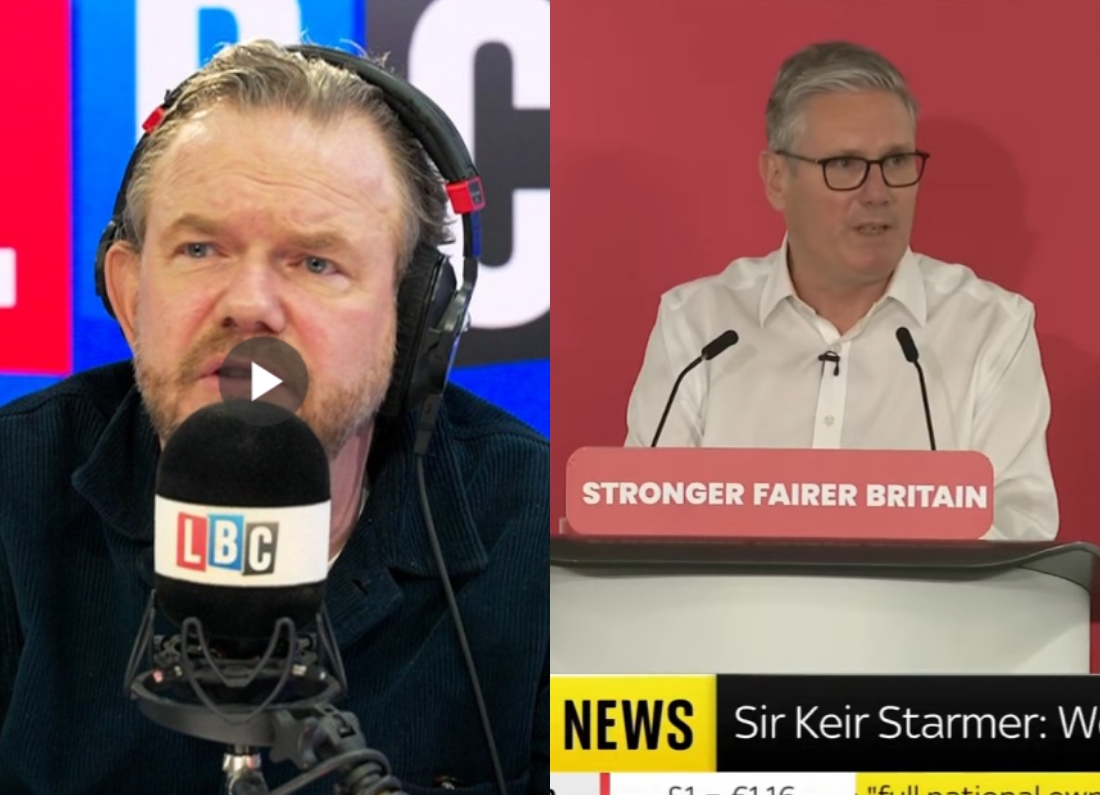
LBC presenter James O’Brien has articulated something that many observers of the Starmer leadership crisis have been struggling to name – the specific way in which British politics has developed an addiction to dramatic political dysfunction since the 2016 Brexit referendum that now appears to operate independently of which party is in power, which leader is under pressure or what the underlying policy questions actually are.
O’Brien did not let Starmer off the hook. His assessment of the Prime Minister’s failure was precise: dullness was supposed to deliver “competence, efficiency, results and tangible improvements” and it had not delivered those things in sufficient measure or at sufficient speed. That is a legitimate criticism.
But his broader point was directed not at Starmer personally but at the political culture that has made his position so rapidly untenable – and at what he sees as its origin.
“One of the great tragedies of post-Brexit politics,” O’Brien said on LBC, “is that we as a population have fallen into the trap of thinking that an outward veneer, usually fraudulent, of bonhomie is somehow preferable to dullness.”
What O’Brien actually argued
The argument has two distinct components.
The first is about what voters say they want versus what they actually respond to. Dullness – competent, incremental, evidenced-based governance that delivers tangible improvements over time – is, in theory, what most people would choose if asked directly. It is what Starmer promised and what many voters said in 2024 they were desperate for after years of Conservative chaos. And yet, O’Brien observes, when dullness is delivered without the accompanying sense of momentum, hope and dramatic narrative, it fails to hold the public’s attention or loyalty. The “fraudulent bonhomie” of a Boris Johnson or a Nigel Farage – the performance of warmth, certainty and belonging – wins the emotional argument even when it loses the factual one.
The second, more provocative component is the Brexit argument. “I can’t remember what life was like before 2016,” O’Brien said, “before the British public was given permission to believe whatever it wanted to believe, regardless of facts or evidence.”
This is a specific claim: that the 2016 referendum was a watershed not merely in policy terms but in epistemological ones. That it normalised, at a population level, the idea that evidence and expertise were optional inputs to political decisions rather than necessary foundations for them. And that once that permission was granted, it could not be withdrawn – producing a political culture in which dramatic narrative always beats careful argument, emotional authenticity always beats procedural competence, and the next crisis is always more interesting than the unglamorous work of the last one.
The Starmer leadership crisis as case study
The current Labour leadership crisis illustrates O’Brien’s argument with some precision.
Keir Starmer has governed in conditions of extraordinary difficulty. He inherited a public finances position worse than any incoming government has faced in modern times. He has overseen a 330,000 reduction in NHS waiting lists. He has nationalised four rail franchises and is nationalising British Steel. He has begun a fundamental reset of the UK-EU relationship. He has maintained coherent foreign policy through the Iran war while keeping Britain out of the conflict. He has passed the most significant employment rights legislation in a generation.
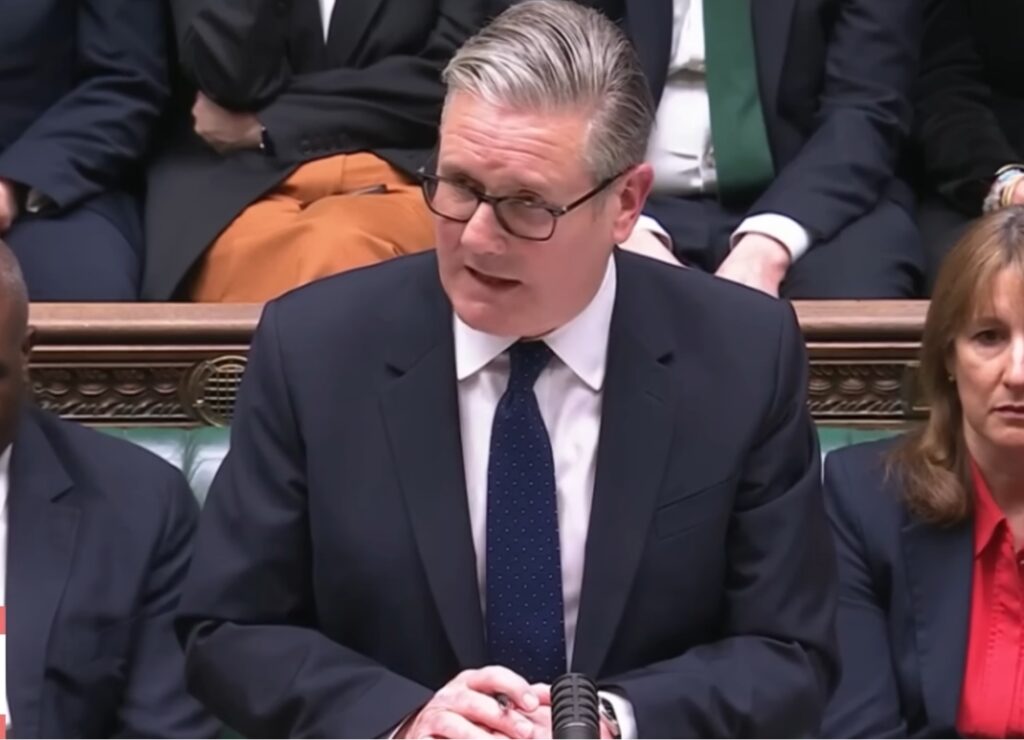
These are not trivial achievements. But they are dull achievements. They are the kind of things that get delivered without fanfare, that do not generate memorable moments and that do not satisfy the demand for political drama that O’Brien argues has become structurally embedded in British political culture since 2016.
As we reported in our structural analysis of why prime ministers keep falling, thirty years of Ipsos polling shows that satisfaction with prime ministers and governments has declined steadily across all parties since 1997, with Liz Truss appearing as a specific turning point after which public tolerance for political failure permanently collapsed. What O’Brien is adding to that analysis is a cultural explanation for the structural data: the post-2016 permission to ignore facts means that no amount of genuine delivery is sufficient if the narrative feels wrong.
The addiction as both cause and symptom
O’Brien’s “addiction” framing is worth examining carefully. Addiction implies something that produces short-term satisfaction and long-term harm – something the person experiencing it knows is damaging but cannot stop seeking. That is a reasonable description of what the parliamentary Labour Party, the media and significant portions of the public are currently doing with the Starmer leadership story.
The crisis is generating enormous media coverage, social media engagement and political energy. It is absorbing the attention of 77 Labour MPs, several cabinet ministers, the Home Secretary, dozens of special advisers and the entire Westminster press corps. As we reported in our coverage of the 77 MPs calling for Starmer to quit, one Labour MP’s private WhatsApp described the situation as “I am not quite sure how we ended up here” – a phrase that sounds less like strategic calculation and more like the bewildered recognition of someone who has done something they know is not serving their long-term interests.
The short-term satisfaction is real: naming the drama, participating in the narrative, being part of the story that everyone is talking about. The long-term harm is also real: every week spent on the leadership crisis is a week not spent on Reform’s actual governance record, on the Harborne investigation, on the UN food crisis warning, on the specific policy arguments that would differentiate Labour from its opponents.
As we covered in our piece on Reform’s first year in local government, the party that won 1,400 council seats last week has already raised council tax in every council it controls, tried to close care homes and had three of its new Essex County councillors suspended or resigned within 72 hours of election. Those stories – which directly affect millions of people – are receiving a fraction of the coverage of a Labour leadership crisis that is primarily about Westminster psychology.
The 2016 origin question
O’Brien’s specific attribution of the problem to 2016 will be contested. The post-truth era in politics is not unique to Britain, nor did it begin with Brexit. Donald Trump’s 2016 presidential campaign ran simultaneously with the Brexit referendum on a similar playbook. Hungary’s Viktor Orbán had been operating in this register for years before 2016. The decline in trust in institutions, experts and mainstream media that enables post-truth politics has been building across Western democracies since at least the 1990s.
What Brexit did, in O’Brien’s analysis, was bring that permission to ignore facts into the mainstream of British political culture specifically – to give it democratic legitimacy by attaching it to a referendum result that 17.4 million people endorsed. You cannot argue that 17.4 million people made the wrong choice without challenging democratic legitimacy directly, which makes the factual critique of Brexit politically unusable as an ongoing argument. The result is a permission that, once granted, cannot be revoked democratically – because the act of revoking it would itself require the kind of sustained engagement with evidence that the permission was designed to make unnecessary.
What it means for whoever comes next
If O’Brien’s diagnosis is correct, it has a specific and troubling implication for the Labour leadership contest now apparently underway. The addiction to drama does not discriminate between left and right. It does not care whether the leader is Starmer or Burnham or Streeting or Rayner. It will consume the next one as readily as it has consumed this one – unless the structural conditions that feed it change, and there is no obvious mechanism by which they will.
As we reported in our Rayner bombshell statement piece, the former Deputy Prime Minister’s Sunday intervention was itself a masterclass in the dramatic narrative that O’Brien describes – framing the moment as “last chance,” citing Burnham as the blocked hero, casting Mandelson as the villain and positioning herself as the voice of authentic Labour values against a government she had just left. It was compelling. It was dramatic. It was exactly the kind of political communication that cuts through in post-2016 Britain.
Whether it was the kind of political communication that would help Labour govern more effectively in 2027 is a different question.