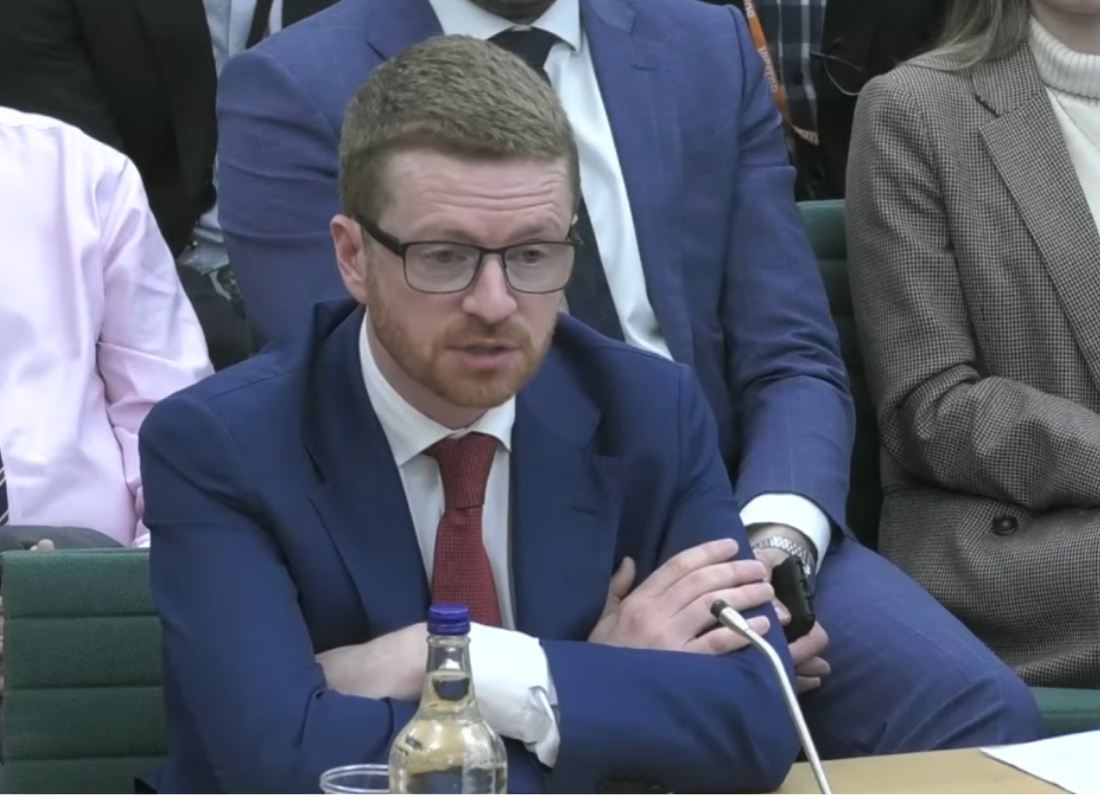
Morgan McSweeney – Keir Starmer’s former chief of staff and the man who resigned in February over his role in recommending Peter Mandelson as UK ambassador to the United States – gave evidence to the Foreign Affairs Committee on Tuesday in the most candid and consequential testimony yet on the scandal that has come to define Starmer’s premiership. Here is what we learned.
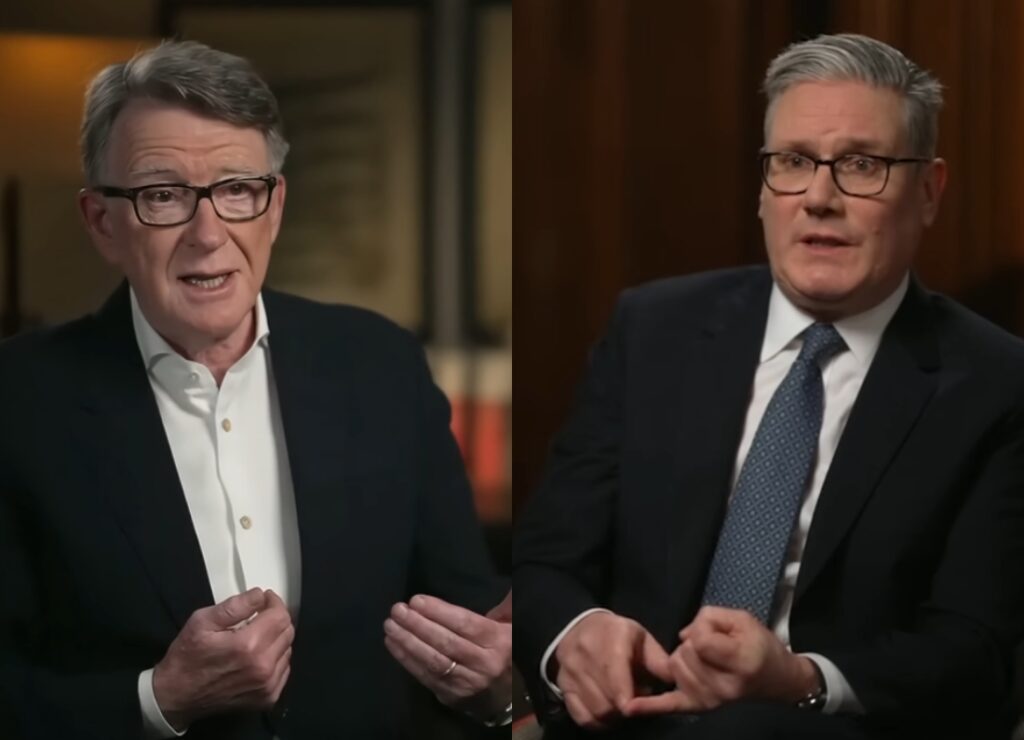
The session came a week after sacked Foreign Office permanent secretary Olly Robbins told the same committee that Downing Street had shown a “genuinely dismissive attitude” to Mandelson’s security vetting. Earlier on Tuesday, Robbins’s predecessor Sir Philip Barton also gave evidence. He said No 10 was “uninterested” in aspects of Mandelson’s security vetting, but sought to distinguish between pressure to complete the vetting process and pressure to approve it – suggesting he experienced the former rather than the latter.
The news that Starmer now faces a formal parliamentary standards investigation into whether he misled the House over the appointment was confirmed in the hours before McSweeney took his seat.
1. He called it a ‘serious error of judgment’ – and took full responsibility
McSweeney opened his evidence with a clear and unambiguous acceptance of responsibility – something that will be noted by those who have accused Starmer of attempting to deflect blame onto civil servants.
“I resigned because I believe responsibility should rest with those who make serious mistakes. Accountability in public life cannot apply only when it is convenient,” he told the committee. “The prime minister relied on my advice, and I got it wrong.”
He added: “It is also important, however, to distinguish between what I did do and what I did not do. What I did do was make a recommendation based on my judgment that Mandelson’s experience, relationships and political skills could serve the national interest in Washington at an important moment. That judgment was a mistake.”
2. He insisted he never pushed for vetting to be approved at all costs
The most serious allegation McSweeney faced going into the session was that he had pressured Foreign Office officials to simply approve Mandelson’s vetting regardless of the outcome – with one widely circulated claim suggesting he had sworn at officials and told them to “just f***ing approve it.”
He flatly denied it. “What I did not do was oversee national security vetting, ask officials to ignore procedures, request that steps should be skipped, or communicate explicitly or implicitly that checks should be cleared at all costs. I would never have considered that acceptable.”
Sir Philip Barton, who ran the Foreign Office before Olly Robbins, confirmed there was no substance to the specific allegation that McSweeney had sworn at him while urging the process to move faster. The denial of the swearing allegation had already been given by Barton’s successor Robbins in his own evidence session the previous week.
3. Mandelson would not have got the job if Kamala Harris had won
One of the most revealing moments of the session was McSweeney’s candid acknowledgement that Mandelson’s appointment was specifically about managing the Trump relationship – not a judgment about his general diplomatic suitability.
“I don’t think the prime minister would have chosen Mandelson if Kamala Harris had been elected president,” McSweeney told the committee. He said there would have been a wider range of candidates available if the Democrats had won because of the “nature of the relationships available.” He said his “top concern” was the UK-US trade deal, and Mandelson’s previous experience as European Commissioner was seen as a relevant advantage.
4. Starmer was considering Mandelson for the job before the election
The timeline emerged from McSweeney’s evidence in a way that adds further context to how long this decision had been in the making. As early as January or February 2024 – months before Labour’s landslide election victory in July – the party had told the civil service that Starmer was considering making Mandelson a political appointment to Washington.
5. Mandelson put his own name forward
On the question of where the idea originated, McSweeney was direct: “I think the first person who put Mandelson’s name forward was Mandelson.” He said the former Labour peer made it very clear he was interested in the job and was “certainly lobbying” for the ambassadorship, while appearing to “hedge” because he did not yet know whether he would be appointed.
McSweeney pushed back on the characterisation of his relationship with Mandelson, denying that the peer was a mentor. “He was a confidant for me. I didn’t regard him as my mentor,” he said. “I first had a conversation with Peter Mandelson in 2017. I don’t think I really started to go to him for advice until about 2021, and I was 44 years of age then.”
He also explicitly denied that Mandelson had any involvement in the selection of Labour’s parliamentary candidates, or in the cabinet reshuffle that followed Angela Rayner’s resignation.
6. Seeing pictures of Mandelson with Epstein was ‘a knife through my soul’
The most emotionally charged moment of the session came when McSweeney described his reaction to the Bloomberg emails published in September 2025 – which revealed the true depth and nature of Mandelson’s friendship with Jeffrey Epstein, far beyond what McSweeney said he had been led to believe.
“The nature of the relationship that I understood he had with Epstein was not a close friendship,” McSweeney told the committee. “How I understood it at the time was a passing acquaintance that he regretted having, and that he apologised for. What has emerged since then was way, way, way worse than I had expected at the time.”
He described the moment of discovery as “a knife through my soul.”
7. He didn’t feel he got the full truth from Mandelson
McSweeney said he now believes Mandelson was not entirely honest with him during the due diligence process – a significant claim given the seriousness of what subsequently emerged.
“I certainly think it would have been much, much better if I’d asked PET [the Cabinet Office’s propriety and ethics team] to ask those follow-up questions,” he said. “I guess my thinking at the time was if I put follow-up questions to him in writing, and that if a senior member of staff did that, he would feel more obligated to give the truth and the full truth. I didn’t feel that I got that back from him.”
He acknowledged, however, that at the time he believed Mandelson was telling the truth. He only came to believe it may not have been “the full truth” when the later revelations emerged.
8. He was ‘surprised’ the Foreign Office never sought US intelligence on Mandelson’s Epstein links
Perhaps the most operationally striking moment came when McSweeney said he had assumed – apparently incorrectly – that British officials had requested information from their American counterparts about Mandelson’s relationship with Epstein before the appointment was finalised.
“One of the things that subsequently surprised me – I would have assumed that, and maybe they did – but I would assume that our Foreign Office would have been in contact with US counterparts to see what information they held on him,” he said. He said there is “no way” Mandelson would have been appointed ambassador if the government had known the full depth of his Epstein friendship.
9. A new and separate bombshell: Ian Collard’s letter – and the standards investigation
On the eve of Tuesday’s session, a letter from Ian Collard – the director of security who oversaw the vetting – was published by the committee. Collard revealed he had never actually seen the document that recommended security clearance be denied. Instead, he received an oral briefing from officials who told him it was “overall a borderline case” that could be handled through “robust risk management.” He admitted feeling under pressure to deliver a “rapid outcome” but said it did not affect his final judgment.
That detail – that the official who made the final vetting decision never saw the formal red-box denial document – adds yet another layer to a scandal that has now generated multiple contradictory accounts of who knew what, when, and what they decided to do about it.
And to close what has been an extraordinarily damaging week for the government: it was confirmed that Starmer now faces a formal investigation by the parliamentary standards commissioner into whether he misled the House when he told MPs three times that “full due process” had been followed over Mandelson’s appointment. The investigation could result in a finding of contempt of parliament.
The evidence sessions continue. The investigation has begun. And the question of what Starmer knew, when he knew it, and whether he was honest with parliament about it, remains – for now – unanswered.
You can watch it in full below:
You may also like: ‘You can smell the alcohol between votes’ – and taxpayers are paying £7.4 million a year to keep the drinks flowing