

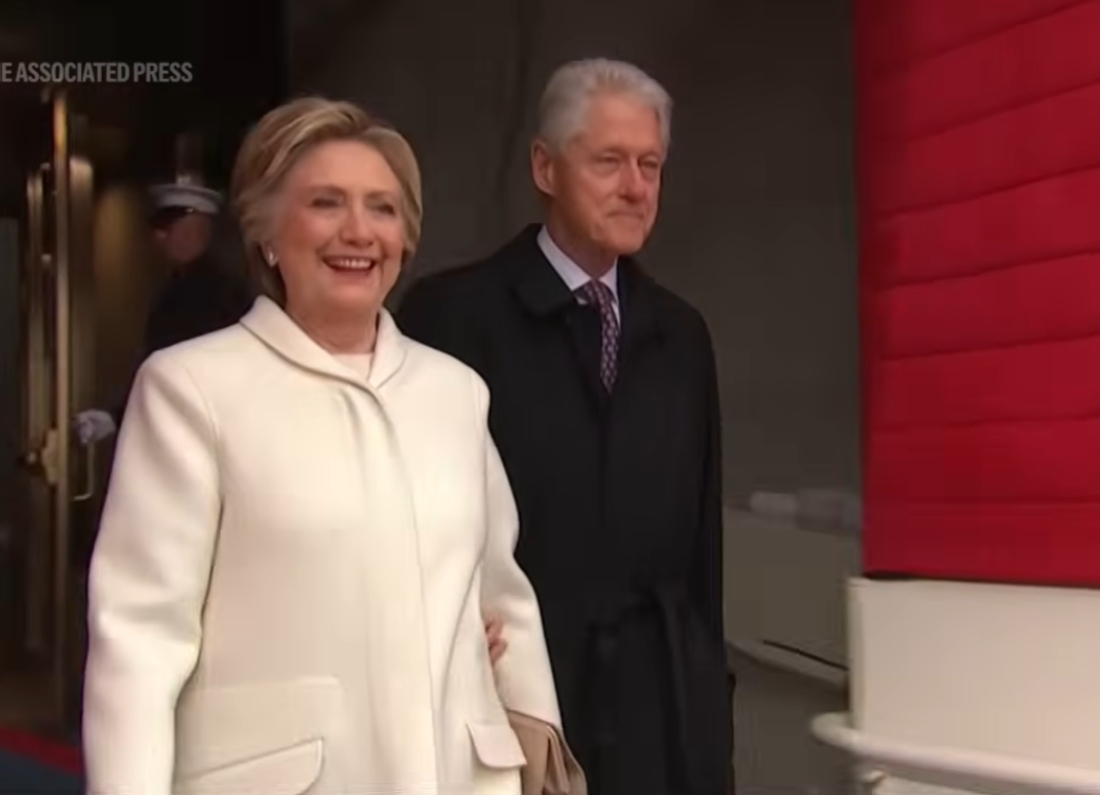
Bill and Hillary Clinton have agreed to testify to the US House of Representatives as part of a Republican-led investigation connected to the latest release of files relating to Jeffrey Epstein, according to a statement from the former president’s deputy chief of staff.
The development comes as millions of pages of material have been released by the US Department of Justice in recent days, triggering renewed scrutiny not only in the United States but also in the UK, where fresh questions have been raised about the conduct of public figures named in email exchanges and documents.
An aide to the Clintons, Angel Urena, said the pair would attend and “look forward to setting a precedent that applies to everyone”, after the House oversight panel accused them of attempting to avoid testifying. The House Oversight Committee has threatened contempt action in a dispute over subpoenas and cooperation, though the precise timetable and format for any testimony has not been set out publicly in full.
In parallel, attention in the UK has intensified around Peter Mandelson following reporting on emails and alleged payments that appear in the newly released material, with the Metropolitan Police confirming it is assessing reports related to alleged misconduct in public office.
Clintons’ agreement follows dispute over subpoenas
The latest flashpoint in the United States centres on whether the Clintons will provide testimony to Congress, after Republicans accused them of refusing to comply with subpoenas and “requesting special treatment”.
Urena’s statement rejected that characterisation, saying the Clintons had “negotiated in good faith” and would appear. If the House votes to pursue contempt, the consequences can be politically significant, although enforcement can be complex and often becomes entangled in legal and procedural arguments.
The Clintons’ representatives have previously argued the probe is politically motivated and have pointed to prior cooperation, including sworn statements, while the committee has insisted that in-person testimony is necessary.
The Clinton connection, and what is actually alleged
The renewed attention does not in itself establish wrongdoing. Jeffrey Epstein had extensive contact with many high-profile figures over decades, and the appearance of names in correspondence or files is not proof of criminal conduct.
That said, the release has revived scrutiny of relationships and decision-making around a man who was later convicted and faced serious allegations. US and UK media have reported that the documents include extensive communications, images and videos, much of which has not been presented with full context, making careful handling essential.
UK political scrutiny widens as police assess reports
In Britain, the strongest immediate institutional response so far has been confirmation from the Metropolitan Police that it has received multiple reports “relating to alleged misconduct in a public office” and that these are being assessed.
The focus has been on claims made in reporting about Mandelson’s correspondence with Epstein, including an allegation that Epstein was given advance notice of a major EU bank bailout in 2010 and that market-sensitive information may have been shared. Mandelson has said he has no recollection of receiving money from Epstein and has questioned whether some documents are genuine, while also expressing regret about the association.
The case also underlines the legal complexity around any potential UK investigation. Misconduct in public office is a serious common law offence, and any criminal inquiry would need to meet evidential thresholds. Separately, the UK can also be asked to assist overseas investigations through mutual legal assistance arrangements, depending on what US authorities seek and what evidence is provided.
Royal-linked claims and wider reputational impact
The Epstein document release has also pulled the UK’s public institutions back into the story in ways that go beyond Westminster. International coverage has highlighted renewed attention on Sarah Ferguson, with reporting on emails and the closure of a charity linked to her following the latest revelations.
Separately, new allegations involving Prince Andrew have again prompted public calls for further examination by authorities, though he has previously denied wrongdoing.
What comes next
In Washington, the next key moment is whether the House proceeds with contempt steps and how quickly testimony is scheduled. Even then, congressional investigations can generate headlines without necessarily producing clear legal outcomes, particularly when they overlap with partisan battles.
In the UK, the most concrete immediate step is the Metropolitan Police assessment of reports. Whether that escalates into a formal investigation will depend on the substance of complaints, the underlying evidence, and whether any alleged conduct falls within a prosecutable framework.
For the wider public, the most important point is also the simplest: document dumps can be vast, messy and frequently incomplete in context. Serious claims require serious corroboration, and any individual named is entitled to due process and fair reporting standards.
You may also like: Trump threatens to sue Trevor Noah over Grammys joke referencing Epstein





Leave a Reply