

Downing Street has issued an unusually direct rebuke to Donald Trump’s defence secretary Pete Hegseth after he claimed that only a handful of America’s NATO allies made a meaningful contribution to the war in Afghanistan.
Hegseth, who served with the US military in Afghanistan, told US army cadets that coalition headquarters could display the flags of dozens of countries while relatively few were involved in the fighting. He suggested that “maybe five” countries made a significant contribution and that, towards the end of the campaign, only “one or two” were engaged in what he described as kinetic operations.
He also repeated an old joke used by some American troops, saying the initials ISAF, which stood for the NATO-led International Security Assistance Force, could instead mean: “I Saw Americans Fighting.”
The remarks prompted a blunt response from Downing Street, which pointed to the record of British and other allied troops who fought and died during the conflict.
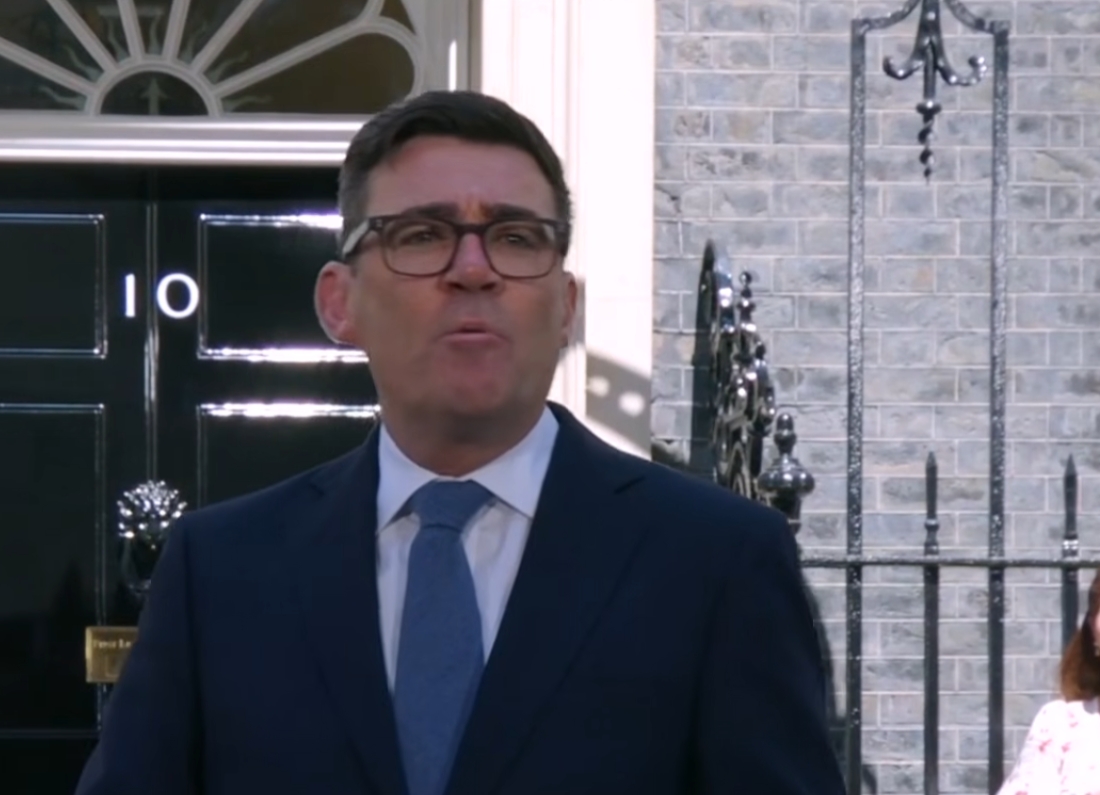
A spokesperson for Prime Minister Andy Burnham said: “Frankly, the facts speak for themselves when it comes to the UK’s and NATO’s contribution to Afghanistan. Thousands of British and allied families made huge sacrifices to play their significant parts in that war and uphold our values.”
No 10 added that it was “wrong to diminish” the contribution made by British forces and other NATO allies.
More than 450 British service personnel died during the Afghanistan campaign, with the official UK death toll standing at 457. Britain suffered the second-highest number of military deaths among coalition countries after the United States.
British troops spent years fighting in Helmand
Hegseth’s characterisation is particularly sensitive in Britain because UK forces were heavily involved in frontline combat, most notably after taking responsibility for security in Helmand province in 2006.
British troops fought sustained battles against the Taliban in places including Sangin, Musa Qala, Now Zad and Gereshk, often from isolated bases surrounded by hostile territory. Helmand became the centre of Britain’s war effort and accounted for a large proportion of UK casualties.
Some British units experienced extremely intense fighting. Sangin alone became synonymous with the cost of the campaign, with scores of British personnel killed in and around the district before responsibility was handed to American forces in 2010.
Britain was far from the only US ally to take casualties. Canada played a major combat role around Kandahar, while troops from France, Germany, Italy, Denmark, Poland, Australia and several other countries were killed during the conflict.
There were real differences within the coalition over how forces were deployed. Some governments imposed restrictions on where their troops could operate or the type of missions they could carry out, something that repeatedly frustrated American and British commanders. The United States also provided by far the largest military contribution to the war.
That is very different, however, from suggesting that almost all of the fighting was done by Americans.
‘Maybe five were doing stuff’
Hegseth made the comments while describing his own experience at NATO headquarters in Kabul.
He recalled seeing the flags of around 50 countries represented in the coalition before questioning how many were making what he considered a serious military contribution.
According to Hegseth, “maybe five were doing stuff”, while by the later stages of the campaign only “one or two” were involved in significant combat.
His use of “I Saw Americans Fighting” also revived a complaint that circulated among sections of the US military during the conflict. American officers regularly argued that national restrictions placed on some NATO contingents left a smaller group of countries taking a disproportionate share of the risk.
Britain was generally considered part of that smaller group rather than one of the countries avoiding combat, which makes Downing Street’s irritation with Hegseth’s broad description easier to understand.
A rare public disagreement with Washington
The language from No 10 is notable because British governments usually avoid publicly rebuking senior members of an American administration, particularly on military matters.
The UK and US remain exceptionally close defence and intelligence partners, cooperating through NATO, the Five Eyes intelligence network, Britain’s nuclear deterrent and military operations around the world.
Only days ago, Defence Secretary Wes Streeting was in Washington for talks with Hegseth as the two governments attempted to manage growing disagreements over Ukraine and Russia.
Britain has continued to offer strong backing to Volodymyr Zelenskyy’s government and insists that any peace settlement must involve Ukraine. Trump has taken a softer approach towards Moscow and has repeatedly pushed for direct negotiations with Russia.
Downing Street used its response to Hegseth to reiterate that Britain’s support for Ukraine remains “unwavering”, another sign of the increasingly visible difference in tone between London and Washington.
Trump has already faced anger over similar remarks
Hegseth is not the first senior figure in the Trump administration to anger NATO allies over Afghanistan.
Trump caused an international backlash earlier this year after claiming NATO countries had stayed away from the front lines and suggesting allied troops had not properly supported American forces.
The comments prompted angry responses from veterans and politicians in several countries, including Britain, where the 457 personnel who died in Afghanistan became an immediate focus of the criticism.
The row also reopened a longstanding argument inside NATO about burden-sharing. Successive US presidents have complained that European allies relied too heavily on American military spending, although Trump has pursued the issue much more aggressively than his predecessors.
NATO members have significantly increased defence spending in recent years, particularly following Russia’s invasion of Ukraine, but Washington continues to provide capabilities that European countries would struggle to replace quickly.
Hegseth’s comments concerned something different from how much NATO countries spend. His claim was about what allied personnel actually did once deployed to Afghanistan, and that is why Downing Street chose to challenge him publicly.
The UK deployment lasted for nearly two decades, beginning after the September 11 attacks in 2001 and ending with the withdrawal from Kabul in 2021. Tens of thousands of British personnel served during that period, many repeatedly, while 457 never returned home.



Leave a Reply