

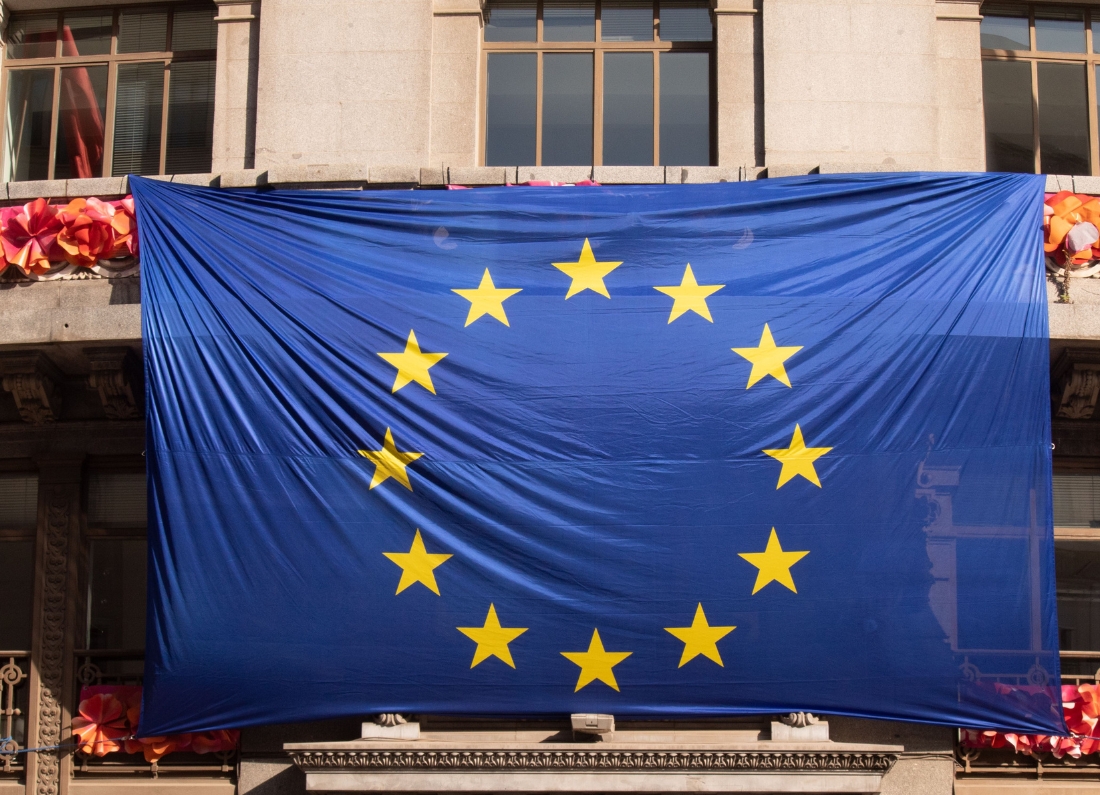
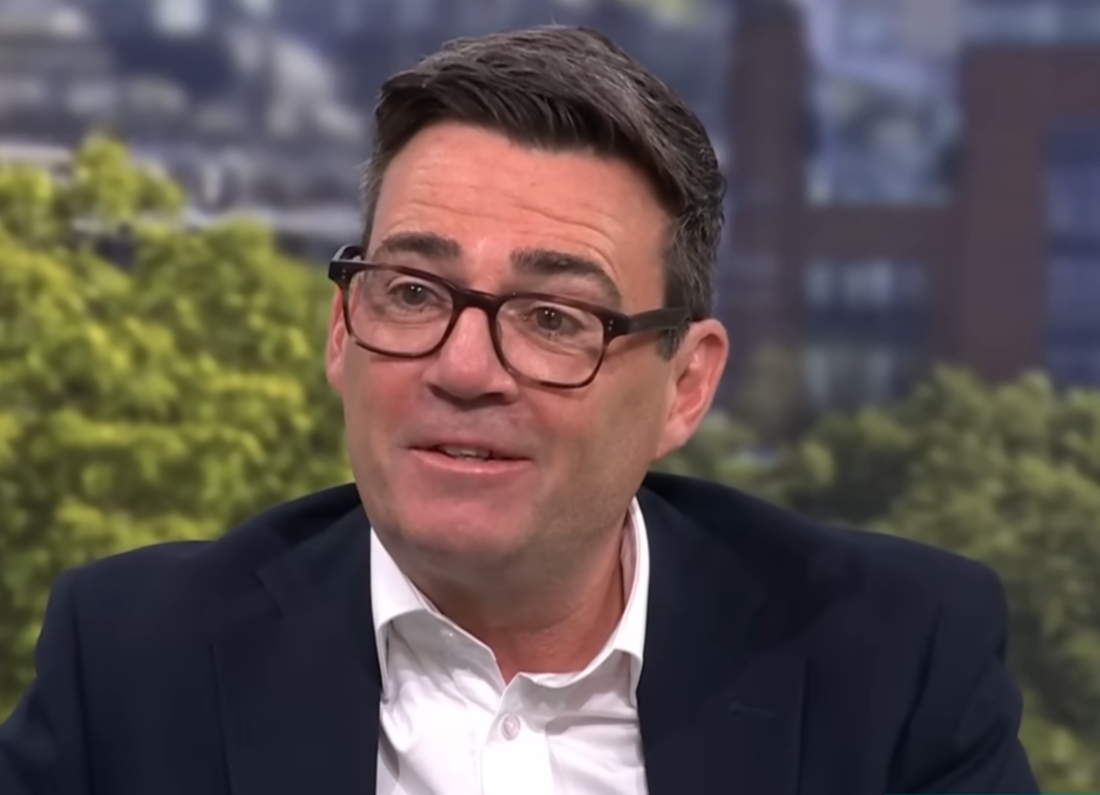
Britain can no longer protect its economy, security and democratic institutions effectively while remaining outside the European Union, according to a major new report urging Andy Burnham to make full EU membership a medium-term national goal.
The Institute for Public Policy Research says the assumptions underpinning Britain’s post-Brexit strategy have been overtaken by events, pointing to Russian aggression, an increasingly unpredictable United States and growing economic pressure from China.
Its central argument is that Britain is trying to operate as an independent middle-sized power in a world increasingly dominated by large economic and security blocs.
That, the thinktank says, leaves the UK with formal sovereignty but less practical ability to shape the forces affecting its economy and security.
The report argues:
“Sovereignty without the ability to act on it is not autonomy.”
IPPR says Burnham’s government has made progress in rebuilding relations with European capitals, but warns that individual agreements on trade, energy, regulation or defence will not give Britain the influence it needs.
Instead, it says the government should begin preparing politically for eventual EU membership.
Harry Quilter-Pinner, IPPR’s executive director, said:
“The world Britain built its post-Brexit strategy for no longer exists.
“We are entering an age in which economic strength, security and political influence increasingly depend on scale, and Britain cannot manufacture that scale on its own.”
He added that improved relations with Brussels were welcome, but argued:
“A series of individual deals will not be enough. There is one option which is best for the UK’s relationship with Europe – membership of the EU.”
‘Britain can’t do that alone anymore’
The report deliberately frames the argument around the language that helped deliver Brexit in 2016.
Laura Chappell, IPPR associate director and one of the report’s authors, said Burnham’s promise to give people greater control over their lives now required closer cooperation rather than greater distance from Europe.
She said:
“It’s time to stop talking about Brexit and focus entirely on the future. A lot has changed over the past decade.
“The prime minister has said his mission is to give people back control, but Britain can’t do that alone anymore.”
She added:
“Whether it’s protecting households from swings in the cost of living, restarting industry, or keeping us secure, we lack the weight to act alone.
“In today’s world, we can’t take back control while being an outsider in Europe.”
The report says Britain’s vulnerability has become more obvious because many of the major pressures now affecting everyday life cannot be controlled by national governments acting independently.
Energy prices can be driven by wars thousands of miles away. Industrial supply chains are affected by competition between the US and China. European defence has become more urgent as Russia continues its war against Ukraine, while Washington is seen as a less predictable security partner under Donald Trump.
IPPR argues that the answer is not for Britain to surrender control, but to pool enough of its power with European neighbours to exercise more influence over those forces.
Trump, Putin and China change the argument
The report says the international environment is fundamentally different from the one in which the 2016 referendum took place.
Britain’s traditional security relationship with the United States has become less predictable, while Russia poses a much more immediate threat to European security than it did a decade ago.
At the same time, China’s economic power means individual European countries are increasingly vulnerable to coercion in areas including trade, technology and strategic supply chains.
IPPR argues that Europe itself has changed in response.
Rather than seeing the EU primarily as a trading bloc based around open markets and regulation, the report describes an organisation increasingly focused on defence, industrial policy, energy security and strategic independence.
That is why it argues the question is no longer whether Britain should reverse the decision it made in 2016.
The question is what relationship Britain wants with the Europe of the 2030s.
Full membership, but not an immediate referendum
IPPR is not calling for Burnham to announce an EU referendum tomorrow.
Instead, it wants the government to make membership its medium-term destination while building public and political support first.
Its proposed route includes closer industrial cooperation with the EU, opening British public procurement to European businesses in return for reciprocal access, and creating a new European Defence Alliance.
Britain could play a particularly important role in that alliance because of capabilities in areas where European states remain heavily dependent on the United States, including intelligence, nuclear deterrence and satellite communications.
Only once support had become more durable should the government seek a formal mandate for EU membership.
IPPR says that could come either through another referendum or through a clear commitment in a general election manifesto.
That puts it slightly at odds with Labour figures such as Emily Thornberry, who has argued that another referendum may not be necessary if rejoining was explicitly promised at a general election.
Poll finds 52% want to join EU
The political case is strengthened by new polling commissioned by IPPR and Persuasion UK.
Some 52 per cent of respondents said Britain should join the EU, compared with 29 per cent who wanted to stay outside.
Ten per cent said they did not know and nine per cent said they would not vote.
When those groups were removed, the result became 64 per cent in favour of joining and 36 per cent against.
Perhaps more notably, support remained relatively resilient when voters were given different versions of a possible membership deal containing actual costs and compromises.
The researchers ran what is known as a conjoint experiment, showing respondents combinations of advantages, obligations and arguments for and against EU membership.
Rather than simply being asked whether they liked the idea of rejoining, voters had to decide whether they would accept particular packages.
Average support remained at 52 per cent.
That matters because simple referendum polling can often overstate how firm public opinion is before the details of an agreement are known.
IPPR says its findings suggest there is at least the potential to build a durable majority, although it stops short of claiming voters have already agreed on exactly what rejoining should look like.
Even potential Labour-to-Reform switchers lean towards joining
One particularly interesting finding concerns Labour voters considering switching to Reform UK.
Among that group, 54 per cent said they wanted Britain to join the EU, while 36 per cent preferred to stay outside.
That complicates the assumption that moving towards EU membership would automatically drive large numbers of Labour voters into Nigel Farage’s party.
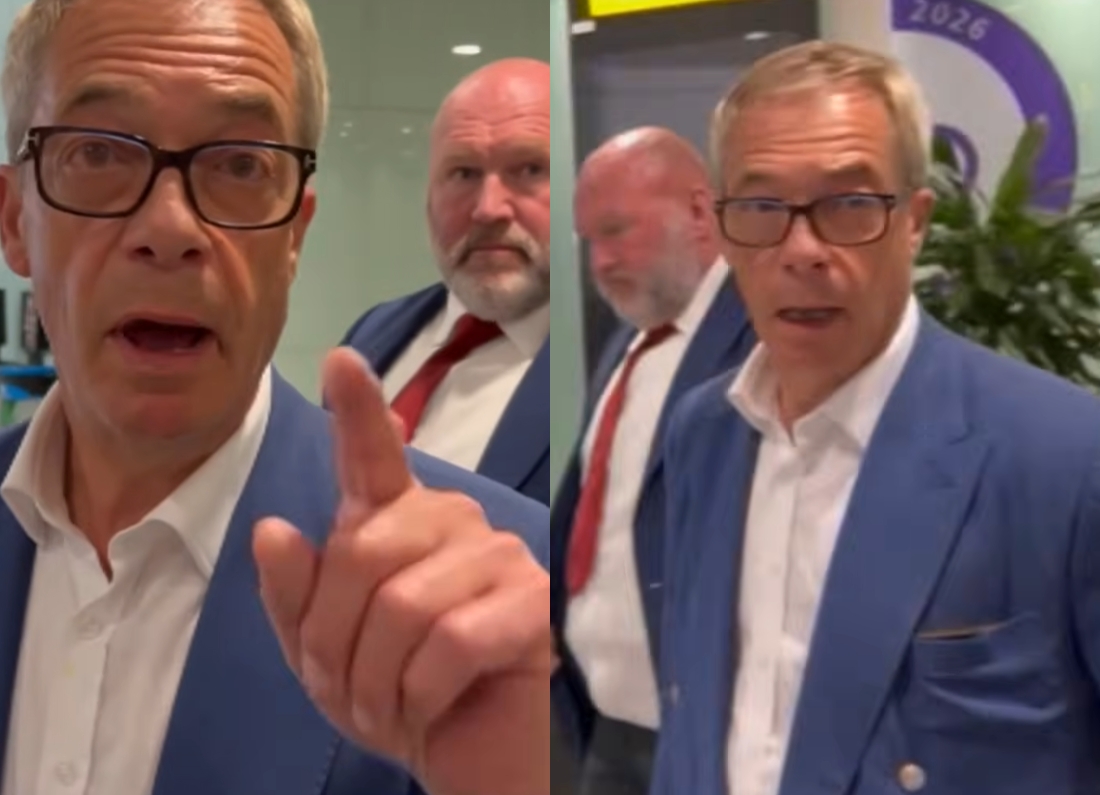
Reform remains firmly opposed to rejoining and Farage has repeatedly accused Labour figures of attempting to overturn Brexit.
But the new polling suggests some voters attracted to Reform for reasons such as immigration, living standards or dissatisfaction with government do not necessarily share the party’s position on Europe.
That does not mean EU membership would be politically risk-free for Labour.
Separate polling has repeatedly shown that voters can become less enthusiastic about rejoining when questions involve freedom of movement, budget contributions or other obligations of membership.
The challenge for Burnham would be persuading voters that the practical benefits outweighed those costs.
Keeping the current relationship may be the least popular option
Another finding from the research could be particularly uncomfortable for politicians hoping to avoid the issue altogether.
When respondents were presented with different possible relationships with Europe, maintaining Britain’s current settlement appeared to be the least attractive option.
There was disagreement over whether Britain should fully rejoin or pursue something short of membership, but considerably more support for change than for simply maintaining the post-Brexit status quo.
That reflects a wider shift in public opinion.
Polling from the European Council on Foreign Relations earlier this year found that 75 per cent of Britons wanted some form of closer relationship with the EU, including a majority of people who voted Leave in 2016.
The same research found widespread belief that Brexit had damaged areas including the economy, living standards and opportunities for young people.
Burnham has reopened a debate Labour once considered closed
The report lands at a particularly sensitive moment because Burnham has already moved Labour considerably further on Europe than Keir Starmer was prepared to go.
Burnham has said Brexit caused “more harm than good” and has refused to rule out full EU membership as one of several long-term options.
His government is preparing for a major UK-EU summit in Brussels on 20 November, where talks are expected to cover security, energy cooperation, food and agricultural trade, migration and youth mobility.
The prime minister has also confirmed that intelligence shown to him after entering Downing Street indicated Russia attempted to interfere in the 2016 Brexit referendum, although the government has not claimed that intervention changed the result.
Burnham has used that evidence to argue for closer cooperation with European democracies against foreign interference.
EU leaders are increasingly open to a British return
The political environment on the continent has changed too.
French president Emmanuel Macron responded “Welcome back” when asked recently about Burnham reopening the possibility of EU membership, while Spanish prime minister Pedro Sánchez has also said Britain would be welcome.
Recent ECFR polling across EU countries found 66 per cent would support Britain joining, with majorities in every country surveyed.
That does not mean Britain could simply restore the membership arrangements it had before 2020.
A new application would take place under Article 49 of the Treaty on European Union and would require unanimous agreement from every member state.
Questions over freedom of movement, budget payments, the euro, Schengen and Britain’s previous opt-outs would all have to be negotiated.
IPPR’s argument is that those questions should now be confronted rather than treated as reasons to rule membership out before the debate begins.
Its recommendation to Burnham is to make full membership a destination, build support for it over time and use the immediate UK-EU reset to start moving Britain closer to the bloc.





Leave a Reply