

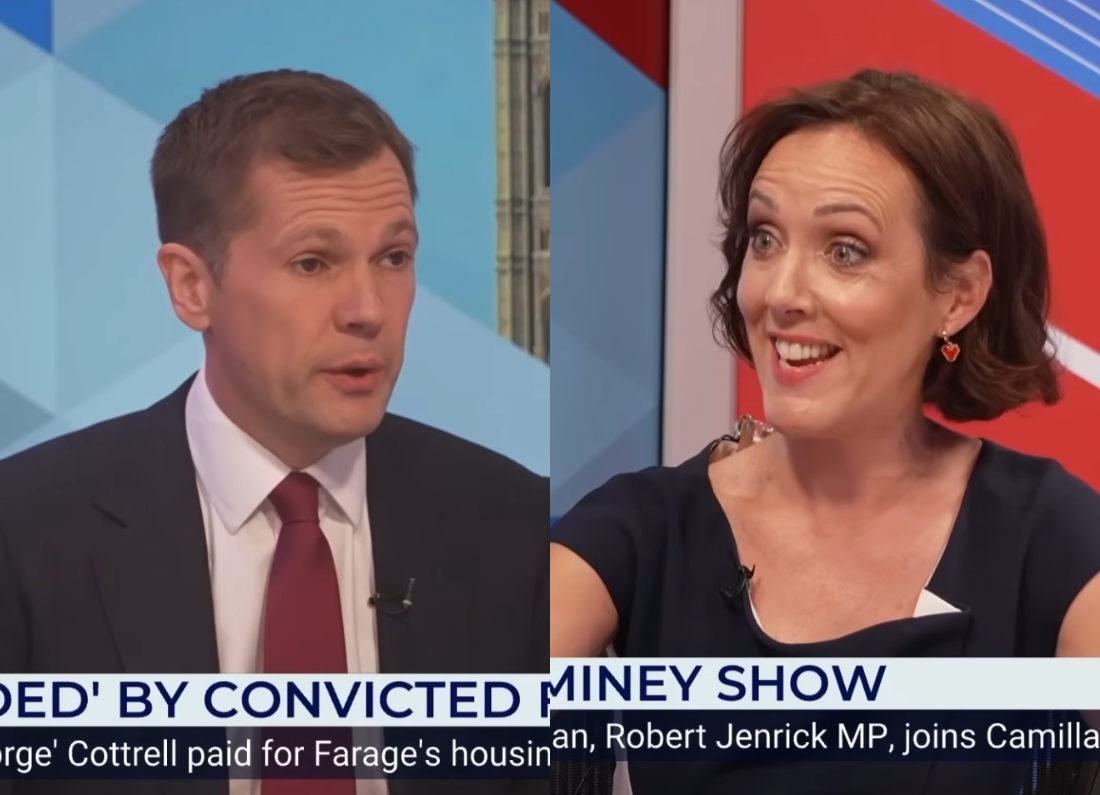
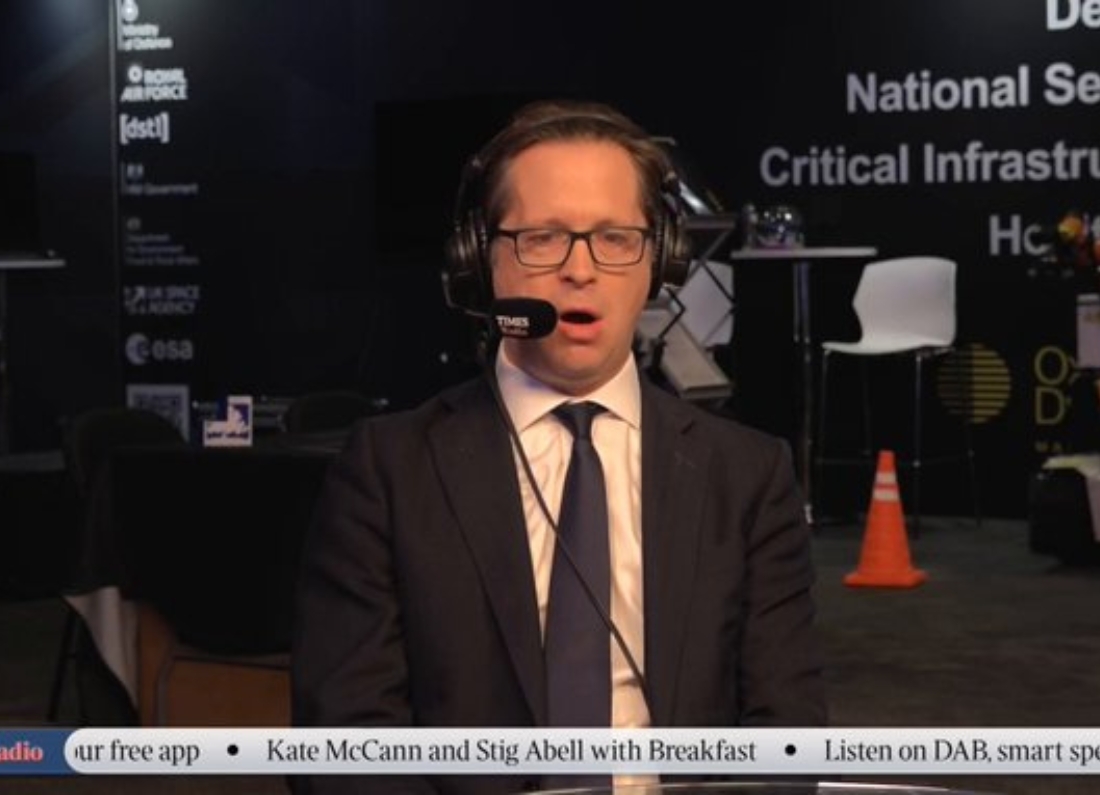
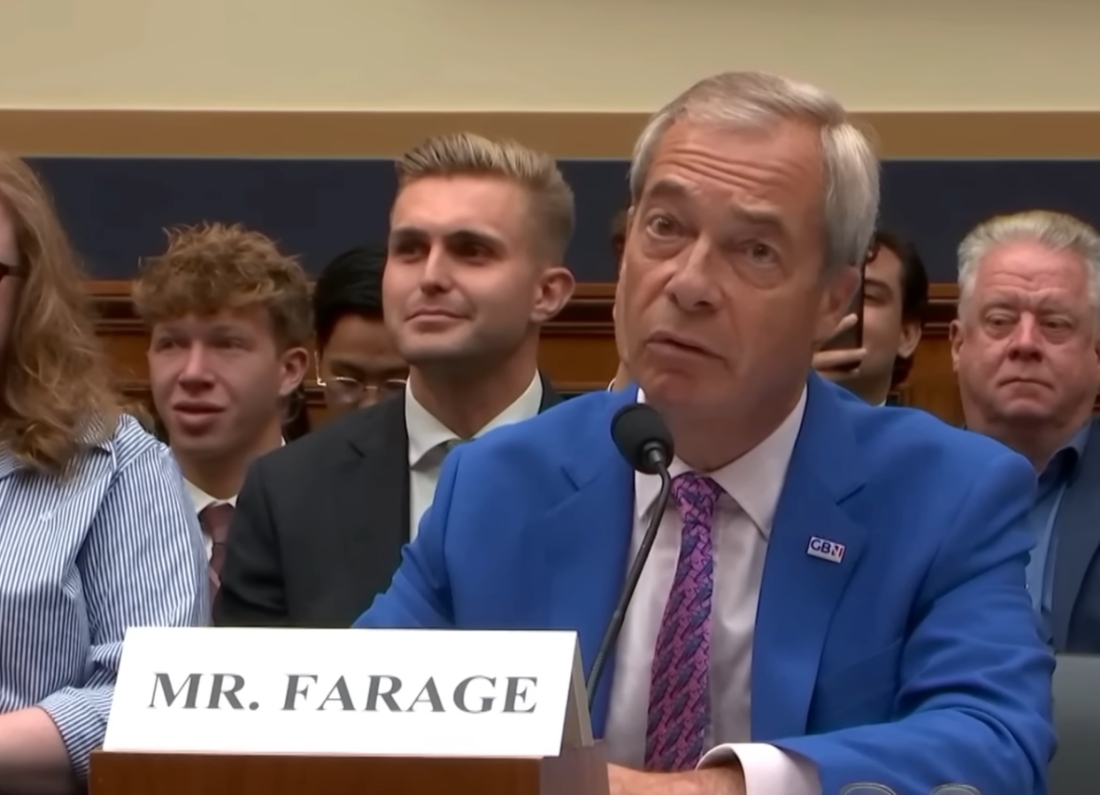
To the studios of GB News, no, stick with us, where Reform UK’s Robert Jenrick was doing the media rounds in the wake of the latest revelations about Nigel Farage’s many and various cash gifts.
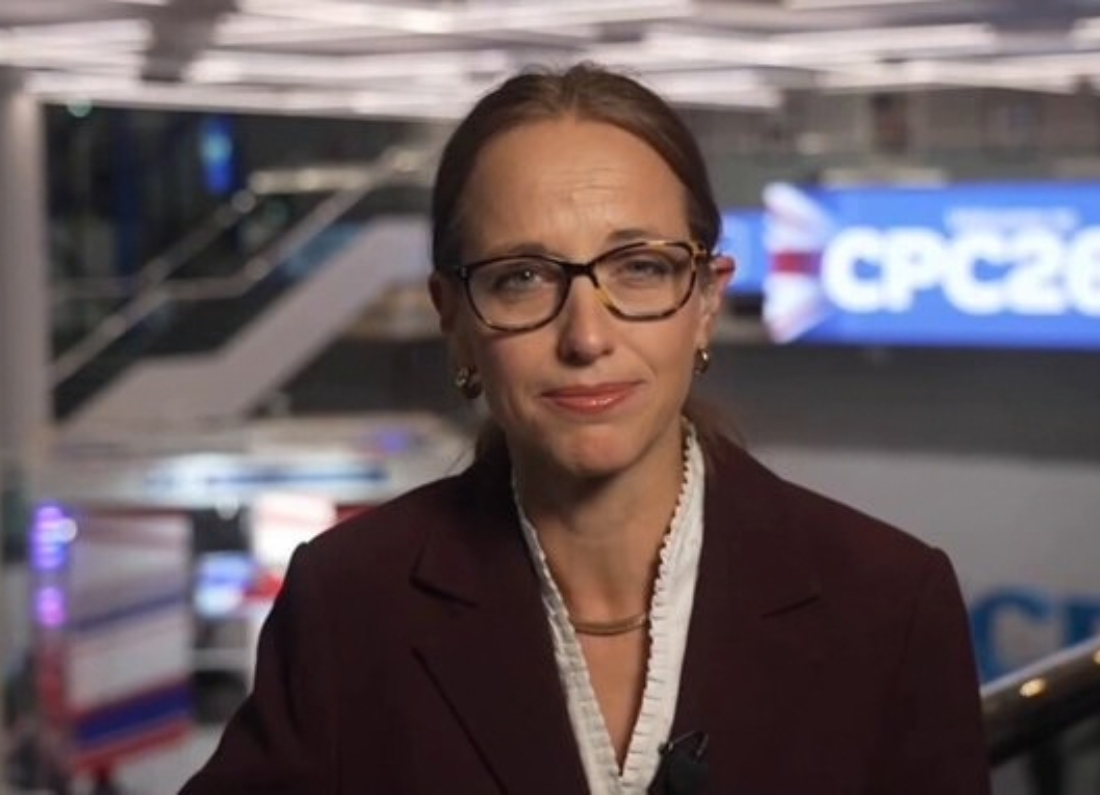
And it is surely a sign of how steeply Farage’s troubles are mounting that presenter Camilla Tominey was having absolutely none of it.
The exchange that mattered
Tominey grilled Jenrick over the Sunday Times investigation into Farage’s relationship with George Cottrell, the convicted fraudster reportedly known as “Posh George,” who is alleged to have helped fund Farage’s housing, staff and security.
Jenrick attempted to frame the whole thing as part of a media agenda against Farage. Unfortunately for him, that meant trying to suggest even the Telegraph, Tominey’s own paper, was somehow part of the left-wing media machine. It did not go well.
At one point, Tominey put it plainly: “So he funded him in the 12 months before.” That was the detail a lot of people seized on. Reform’s defence has rested heavily on the claim that Farage was not yet a candidate during some of the relevant period. But if someone is funding your political operation, staff, security or accommodation in the year before you become an MP, it is not exactly unreasonable for journalists to ask whether voters should have known about it. Especially when the politician in question is Nigel Farage, a man who has spent years presenting himself as the straight-talking outsider standing up to a corrupt establishment.
The rules, spelled out
Tominey walked Jenrick through the actual code of conduct in detail: new MPs must register any benefit received during the 12 months before their election that exceeds £300 in value and is “in any way” related to their political activities. There is a declared figure of £9,200 on the record. But if Cottrell had been funding security, drivers, staff and accommodation, that plainly exceeds £300.
Jenrick’s defence was that Farage was, at the time, “honorary president” of Reform and a GB News presenter rather than an MP, meaning the support had nothing to do with his life as a parliamentarian. Tominey was not persuaded. “If it’s more than that, and it seems as if that financial support or benefit doesn’t just have to be cold hard cash, benefit could be allowing him to stay in his property near Buckingham Palace, for instance, if it might reasonably be thought by others to influence their actions or words as a parliamentarian, then it needed to be declared.” Jenrick’s response, “Well, it didn’t,” was not exactly a rebuttal.
The ‘old friend’ defence, tested
Jenrick repeatedly described Cottrell as simply “an old friend” of Farage’s. Tominey pressed him directly on what that friendship actually involved: “Are you friends with many convicted criminals, out of interest? Do you take money from them? Do you have your security paid for by them? Do you stay at their houses? Any convicted criminals at all?” Jenrick’s answer, “He’s allowed to have a friend,” sidestepped the specific question entirely, prompting Tominey to ask again: “Could you just answer the question?”
The media conspiracy argument, and why it collapsed
Jenrick’s core defence was that the story was being pushed by “the left-wing press” trying to “besmirch” Farage’s reputation because the establishment fears real change. The problem for that argument, made live on air to Camilla Tominey, a Daily Telegraph columnist, is that it required him to suggest her own newspaper had “an agenda” against Farage too. “Sometimes even people like yourself, Camilla, who write in the Telegraph, do have an agenda,” he said. Tominey’s response was simply: “Right.”
The property question
Tominey also raised the wider picture of Farage’s property arrangements, asking Jenrick directly to confirm how many properties Farage owns, and noting that the Buckingham Palace townhouse Cottrell allows him to use appears to have been bought from Nick Candy, Reform’s own honorary treasurer. “Can you not see that some of this just looks a bit iffy?” she asked. Jenrick’s response was to accuse her of being “anti-people owning homes,” a deflection Tominey did not accept.
The press conference dispute
Jenrick claimed Farage has done “more press conferences than any other party leader,” including one in Wakefield that he suggested Tominey had simply chosen not to attend. Tominey corrected him directly: she and her Daily Telegraph podcast colleague Tim Stanley had in fact travelled to Makerfield and attempted to interview Reform’s candidate Robert Kenyon, only to be told by Reform HQ that they could not speak to him. “So you’re wrong on that,” she said.
Shabir Ahmed and Andy Burnham
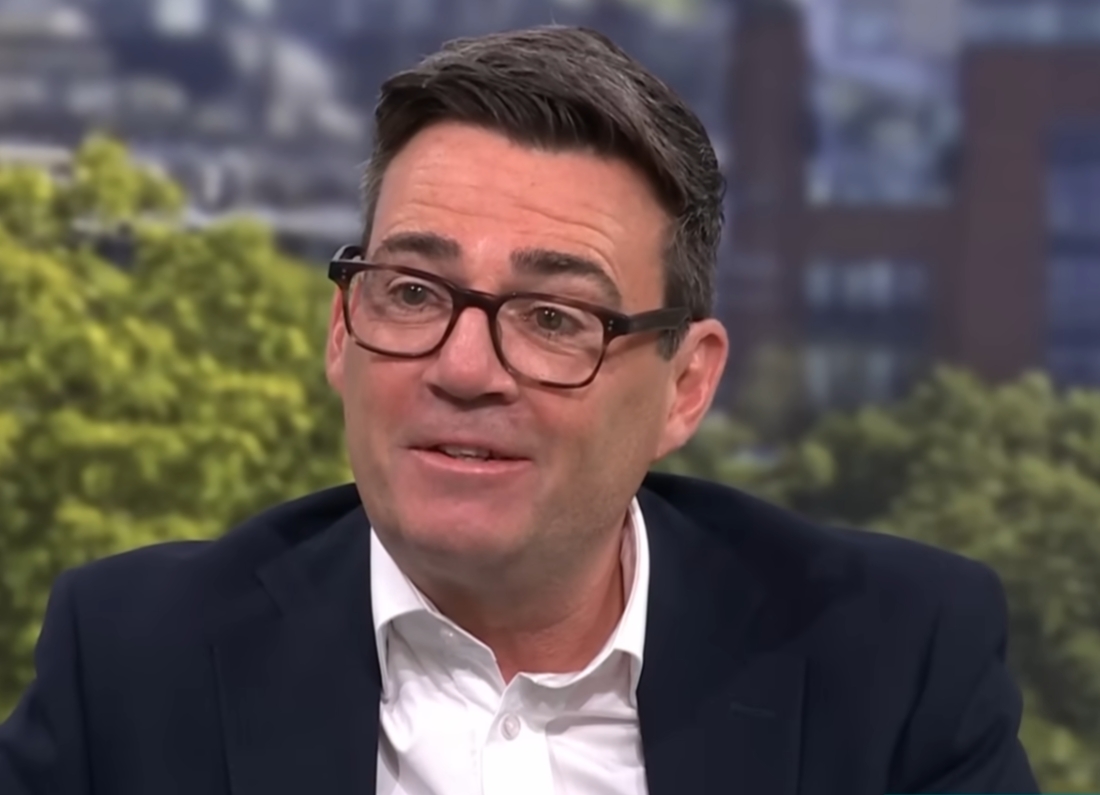
The interview closed on a different but related note, with Jenrick calling for emergency legislation to deport Shabir Ahmed, describing the failure to act quickly on this case as inconsistent with the speed at which Labour had previously passed legislation to keep pubs open later. He set out Reform’s proposed approach: amending the Immigration Act, pressuring Pakistan to accept Ahmed’s return by threatening to pause UK foreign aid and visas, and challenging Andy Burnham directly to make the call as an early test of his premiership. “Does he have the balls to do that?” Jenrick asked, adding pointedly that Farage and Yusuf “certainly do.”
The reaction
The online response to the interview was swift and struck a consistent note of surprise that GB News, of all outlets, had produced the sharpest questioning Jenrick has faced. Stuzi wrote: “Hats off to Camilla Tominey for doing what #bbclaurak failed to do. Doesn’t give Jenrick an inch, and makes him look like a gibbering idiot as he labels the Telegraph as part of the left wing media with an agenda against Farage.” RILEY added: “You know it’s bad when GB News actually stops arselicking the far right and do some actual journalism.” Anti gaslighting wrote: “I can’t stand the woman but that was a joy to watch.”
Fick Nerrari drew the most direct comparison to the BBC’s own recent Farage coverage: “Here you go Laura Kuenssberg, this is how it’s done, by Camilla Fucking Tominey of all people! Christ.” Dave Lawrence summed up the significance of the venue itself: “When GB News totally destroy a Reform defence they have indeed lost the country and indeed the argument.” Charlotte Salomon framed the wider point: “Reform liked scrutiny when it was aimed at everyone else. Now it’s their turn, they seem shocked, insulted even, to discover that politics involves questions, evidence and consequences.”
Richard Sanders asked the question that cuts to the heart of the story: “Why is GB News doing a better job of calling Farage to account than the BBC?”
Why it matters
That really is the heart of it. When even GB News is giving Reform a rougher ride than some of the supposedly hostile broadcasters, the party’s “left-wing media stitch-up” line starts to look considerably thinner than it already did. This is not a vague Westminster whisper campaign. Farage is facing questions about a £5m gift from Christopher Harborne, questions about alleged support from George Cottrell, questions about property declarations, questions about outside earnings, and questions about whether the public has been given a full picture of who has helped fund one of Britain’s most powerful political figures.
Reform can call that hounding if it likes. Most people call it scrutiny. And if Farage is seriously presenting himself as a prime minister-in-waiting, the questions do not get smaller from here. They get bigger.



Leave a Reply