King Charles has delivered one of the most memorable lines in the history of Anglo-American diplomacy, turning Donald Trump’s own “you’d be speaking German” jibe back on the President at a White House state dinner and raising the possibility, with characteristic royal wit, that the moon might already be part of the Commonwealth.
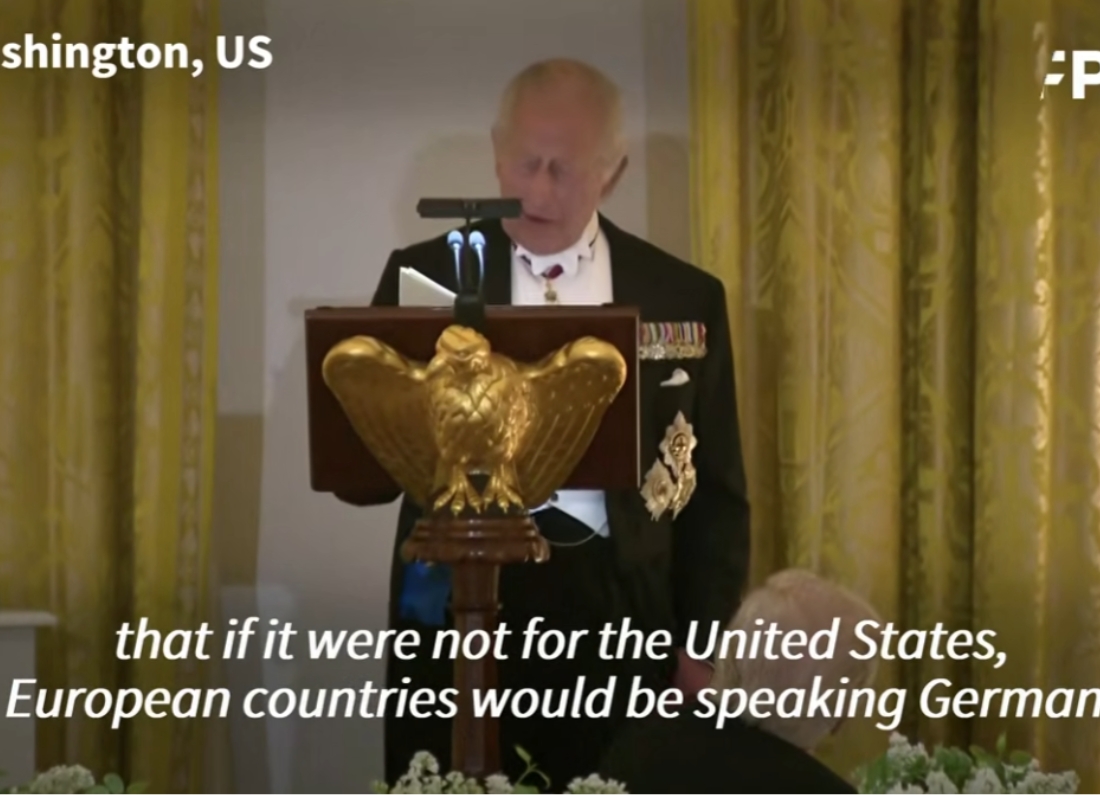
The moment came on Tuesday evening during the formal state banquet at the White House – the centrepiece of the King and Queen Camilla’s four-day state visit. Wearing white tie and seated alongside the President at a table set for hundreds of Washington’s most senior figures, Charles used the occasion to deliver remarks that managed simultaneously to be warm, funny and diplomatically pointed in equal measure.
The ‘speaking French’ moment
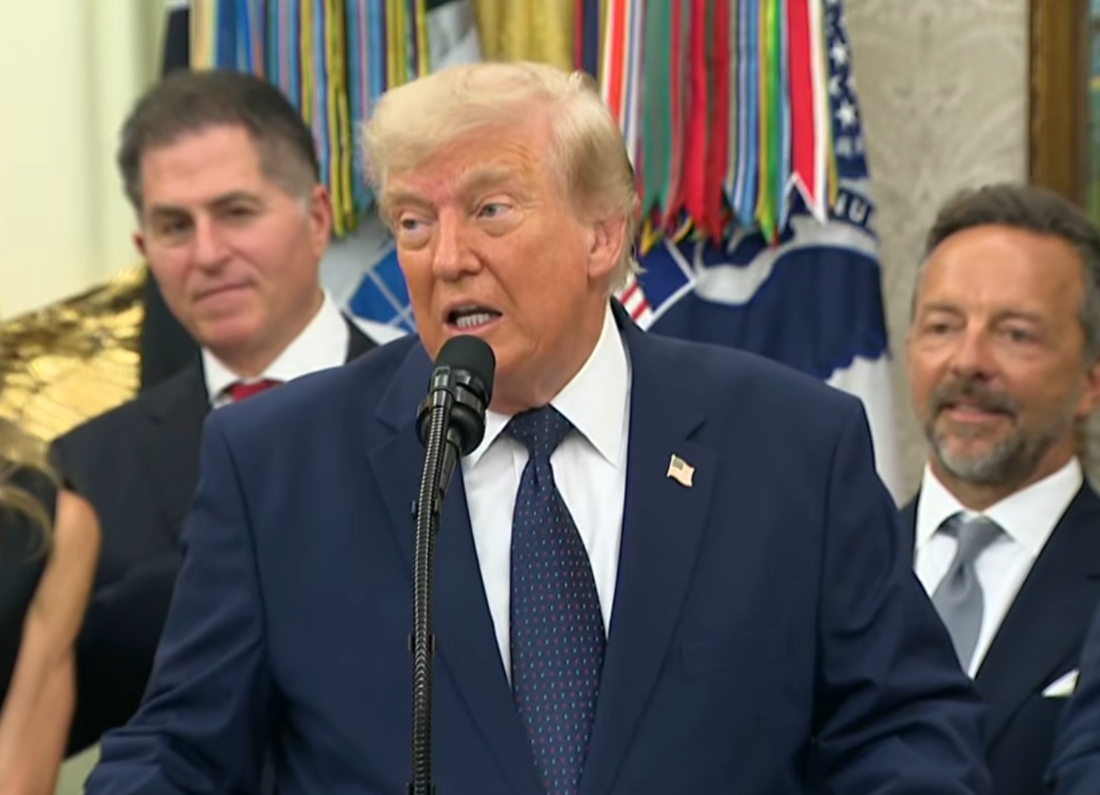
Trump had provoked considerable anger across Europe in January when, speaking at the World Economic Forum in Davos, he claimed that without America’s contribution to the Second World War, European countries would “all be speaking German.” The remark was widely condemned as historically simplistic and diplomatically tone-deaf – ignoring not only the role of the Soviet Union, British forces, French resistance and Commonwealth nations, but also the fact that the United States entered the war in December 1941, three years after Britain had already been fighting.
Charles took his moment. Pointing out that the Royal Family’s history is reflected across American geography – the Carolinas named after King Charles II, Virginia after the Virgin Queen Elizabeth I, Georgia after King George II, Maryland after Queen Henrietta Maria – the King noted Britain’s own deep imprint on the country that had once fought to be independent from it.
He then turned to Trump directly. “This said, our French friends can feel equally at home with a glance at a map,” Charles said. “Indeed, you recently commented, Mr President, that if it were not for the United States, European countries would be speaking German.”
He paused.
“Dare I say that, if it wasn’t for us, you’d be speaking French.”
The room reportedly erupted. It was a perfect riposte – historically accurate, entirely good-natured in delivery, impossible to take offence at, and yet making precisely the point that needed to be made about the complexity of the history Trump had so blithely simplified in Davos.
The moon gambit
Charles was not done. Turning to Trump’s widely publicised ambitions to return American astronauts to the moon – part of the Artemis programme which the Trump administration has continued – the King offered a gently devastating complication.
“Now, I know you have big plans for the moon, Mr President,” he said, “but I’ve actually checked the papers and I rather suspect it is already part of the Commonwealth, I’m afraid.”
The joke – delivered with the kind of straight-faced precision that only decades of public speaking can produce – referenced the 1967 Outer Space Treaty, which declares celestial bodies the “province of all mankind” and specifically forbids national appropriation. Whether the Commonwealth has any stronger claim than anyone else is, of course, legally moot. The point was the delivery.
In context: the Congress speech and the diplomatic mission
The state dinner came after what had already been an extraordinary day of royal diplomacy. In his earlier address to a joint session of Congress, Charles had delivered a series of carefully coded messages – praising NATO, defending checks and balances on executive power, backing Ukraine, and championing diversity – all in language that drew bipartisan standing ovations without once naming Trump directly.
The state dinner allowed him to shift registers entirely. Having done the serious diplomatic work in Congress, Charles used the banquet to demonstrate something equally important to the special relationship: that the British and Americans can disagree, laugh about it, and remain friends. The wit was not a distraction from the diplomacy. It was part of it.
Charles also used his dinner remarks to echo the themes of his Congress speech, referencing NATO’s Article 5 invocation after 9/11 and the long history of British and American forces fighting “shoulder to shoulder, through two world wars, the Cold War, Afghanistan and moments that have defined our shared security.”
Trump’s reaction
Trump, seated alongside the King, was reported to have laughed at both jokes. His reaction to the state dinner as a whole was positive – he had described the visit as already helping to “absolutely repair” the special relationship, called Charles “a fantastic man” and “a very elegant man,” and earlier in the day had revealed that his late mother had a “crush” on the young Prince Charles.
The combination of Charles’s Congress speech and his state dinner remarks appears to have achieved precisely what Downing Street had hoped – a reset of the mood between London and Washington that official diplomacy had failed to produce, delivered not through threats or ultimatums but through history, humour and the accumulated weight of centuries of shared experience.
Whether that mood survives contact with the political realities that will follow the King’s departure from Washington on Thursday remains to be seen. But for one evening at least, a British king made the most powerful man in the world laugh, and reminded a joint session of Congress why the alliance between the two countries is worth defending.
Some days in diplomacy are defined by what is signed. Others are defined by what is said. Tuesday was the latter kind.
You may also like: King Charles embarks on state visit to the US – can he repair the special relationship?