


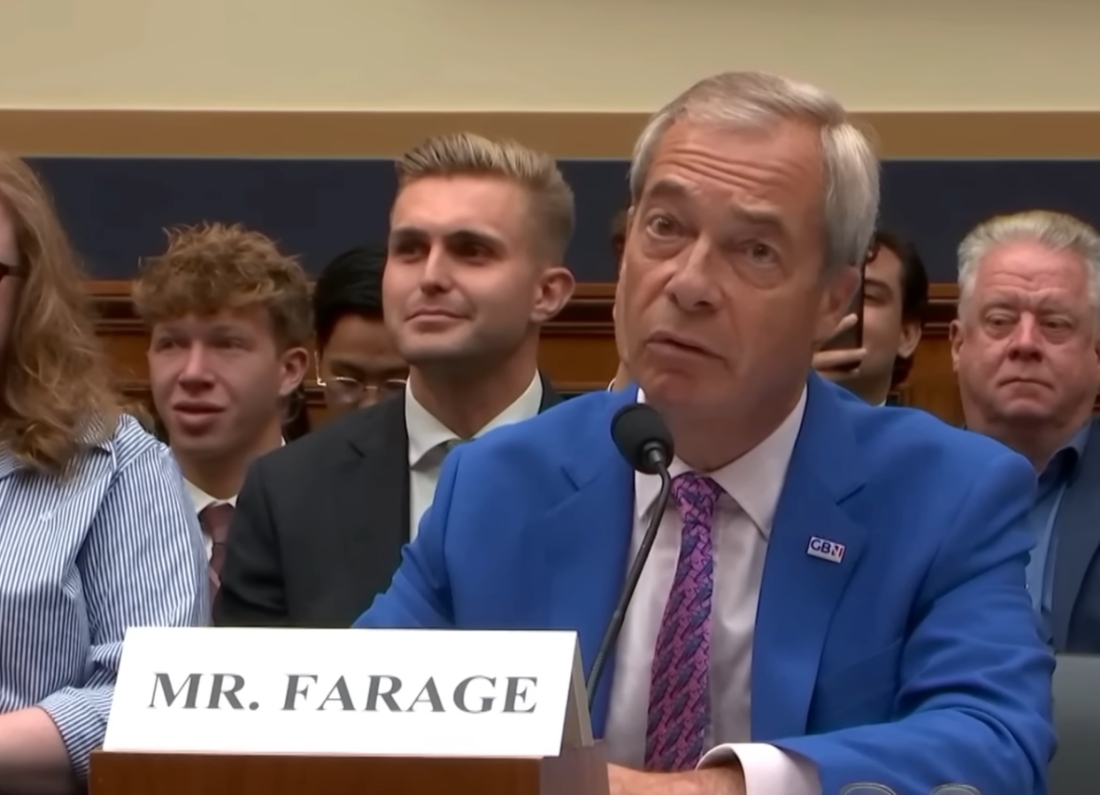
Nigel Farage has said the United Arab Emirates was “not treated very straight” by the UK over the collapse of an Abu Dhabi-backed attempt to buy the Telegraph, as Reform UK steps up efforts to build relationships and raise funds among wealthy British expatriates in the Gulf.
Farage made the comments during a recent visit to Dubai that included private events with British expatriates and appearances tied to GB News’s fifth anniversary celebrations, according to reports by the Financial Times and The Guardian.
The row centres on the failed bid by RedBird IMI – a consortium involving RedBird Capital Partners and International Media Investments (IMI), which is backed by Abu Dhabi – to acquire control of the Telegraph titles. The attempted takeover became a flashpoint in Westminster over concerns about foreign state influence in British newspapers, ultimately prompting new legal restrictions.
What Farage said – and why it matters now
Farage, who previously criticised the prospect of UAE-linked ownership of a major UK newspaper, has now argued that the UK handled the process poorly from the Gulf state’s perspective.
“I don’t think we were very straight with [the UAE] over the Telegraph deal,” he told the Financial Times, adding that the Foreign Office was “prone to lecturing” Gulf partners about how to run their societies.
The intervention is politically notable for two reasons. First, it underscores Reform’s attempt to broaden its donor base beyond the UK, including among British citizens living abroad who remain eligible to make political donations under UK rules if they are registered as overseas electors. Second, it marks a tonal shift from Farage’s earlier public scepticism about the UAE’s suitability as an investor in British media – a shift that critics are already framing as opportunistic.
Farage’s remarks come as Reform seeks to project itself as a credible party of government, while also positioning itself as a champion of lower-tax, pro-enterprise policies. The Dubai trip was widely reported as part diplomatic signalling, part fundraising pitch – with meetings and events involving UAE-linked figures and British expatriates.
The Telegraph takeover saga and the rule change that stopped it
The RedBird IMI bid for the Telegraph was derailed after the previous Conservative government moved to block foreign state ownership – or meaningful foreign state influence – in UK newspaper enterprises.
Legal and industry commentary around the time noted that the UK introduced measures designed specifically to prevent foreign states from controlling or influencing newspapers, with a broad definition of what counts as a “foreign power” for these purposes.
In the wake of the original controversy, the legal framework evolved further, with subsequent regulations and reforms debated in Parliament and additional changes continuing to emerge.
In practice, the rules created a major obstacle for any bid that left a foreign state-backed entity in a position of control, or that allowed a route to influence over editorial direction. While later policy discussion included the idea of limited exceptions or caps for certain kinds of investment structures, the overall direction of travel remained clear: governments of any stripe did not want to be seen allowing a foreign state to take over a national newspaper group.
Why UAE officials felt aggrieved
According to reporting referenced by the Financial Times, UAE officials believed they had received signals before the clampdown that the investment would be welcomed – only for the deal to be blocked and for the political weather in London to shift sharply against it.
That sense of grievance matters because the UAE has, in recent years, pursued a strategy of high-profile investments and partnerships in the UK and other Western states. When a deal collapses amid public controversy, it can quickly become not just a business issue but a diplomatic one.
Farage’s argument is essentially that the UK should have been clearer, earlier, about political red lines – rather than letting a major bid advance to the point where it became a national row and then slamming the door. Critics, however, will point out that the UK’s position hardened in response to the very concerns raised by politicians, journalists and campaigners about the implications of state-linked ownership of influential news outlets.
Reform’s Gulf outreach and the GB News connection
Farage’s Dubai visit also highlighted the increasingly interconnected ecosystem of right-leaning media, politics and donor networks.
GB News, where Farage is a presenter, has been backed by investors including the Dubai-based Legatum group and hedge fund manager Sir Paul Marshall via its parent company, All Perspectives.
At an event linked to the broadcaster’s anniversary, Farage praised Dubai’s “law and order” and contrasted it with crime fears in London, in comments that have since circulated widely.
The broader political context is Reform’s attempt to professionalise its fundraising operation and build relationships with high-net-worth supporters, including Britons who have moved abroad. Estimates for the British population in Dubai and the wider UAE vary, with figures commonly reported in the high hundreds of thousands across the country and up to the mid-hundreds of thousands in Dubai alone.
UK political donation rules allow donations from individuals on a UK electoral register – including overseas electors – as well as from certain UK-registered entities that meet legal tests. Transparency campaigners have long argued that the rules can still leave room for influence to be difficult to trace in practice, even where donations are technically permissible.
The politics behind Farage’s new line
Farage’s repositioning on the UAE comes at a time when Reform is trying to show it can operate on the international stage – not only as a protest movement but as a potential governing party with relationships and interests that extend beyond Westminster.
His core claim – that the UAE was mishandled and that Britain should aim for a “better relationship” – is likely to land differently with different audiences. Supporters may see it as hard-headed diplomacy and an argument for less moralising in foreign policy. Critics may see it as inconsistent, especially given Farage’s previous warnings about the risks of state-linked investment in a major national newspaper.
You may also like: Jeremy Clarkson warns Reform hype could crash into the reality of government




Leave a Reply