

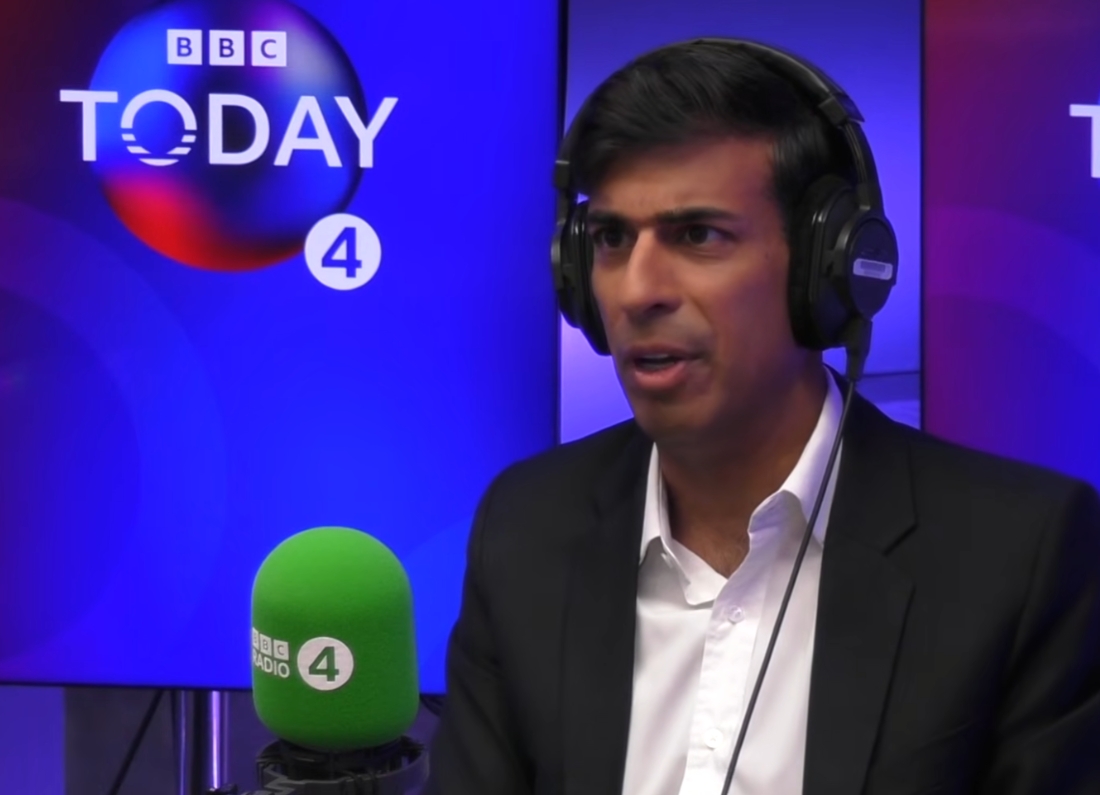
Rishi Sunak has warned that arguments over immigration are being used to question whether people who are not white can truly be English or British.
Writing in The Sunday Times, the former prime minister said he had usually preferred to ignore claims about his own Englishness. Their growing frequency, and the implications for children hearing them, had persuaded him to speak out.
Sunak argued that politicians could demand lower immigration and stronger integration without making ancestry a test of national identity. He ended with a warning: “We cannot allow race to be reintroduced into our politics.”
Why Sunak has spoken out
Sunak was born in Southampton. He recalled growing up near the city’s football ground and Hampshire’s County Ground, supporting England at cricket and regarding the country as home.
He contrasted that experience with a debate after he left office about whether he could call himself English. The argument, as he described it, was that he could not be English because he was a “brown Hindu”.
That dispute had a public flashpoint in 2025, when commentator Konstantin Kisin questioned Sunak’s English identity while discussing the distinction between nationality and ethnicity. Sunak has previously described himself as British, English and British Asian.
In his new column, Sunak revisited Norman Tebbit’s old question about which cricket team immigrants supported. Whatever the faults of that test, Sunak argued, a person could pass it by embracing England as home. A test based on ancestry would offer no such possibility to a non-white child born and raised here.
He also referred to online reactions to The Sunday Times’ report on the changing ethnic makeup of grammar schools. Sunak asked what critics expected of the children gaining places: should they deliberately fail their exams? He suggested that their success was being treated as a problem when their failure would attract criticism too.
Immigration and identity
Sunak made clear that he had not changed his position on immigration. He defended efforts to remove people who entered the country unlawfully, referred to his government’s Rwanda policy and said he regretted waiting until December 2023 to raise the salary threshold for skilled worker visas.
Those arguments concern who enters Britain and on what terms. Sunak’s objection was to telling people already born and brought up here that they could never belong because of their race.
He said such claims risked creating a society in which some people would always be regarded as less British than others, however they lived or identified. His column challenged the suggestion that calling someone British while denying they are English is a distinction most people would hear as harmless.
The warning carries personal weight. Sunak was Britain’s first prime minister of colour. He wrote that his race and Hindu faith were seldom treated as obstacles during his premiership, despite the many political arguments people had with him. He did, however, recall being shocked when a racial slur directed at him was caught on camera during an election campaign.
Cricket and belonging
Sunak’s column followed the Cowdrey Lecture he delivered at Lord’s on Thursday 17 September. He used the speech to argue that cricket could help children from different backgrounds share an experience of national life.
“We can’t just live side by side – we must live together,” he told the audience. He called for wider access to the game so that more children could imagine playing for England.
In the column, he pointed to cricket’s appeal both among his largely white rural constituents in Yorkshire and among British Asian children in Bradford. Playing together, he argued, was one way of building the integration he wants to see.
His central point was more immediate. Britain can have a fierce argument about immigration. Sunak says it should not become an argument over whether the colour of someone’s skin disqualifies them from calling this country home.






Leave a Reply