

Reform UK’s flagship council is facing an £83.7 million funding gap as former party councillors describe its leadership as “autocratic”, “toxic” and “a betrayal”.
Durham County Council’s latest financial forecast estimates that it must close a £83.662 million shortfall over the four years to 2030/31. The pressures include rising social care costs, home-to-school transport, energy and waste management.
Darren Grimes, the council’s deputy leader and cabinet member for finance, warned that the authority would have to make “difficult choices” despite identifying more than £20 million in potential savings.
The figures emerged as a Sky News investigation examined internal divisions at the council, where Reform won 65 of the 98 seats in May 2025.
Sky reported that 13 Reform councillors had since left the party, although it had gained two others. Five former Reform councillors agreed to speak about their experiences, while other people connected with the authority reportedly said they were too frightened to be identified.
Reform strongly rejected their account, describing Sky’s reporting as “misleading and malicious” and insisting that its record in Durham had been one of success.
Darren Grimes warns of ‘difficult choices’
Durham’s cabinet is due to consider the financial forecast on September 16 as it begins preparing the authority’s budget for 2027/28.
According to details published ahead of the meeting, the council must find £23.278 million during 2027/28 alone before any new savings or council tax increases are included.
A wider transformation programme has identified more than £20 million of savings through changes to council operations, contracts and technology.
Grimes said:
“Unfortunately, this alone is not enough to meet the pressures we are facing.”
Residents will be consulted on the council’s financial plans, including possible increases in council tax.
Grimes said it was “inevitable that we will have to make some difficult choices” during the coming months.
The scale of the gap creates an awkward test for an administration elected on promises to challenge spending decisions, eliminate waste and offer a new approach to local government.
Financial pressures predate Reform’s victory
The entire £83.7 million gap cannot fairly be attributed to decisions made by Reform since it took control in May 2025.
A Local Government Association corporate peer review, completed before the change of administration, described Durham as financially stable but warned that substantial further savings would be required.
At the time of the council’s 2025/26 budget, £45.848 million of savings had yet to be identified for the period between 2026/27 and 2028/29.
The new administration therefore inherited a significant structural problem caused by rising demand, inflation and years of pressure on local authority finances.
Reform is now responsible for deciding how that problem should be addressed. Its choices over services, charges, council tax and reserves will provide one of the clearest practical tests of the party’s claim that it can run public bodies differently.
Former councillors describe leadership as ‘autocratic’
The financial forecast arrived as former Reform councillors gave damning accounts of the party’s leadership at Durham.
Kate Rowland, who became involved in local politics because of problems affecting children with special educational needs and disabilities, described the atmosphere as “horrendous”.
Asked about the leadership style at the top of the council, she said:
“Narcissistic. It’s very much a case of our way or the highway.”
Ian Catchpole, an RAF veteran, said councillors had been elected with a mandate to challenge the established political system.
However, when asked whether Reform was proving any better than the parties it had replaced, he replied:
“I don’t think we’re any better.”
Asked whether the administration could prove worse, he answered:
“I think potentially, yes, we could be worse.”
Catchpole also described the leadership as “autocratic” and claimed that senior figures did not tolerate challenges to their decisions.
Nick Brown, who had previously stood for the council leadership, said he had no regrets about leaving Reform.
“I feel the people of County Durham have been let down. In fact, I feel they’ve been betrayed.”
Andrew Harrison, a former member of the Parachute Regiment, described the culture as “toxic” and claimed the organisation had begun to resemble “a cult”.
Reform has disputed the credibility of its former councillors and said some had been suspended over allegations involving bullying or the employment of a worker without the right to work.
Dispute over mental health remark
Some of the most serious allegations concerned the treatment of Kenny Hope, an Army veteran who has spoken openly about living with complex post-traumatic stress disorder, anxiety and depression.
Hope alleged that council leader Andrew Husband told a meeting in April that “mental health is woke, isn’t it?”
Husband denied dismissing mental health in those terms. He said his comment had concerned what he regarded as virtue-signalling about mental health rather than mental health itself.
Sky said three other people who attended the meeting supported Hope’s version of events.
Hope subsequently wrote to Reform’s national leadership asking it to address what he considered cultural and procedural problems within the council group. He said he received no reply.
Reform described his complaint as vexatious and said he had previously been warned about his conduct.
Husband later called Hope a “bitter ex-Reform misfit” and a “nut job” on X. Sky also obtained a WhatsApp message in which Husband allegedly said Hope had “lost the plot” and would “get a kicking at full council”.
Hope was suspended in May and resigned from Reform several days later. He now sits as an independent.
Police complaints and rising conduct cases
Sky reported that three councillors had complained to Durham Constabulary about Husband over alleged harassment and malicious communications.
The broadcaster said it had seen correspondence indicating that officers intended to speak to the council leader.
Husband said the police had contacted him to make him aware of the reports but insisted that he received no warning and that no further action was taken.
Reform also reported Hope to the police over allegations involving harassment and a data breach.
Neither set of allegations should be treated as proof that a criminal offence was committed.
Complaints to the council about elected members’ conduct reportedly increased by 336 per cent over one year, costing the authority almost £50,000. Most were rejected or discontinued without further action.
Reform rejects ‘misleading and malicious’ report
Husband dismissed the former councillors’ allegations and said they were responsible for their own departure from Reform.
“They are bitter. They are hurting, but it is fair to say they have blown it.”
He said the administration would continue with “business as usual” and suggested its critics establish a “Party of Envy”.
Reform issued an equally combative response to Sky.
“This reporting by Sky News is misleading and malicious.”
The party accused the broadcaster of presenting the testimony of disgruntled former councillors as fact. It also referred to a separate Ofcom complaint involving Sky’s reporting about Nigel Farage’s daughter.
Reform said the Durham administration had delivered one of the lowest council tax rates in the country and saved residents tens of millions of pounds by renegotiating contracts.
The party did not accept the former councillors’ description of the council or announce any independent examination of the allegations raised in the programme.
Durham remains a national test for Reform
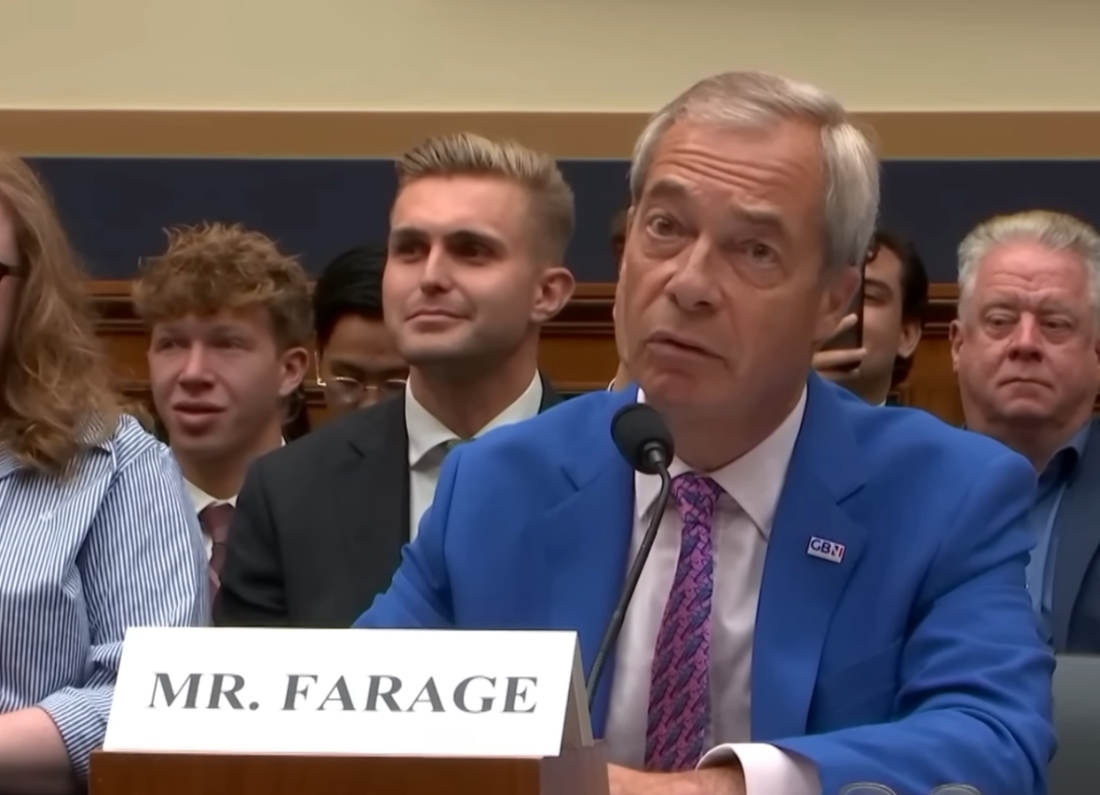
Farage presented the Durham victory as considerably more than a local election result.
“We can set the markers for how we intend to govern.”
That declaration has made the council particularly significant as Reform attempts to persuade voters that it is ready for national office.
The authority’s financial difficulties were not created when Reform entered County Hall. Like councils across Britain, Durham was already confronting rising costs and a substantial savings requirement.
The question for Reform is whether its administration can manage those pressures while maintaining stable leadership and retaining the confidence of its own councillors.
As Hope told Sky:
“If they can’t get things right locally, they’re never going to get things right nationally.”
One response to “Reform’s flagship Durham council faces £83.7m gap as former councillors allege ‘chaos’”
-
You also need to report the additional £££££ that the Labour Govt gave to Durham CC. Reform chose to use that money to deliver lowest tax rises nationally. That money could have ensured that service could be maintained and improved. Instead it chose to deliver the party line. The majority of people in Co. DURHAM haven’t been supported and now face the impact of “difficult choices”.








Leave a Reply